Saturday, April 13, 2013

The Perfect Stranger: Meeting Wanda's Hematopoietic Stem Cell Transplant (HSCT) Donor


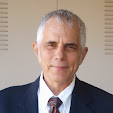
Aaron, Wanda, and me, Newport Beach, 2013

My friend, Wanda had a particularly nasty form of CLL. I say had, because she has been disease free for long time, all because of the kindness of a stranger who is a stranger no more.

But I am getting ahead of myself.

Wanda had had a difficult time with her cancer. Her leukemia had resulted in multiple hospitalizations include at least twice for near death experiences with septic shock, recurrent disabling and painful infections despite heavy duty prophylaxis and an aggressive CLL clonal evolution of the dreaded 17p deletion. And I am leaving out huge chunks of her travails.

Clearly when she looked at her options a few years ago, it was apparent that she couldn't keep going much longer without more therapy, but her fragile immunity couldn't have tolerated the blows from the chemotherapy that she needed.

This has just before our awareness of the promise of the emerging TKIs such as ibrutinib (PCI-32765) and idelalisib (CAL-101) in CLL and at that time, her options were mighty limited.

Wanda bravely elected for an allogeneic stem cell transplant, but wisely chose one where there was no chemo! A transplant and CLL researcher that I knew, Dr. David Miklos at Stanford had an innovative small but growing successful series of outpatient allo-transplants for CLL using only very low dose radiation and high dose ATG (anti -thymic globulins) to briefly knock out the recipient's T cells just long enough to sneak the donor cells into the marrow. No immune suppressing chemo is used, not that all the animal antibody of the days of ATG and radiation to the gut is a risk free or pleasant experience.

Still it was perfect option for Wanda, as her dangerous period of immune suppression would be both of shorter duration and lower intensity.

Steeling her nerves, all in, ready to go for the move up to Palo Alto for the months of therapy and follow-up, her difficult to find perfect 10/10 donor backed out at the very last minute.

Emotionally sucker punched, Wanda's knees may have buckled, but ever the fighter that she is, she just got ready to face what ever would be thrown at her in the next round of her cancer battle.

Enter the perfect stranger. Or at least a nine out of ten donor. A match made in in heaven. Her transplant hopes were rebooted.

More than a year after the HSCT, she found out that this genetic near doppelgänger was a rock solid sweet family man from a small town two hours north of Houston, Texas.

Her transplant path since has had its share of scares and joys, but Wanda is CLL and infection free these days. She is living big and is always ready to be more than generous and thankful for the chances she has been offered.

Earlier this week, it was my great privilege to join Wanda and her family and friends to celebrate her donor and savior, Aaron and his wonderful young family in her backyard.

For those few of us who have had that opportunity to meet and thank the perfect stranger from miles away who's selfless actions have saves our lives, it is one of life's magic moments. We meet someone we probably would never have met. Someone whose whole upbringing and life experiences make have no common points of connection with ours. A path we might never have crossed and a hand we might never have shaken if it wasn't for their random act of kindness that mades us blood brothers.

Knowing that we truly are all in this together can change everything. It makes the world bigger and brighter.

I am still in frequent contact with my Israeli donor, Yaakov and living in gratitude for his painful and selfless efforts to help a stranger. I remember so well the tears of thanks and the tidal wave of emotion when we first met.

The world is a better place because of the work of doctors such as David Miklos (and let me share this celebratory moment with my doctor, Steve Forman, at City of Hope), true heroes such as Aaron (and my donor Yaakov), and survivors such as Wanda.

I am lucky to be able to share in these celebrations.


Yaakov and me meeting in NYC, 2009

My blog started all about my transplant adventure and has subsequently morphed more into my editorials and interviews on blood cancers, and I will write again soon about CLL and other malignancies including the still important role of transplants, but I haven't forgotten my original vision for this blog. Even though my transplant failed, it bought me the time to get to the game changing treatment with ibrutinib that I am enjoying now. If it weren't for Yaakov, my story might have ended years ago.

Labels: , , , , , , , , , , , ,

Sunday, March 10, 2013

Saying No to Chemo: Non -Chemo Options for CLL, Part 1

This is probably the most common question that I am asked.

"I know that I need therapy, my CLL is taking off, but I don't want any chemo, so what are my options?"

The answer used to be "not much", but not so anymore. Today there are many choice and soon there will be even more.

But before I give my answer, let me give an important preamble and discuss what we are taking off the table when we veto the chemo option.

When fellow CLLers says no chemo please, I take it to mean that they don't want cytotoxic drugs that work by preferentially killing rapidly dividing cells.

For CLL in the USA, we are mostly taking about two classes of medications.

Number one and the backbone of most chemo cocktails is fludarabine that is a classic purine analog that kills by blocking DNA synthesis. Pentostatin and clardribine are similar adenosine analogs that work the same beat. What these cleverly designed drugs do is pretend to be purine, get themselves incorporated into the dividing DNA and completely gum up the work of replication. Nice.

The other class of pure chemo drugs we see a lot of are the direct descendants of the now banned World War I poison, mustard gas or nitrogen mustard. (The story of how its antileukemic powers were accidentally discovered is worthy of its own post). They destroy by attaching an alkyl group to any and all busy DNA, causing aberrant cross links and preventing it from making copies of itself. The more active the DNA, such as in a fast growing cancer, but also in our fast growing gut and skin, the more damage and the greater the kill. This is how the old standard therapy chlorambucil (AKA Leukeran) works. So too cyclophosphamide  (Cytoxan) the big C in FCR, and bendamustine (Treanda) an old communist drug but a new kid on this side of the Berlin Wall.

There are many many others cytotoxic drugs in oncology that play lesser roles in our disease such as vincristine (Oncovin), the V in CVP occasionally used for refractory CLL and just to confuse us, the O in R-CHOP used for Richter's Transformation and many lymphomas.

Oncologists carefully concoct these toxic cocktails with several goals in mind.

First they want to add to the killing power. Cancer is famously adaptive and will rapidly mutate itself right past a block on its road to lusty growth. Blocking it when it turns to either the left or right is a smart strategy. So too is capturing it in a pincer move with the lengthening lists of the toxic chemicals that make up the alphabet soup that we and others get IV to knock the socks off our cancer, and sometimes (but probably never in CLL) kill it for good.

But doesn't adding one drug on top of another inevitably lead to unacceptable toxicities?

Not necessarily so says our clever oncologists. They look for more than just complementary killing. They look for non-overlapping toxicities. CHOP is the poster boy example, a potentially curative cocktail for some lymphomas, where each of the chemo drugs interferes with the DNA in different synergistic ways AND where each drug has a different toxic target (the marrow or nerves or the heart).

Of course, it is never black and white, and dosing and individual sensitivities widely vary.

Hippocrates famously said that the difference between a medicine and a poison is the dose.

Never was this more true than with chemotherapy. Low dose oral chlorambucil is remarkably well tolerated, even in the elderly, but at the proven price of not doing much to extend the life of the patient.

Some chemo drugs are routinely used at low doses for relatively minor skin problems or auto-immune issues.

But the issue is more than the dose. It is also who is getting the dose.

Is there co-morbid heart disease or nerve damage from uncontrolled diabetes? Has the marrow been beaten up and is having a tough time rising again?

That is why it is so important that we stay well otherwise. Cancer is a hard enough fight without the handicap of a bad heart or bronchitic lungs.

Chemotherapy is not "targeted" in the strict sense, but it does preferentially cull the rapidly dividing cells and that is a good thing. In some cancers, it does such a strong job, it can cure. In CLL, while there are no chemo cures, it can and does give many of us years of healthy happy remission.

The majority of us that end up sitting in the infusion chairs for hours and hours report that while CLL chemo is annoying, it was much gentler that expected. No hair loss, little nausea. FCR or BR are wimpy protocols compared to some of the more potent stews used for more aggressive cancers. I know a surgeon who continue to operate all through his treatments with FCR.

Still cytopenias (low blood cell counts) are all too common including anemia, neutropenia with its high serious infection risk, and low platelets. So hand in hand with the chemo might come a partnering dose of a bone marrow stimulant for either red cells (EPOs), white cells (G-CSFs) or platelets (TPO mimetics) each carrying its own set of side effects and worries. Some of us even need transfusions to just keep going. More decisions. More risks. More time. More expense. More worries.

Long term, there also may be a price to pay. The marrow can only take so much before it gives up the ghost. When our marrow stops making enough of the three lineages of our blood cells, we are in dire straits and the only durable way out may be importing a new one AKA an allogeneic hematopoeitic stem cell transplant.

Chemo wallops our immune cells short term, risks of infections shoots up and may stays up for more than a year after fludarabine which is particularly nasty to our T cells.

Insist that your doctor offers you appropriate antimicrobial prophylaxis.

These drugs by design are mutagenic so we hold our breathe when we get our regular PAPs or mammos or PSAs or colonoscopies. We are getting them aren't we? Please see my earlier post on secondary cancers and do the right thing by yourself.

Infections and secondary cancers are the handle and the blade of the our grim reaper's scythe. So anything we can do to keep it reach short and its edge dull is good.

Eating right, exercise, love, sleep, and avoiding chemo are part of that prescription.

Still, when we face a clear and present danger, we must focus on our imminent needs and worry about tomorrow, tomorrow.

And until very recently, the best tools we had for staying alive when our cancer started to rage was a chemo cocktail, and I for one am grateful that these drugs were and are there in our time of need.

It was only a few years ago that we showed that for the first time a combination of chemo and immune therapy in FCR could prolong our lives. We know that those diagnosed with CLL in the 90s live longer than those diagnosed in the 80's, and much of the credit rests at the doorstep of chemotherapy and the modern management of its side effects.

So before we wave goodbye to chemo as some sort of poison concocted by the a cabal of international pharmaceutical companies, the military and medical industrial complex to keep cancer as a big profit center at our expense (believe me I encounter this line of thinking almost daily), let us calmly look at its risks and benefits.

Let's not throw the baby out with the bathwater.

If you have read any of my posts over the last few years, you have seen me vote with my feet and my blood. You know that I am a fan of the emerging small molecules and have tried to avoid chemo in my own personal journey.

All I am asking for is that we have some balance and keep our eyes wide open as we enter this brave new "post-chemo" world.

"Targeted therapies" while they might be compared a smart bombs or drone, they too like their battlefield equivalents, can pick off innocent target either that look like the enemy or are in the wrong place at the wrong time.

As I said, it isn't black and white.

More on non-chemo choices soon.

Labels: , , , , , , , , ,

Wednesday, January 4, 2012

Old Vaccine for a New Population: Prevnar 13

Good news.

I pasted this article from a link sent by Therapeutic Daily about approval of "kid's" vaccine for adults over 50.

This news is about the conjugated form of the pneumococcal vaccine that kids have been getting for years. Protein conjugated vaccines such as Prevnar are better at eliciting an immune response than the wimpy antigenic stimulation of a polysaccharide vaccine such as Pneumovax that until recently was the only FDA choice for adults. Moreover, protection against 13 subtypes of this potentially lethal bacteria in those with compromised immunity is better than the old Prevnar 7 but still not up to the high water mark of Pneumovax 23. More quantity, less quality.

So if we are early in your CLL, and haven't had recent rituximab or chemo, we should ask our doctor about it. The longer we wait, and the more immune damaging drugs that have hit our veins, the less likely of any meaningful response. Still, the risks are low, though the timing of boosters can be tricky and the small but real chance of untoward reactions are issues best discussed with our local providers.
More importantly, suggest that appropriate family members and friends do the same. See my recent post about the importance of herd immunity.
Remember that the leading cause of death in CLL is infections.
The leading infection is pneumonia.
The leading bacteria that causes pneumonia is what old school doctors like me called pneumococcus, but now more commonly answers to streptococcus pneumoniae. This invader can also cause a host of other infections including meningitis and sepsis.

This vaccine offers an extra modicum of protection and for that I am grateful.

I have been suggested the off label use of this vaccine for years in adults, Now the FDA has caught up so it should be less of a stretch for a primary care provider to OK the shot.
Here's the pasted text:

FDA Approves Pneumococcal 13 Vaccine

From the PharmaLive.com News Archive - Dec. 31, 2011

From UPI Health News (Business) (December 31, 2011)

Prevnar 13, a pneumococcal 13 vaccine, was approved by the U.S. Food and Drug Administration for people age 50 and older to prevent pneumonia, officials said.

Dr. Karen Midthun, director of U.S. Food and Drug Administration's Center for Biologics Evaluation and Research, said pneumococcal pneumonia, caused when the bacterium Streptococcus pneumoniae infects the lungs, is the most common disease caused by this bacterium in adults.

When the bacterium invades parts of the body that are normally free from germs, such as the blood or spinal fluid, the disease is considered "invasive," Midthun said.

"According to recent information for the United States, it is estimated that approximately 300,000 adults age 50 and older are hospitalized yearly because of pneumococcal pneumonia," Midthun said in a statement. "Pneumococcal disease is a substantial cause of illness and death. Today's approval provides an additional vaccine for preventing pneumococcal pneumonia and invasive disease in this age group."

The new use for Prevnar 13 was approved under the agency's accelerated approval pathway, which allows for earlier approval of treatments for serious and life-threatening illnesses, Midthun said.

The pathway allows for the demonstration of effectiveness of a vaccine using an immune marker that is reasonably likely to predict clinical benefit.

Labels: , ,