Sunday, October 19, 2014

ASCO 2014: Dr. Kipps on ABT-199 and more on CLL (chronic lymphocytic leukemia): "Cancer is not an alien from outer space, cancer is us"


More mural work from my son, Ben Koffman

In this final segment of my three part interview from ASCO 2014, my doctor, Dr. Kipps out of the Moore Cancer Center at UCSD, explains as only he can about the competing roles of Bcl-2 and BIM in our malignant B cell clone and how ABT-199 resets that balance in our favor in our malignant B cells.

Here are links to part one and part two of the same interview. They will help set up and give perspective on this longer final segment.

Before you turn off when you hear mention of yet another B cell pathway, please listen to his helpful buttress explanation that explains why this therapy, especially in combinations with other agents, promises a possible cure with no cytotoxic chemotherapy with little collateral damage.

This specific cell death mechanism is particularly active in our malignant B cells. Accordingly, it makes sense as an even more potent target than is blocking B cell communication though the the B-cell receptor (BCR). Blocking BCR activity is likely a major mechanism for the outstanding success of the two newly approved targeted oral agents, idelalisib and ibrutinib. ABT-199 works differently. It works directly on the cell's life and death pathway.

As those who have read my prior post know too well, ABT-199's very potency is its weakness too. It can kill the cancer so fast there is a risk that the kidneys can't keep up with the flood of intracellular toxins spilling out of the millions and millions of lysed (broken down) cancer cells. Tragically, at least two deaths have occurred from this tumor lysis syndrome (TLS), and as a result the whole ABT-199 trial strategy was stopped and than revamped, but it's now back and better.

In other posts, I discussed one tragic death that happened in the trial and argue strongly then that its development be continued and I am so glad that has happened.

But when ABT-199 gets out of trials and into the larger community, I worry that TLS may start to reoccur if the education of the community doctors and their patients is not strong enough.

That, my friends, is one of my major goals here and elsewhere: to inform my fellow patients and providers of the changing landscape in managing CLL so we can make smart decisions and get the care we need.

But ABT-199 has gotten some patients to MRD negative status and even allowed durable disease control long after the med is stopped. That is very exciting and appears to be significantly different from the usual results seen with idelalisib and ibrutinib.

In the past I have argued of reducing the tumor burden with Imbruvica or Zydelig, perhaps with a mAB (monoclonal antibody) such as obinituzumab or rituximab, and then cleaning up any residual disease with ABT-199.

I am happy to say that is now a research direction that is being actively pursued.

It's too early to predict how ABT-199 will fit in the mix, but I predict it will play an important role in the future. The bar already has been set high with the robust responses already seen with the first two approved TKIs. It is not unreasonable to dream that the significant extra kick from ABT-199 or one of the new agents could push us to cure.

So  happy to see more research. We must keep pushing for more evolved therapies that offer cure, not just disease control. (Not that I am complaining about the recent advances that have positively changed my life and that of of so many other CLL patients.)

Later I will comment on the recently announced combination of the PD-1 immune checkpoint inhibitor nivolumab (Opdivo) and the oral BTK inhibitor ibrutinib (Imbruvica) in a phase I/II trial for patients with non-Hodgkin lymphoma (NHL). This is another promising and bold path that has me pretty excited.

But before, we move on, Dr. Kipps has more news for us patients from ASCO 2014.

In the last few minutes of the interview, Dr. Kipps takes a step back and forces us to consider a different perspective on the nature of cancer in general and CLL in particular. He reminds us of cancer's primitive embryonic nature and how ROR1, an embryonic antigen, might be a major player not just in CLL but in other metastatic cancers such as prostrate or ovary too. Thinking about cancer and CLL in this way opens us the possibility for new avenues of research and therapy. The anti-ROR1 mAB is a step in that direction.

When I saw, Dr. Michael Keating from MDACC at the AACR hematology meeting last month in Philadelphia,  he told me he is betting on ROR1 as the path to cure.

When Drs. Kipps and Keating agree, it is worth listening. And considering a ROR1 trial.

Please enjoy my interview with Dr. Kipps.


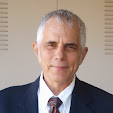
More soon. (By the way, my ASCO 2014 goatee is long gone.)

This is my crazy season of traveling and teaching, so please forgive my tardiness in posting.

I will be at the LRF conference this Saturday, Oct. 25, 2014 in Manhattan Beach, so please join me and say hello. If you have never attended a LRF conference, they are worthwhile on so many ways. Do come and learn and meet fellow patients.

We are all in this together.

Labels: , , , , , , , , , , , , , , , , ,

Sunday, August 11, 2013

ASCO 2013: Dr. Sharman on The Biology of CLL being Cracked with a Therapeutic Renaissance Underway

At the ASCO 2013 in Chicago, I had a chance to catch on camera some of the enthusiasm and optimism of Dr. Sharman.

Dr. Sharman is the director of research at Willamette Valley Cancer Institute and medical director of hematology research for The US Oncology Network, and a very creative and visionary doctor and a great blogger. His posts are always worth reading.

In this  interview, he clearly outlines the rationale of using the new small molecules that blocks BCR (b-cell receptor) or Bcl-2 (b-cell lymphoma-2).

He shares some of the development of third generation mAbs (monoclonal antibodies) such as obinutuzumab to turn on the immune system.  We learned in my earlier ASCO post with Dr. Wierda, immunotherapy, namely an allogeneic stem cell transplant is the only proven cure on CLL. And we have strong data from the German trial and others that adding a mAb such as rituximab to FC makes the chemotherapy better, so building a better antibody is an important step forward .

The swelling number of promising new molecules and treatment options needs to be met with an reciprocal swelling number of volunteers for clinical trials to keep the renaissance alive.

Are we already in a therapeutic renaissance for CLL?  I believe we are just in the very earliest stages of the coming change to the treatment paradigm, but we need many more bright lights to guide our way and that will only be produced by the hard work of the bench scientists and the valour of the volunteers  who enroll in well designed and patent friendly clinical research. Only then will we able to say that we have turned the corner on the "dark ages" of CLL

Thanks again to Andrew Schorr and the great team at Patient Power for helping make these interviews possible.


More soon.

Labels: , , , , , , , , , , , , , , ,

Thursday, February 21, 2013

ASH 2012: Dr. Tom Kipps Explains BCR, Chemokines, and the Power of Blocker Drugs

This is part two of my ASH 2012 interview where my doctor, Dr. Kipps out of UCSD, makes the importance of BCR and chemokines to the B cells understandable. Even a vegan like me can understand his Thanksgiving dinner analogy. He too talks about the debt of gratitude owed to all the patients who enroll in the clinical trials.


More to come soon.

On a personal note, I am home a day early from five days in Manhattan at a hematology conference where my family doctor brain was crammed full of new malignant hematology facts and figures so that I can talk about more than CLL to the experts that I am privileged to meet. I was, for obvious reasons, the only family doctor there, and had to check "other" on my registration form as there were not expected any PCPs to show up. If you newbies to CLL think the acronyms for CLL are bad, hematologist are the perpetual masters of an expanding array of coded alphanumeric soups. I was constantly multi-tasking as I was learning the new material and scouring the web at the same time to decode the heme shorthand for all their therapies.

I did take time off to have some gourmet vegan and raw vegan meals at Pure Food and Wine, Candle 79, and Candle Cafe, dance and sing at a neo-Hassidic shabbat service at the beautiful B'nai Jeshurun,


and catch the very last day of the gritty ash-canny George Bellows exhibit at the Met (and of course revisit the masterpieces by Van Goghs and Caravaggios) all artists whose lives ended far too early, but whose influence will be eternal.


Despite the biting cold and the wind that careens channeled by the steel skyscraping canyons, just walking around Central Park (where I saw an extremely rare golden (or red) tail hawk) or by the skaters at Rockefeller Center or inside the bustle of the well preserved centarian, Grand Central Station, or with my fellow gawkers at Time Square, there is no place on earth like New York City.

After a wonderful visit with dear friends in Springfield, Missouri and undergoing a critical and demanding but extraordinarily successful external review for all the medical education work that I do, I had the help of a friend who drove me 80 miles to Joplin, MO to get the very last seat on an overbooked flight out of Missouri before the ice storm hit the midwest (all the local flights were unavailable and the next flights out were likely two days away). 

I got home a day early to warm and sunny California.

Home for a week, then off the Washington, DC.

Labels: , , , , , , , , ,

Saturday, January 12, 2013

ASH 2012: Dr. John Byrd and the Dream of Magic Bullets: The History and Science behind the Success of the BCR blockers such as Ibrubinib (PCI-32765) and Idelalisib (GS-1101 or CAL101)

In the first of a four segments of my interview with my own wonderful doctor at OSU, Dr. John Byrd, we hear him discuss every patient's dream of a magic bullet and how the history and science of TKIs in general and BCR blockers in particular lead us tantalizingly close to that magic moment.

Be prepared to hear a progression free survival rate in the trial that Dr. Byrd presented at the ASH press conference that will knock your socks off.

Be prepared for some surprisingly good news on what happens to the adverse events the longer you are on the medication.

If you have visited my site at all in the last few months, you are already prepared for the news of the changing of the guard from old school cytotoxic, collaterally damaging, mutagenic chemotherapy to the emerging gentler targeted biological approaches.


 Dr John Byrd ASH 2012

My wife and I leave for Ireland next week, but I hope to continue to post more of the interview every few days. Even ancient castles have the internet these days, but expect shorter commentaries.

The house, the vegetable garden, the tea trees, and most importantly, the cat will be cared for by my adult children who will be moving in during our absence.

Packing the clothes is the easiest part of getting ready. Many layers, and be prepared for the cold and wet.

I have burned about 4 hours of traditional Irish music to keep as going as we drive from village to village in our little rental car.

Paperwork and boarding passes may be an issue as United Airlines and Aer Lingus don't seem to like to play well together. I am hoping our status with Global Entry and TSA-Prescreen will help, but I am not counting on it. The connection in Chicago is tight.

The real work is getting all my precious meds organized for my daily needs. That takes hours of counting out pills. The idea of schlepping more than 20 bottles of my daily and my just in case medication is overwhelming. Without my meds, I would be in trouble fast, so I always bring extras for a few days' buffer. And I bring emergency meds for sudden infections, especially with the flu making the rounds in the USA and Ireland. My irreplaceable Ibrutinib travels in my pants pocket so it is always with me.

The prep for a trip and the worry over what could go wrong is always the worst part. Once we are in Ireland, no matter how cold and damp, we will love it.

What makes that especially certain is that an internet friend whose wife has CLL is meeting us at the airport for a guided tour of the capital of his country, Dublin and then we will share a vegan dinner together. For a fanciful end to our very long day of travel and time shifts and touring, my wife and I will sleep in a real castle.

We can't wait to hit the road.

I am very lucky, but I got a ton of work to do before we leave for the airport.

One piece of personal medical news. Despite all the bone wasting corticosteroids prescribed with my infusions and other issues, and my stopping calcium, my bone density was unchanged in the last two years. I am still in the no man's land of osteopenia (not quite normal but not an an increased risk of fractures), but have not progressed to osteoporosis. I am crediting my high doses of Vitamin D3 and my weight training.

Labels: , , , , , , , , , , ,

Wednesday, December 19, 2012

ASH 2012: Combinations of the PI3K∂ Inhibitor GS–1101 (CAL-101) with Rituximab and/or Bendamustine Are Tolerable and Highly Active in Patients with Relapsed or Refractory CLL

GS1101(formerly CAL101) was the first oral, exciting small molecule to show outstanding results in CLL after the failure of many other small pathway blockers.

It had about an 18 month head start on ibrutinib (formerly PCI-32765), but its lead has shrunk considerably in the race to FDA approval.

It too blocks the pathway downstream from the BCR (B cell receptor) that tells the clone to survive and proliferate. Bench research presented at ASH seems to suggest that in some clones of aggressive CLL with a higher tendency to Richter's Transformation, BCR is promiscuous (couples and responses with any old stimulating antigen) or in another poster presentation, may be self stimulating, perpetually turned on and driving the disease with no outside help. Quoting from the conclusions in that paper " These findings suggest the possibility of self-recognition of BCRs within the CLL cell membrane or BCR interactions between neighboring CLL cells. This may potentially result in autostimulation of the leukemic cell independent of “exogenous” antigens and may account for self-sufficient signaling of some CLL-BCRs in driving disease progression. "

Either way, turned on BCR is not our friend.

This basic science work applies to any and all drugs that effect the BCR pathway, and it was work such as this that lead to the idea that compounds such as GS1101 and ibrutinib might someday have a major role to play in controlling CLL. We now know that PI3K∂ drives survival and proliferation of the cancers cells, so blocking it with GS1101 makes good sense. 

That kind of hard work leads to an understanding  of the basic cell biology that leads to a treatment hypothesis that leads to animal studies that leads to human trials that leads to a usable drug.  I am way oversimplifying the story and this ideal path is aborted 99% of the time long before it gives birth to a helpful medical compound, but I wanted to share some of the mostly unseen effort that makes these breakthroughs possible.  The medicine bottle at the pharmacy is just the tip of the iceberg. We owed so much to the medical chemists.

So what were the clinical results with GS1101 that were presented at ASH

The important  abstract 191:Combinations of the Selective Phosphatidylinositol 3-Kinase-Delta (PI3Kdelta) Inhibitor GS–1101 (CAL-101) with Rituximab and/or Bendamustine Are Tolerable and Highly Active in Patients with Relapsed or Refractory Chronic Lymphocytic Leukemia (CLL): Results From a Phase I Study reported more good news: high response rates.

Here I am sharing an executive summary of the findings but you have a link to all the details included in the abstract. We must wait for the peer reviewed published paper as that is the true test of the validity of the research.

51 patients were studied in three different arms. These were not the easiest  of us to treat. All had relapsed after up to 10 prior therapies, 27 had refractory disease, more that half had bulky nodes, and nearly all had had prior B/R (bendamustine/rituximab).

In the group that was randomized to get B (bendamustine) with the GS1101, the intent to treat overall response rate (ORR) was 82%. Adding rituximab (the BR group) raised that to 87%.

But here is the number that excites me. Leave out the chemo (bendamustine) completely, and use only biological therapies with the combination of CD20 antibody, rituximab, and the new PI3K∂ inhibitor, the response rate was a very respectable 78% in these tough patients. 

Minimum follow-up was 40 weeks for each arm with the one year progression free survival numbers being very similar to the ORR.

Nodes shrunk rapidly in almost everyone. Disease related cytokines, elevated at the start of therapy fell, and that may explain why we feel so much better with these treatments. Elevated cytokines make us feel sick.

In the GS1101 + R (rituximab) group (only 19 patients), 21% (6 patients) got pneumonia, 32% had low neutrophils ( and 11% or two patients had febrile neutropenia) and 21% had low platelets. Only one patient had elevation of the liver enzymes. As expected, the blood work was considerably worse in the  two groups that received bendamustine. Surprising infections were lower in the BR group, but the sample was small with only 15 patients being followed.

The data are very encouraging, but we need much bigger numbers and longer time frames. That is the why we have the phase 3 trials, accruing right now. Check out clinicaltrials.gov for the details. My favorite would be the trial that offers either ofatumumab with or without GS1101 as a way to avoid a chemo arm.

But wait and discuss with your doctors the ibrutinib and ABT-199 trials too if you need to consider therapy soon. I will be reviewing those and some of the related important ASH abstracts here soon. Videos of my interviews with the experts at ASH are being rendered and prepared.

It is good to have choices. Not so long ago, we had almost none. 

Many reasons to be thankful and hopeful.

Labels: , , , , , , ,

Sunday, July 8, 2012

What I want for CLL

Here is the guts of an email that I sent to a friend and to the SLL/CLL yahoo list serve about what I dream about for all of with CLL.
I would love if there was an option that provided a high probability of a cure even if it was fairly toxic such as existing therapy for testicular cancer and others. Go through the hell of chemo and be done with it, except of course for the constant looking over your shoulder to see if our nemesis is returning and the very real late risk of a secondary cancer, especially another blood cancer including MDS (myelodysplastic  syndrome) always looming. Still it's desirable not to need to stay on meds forever. The possibility of the cancer escaping control or late yet unknown side effects is too high and we are living with cancer, not post cancer.
What we have now (outside of clinical trials) is the worst of both worlds, namely toxic therapies that hold no promise of cure (except for the transplant lottery). Gentle long term control is clearly a much preferable and believable possibility based on the very early but promising results with the new kinase inhibitors and the BCR blockers. That is why we are both glad that we traveled to OSU for ibrutinib and others may feel the same for their choices of GS-1101 and different new pathway blockers.
Still we must insist that the researchers don't take their feet off the accelerator. We are still far from home and for too many of us, the hour is getting late. Control is a great start and a big move forward. I am happy and lucky and extraordinarily grateful to be part of that early trial cohort. Maybe it is enough. Maybe there is a magic cocktail out there yet to be proven that will kill the beast once and for all. Maybe when the disease is a long deep remission, it then will be possible to drive a stake through its heart with new chemo or CAR-T or some yet to be discovered chemical. 
What I do know for sure is that I want to live enough years to be part of the proof that our control paradigm has the legs for a long long long  hassle free remission or better yet, to see and experience all of us crossing the finishing line of a cure. 
We are moving in the right direction but I wish it was faster. I want a near future in which we will have the best of both worlds. a low toxicity, highly curative therapy. 

Labels: , , , ,