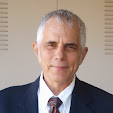
Learning from and about cancer (chronic lymphocytic leukemia or CLL) by Dr. Brian Koffman
What started as a personal journey of a doctor turned patient morphed into a way to share what’s universal in dealing with cancer, in my case a nasty leukemia (CLL), a failed transplant and a successful clinical trial. The telling of my journey has become a journey to teach about CLL, related blood issues and all cancers. Please visit our new website http://cllsociety.org for the latest news and information. Smart patients get smart care™. If you want to reach me, email bkoffmanMD@gmail.com
Saturday, November 29, 2014
ASCO 2014: Dr. Sharman Reviews the Results and Implication of a Single Agent Obinituzumab Poster in CLL (chronic lymphocytic leukemia)
Another audio interview from ASCO 2014, this time with the ubiquitous Dr. Jeff Sharman, who with his work heading up a large national CLL/NHL research group, has brought us several important clinical results that has advanced our understanding of treatment options and provided directions for further research.
Here he is part of a group with Dr. Joe Flynn as the lead author, studying two different doses of the fully humanized monoclonal type II antibody directed against CD20 (same target used by rituximab and oaftumumab) known as obinituzumab, also known as (AKA) GA101and AKA Gazyva used in this trial as single agent.
The abstract shows a strong trend to a better response with the higher dose, especially as regards complete responses. This is not surprising when we know from a dose escalation trial of rituximab published in 2001 from Dr. Susan O'Brien (mentioned in the interview by Dr. Sharman), that when it comes to antibodies, more is better.
Makes sense based on what we know about how these antibodies work. There are billions of B cells and only so much antibody. When they are all "bound up", there are none left.
There is also research now looking to see if there is similar dose response relation with CAR-T therapy: the more chimeric T-cells, the better, though the story here is much more complicated as it seems CAR-T cells are serial killers.
Dr. Kipps and I also discussed this same paper and the difference between Type 1 and Type 2 antibodies here. Dr. Jennifer Brown discusses earlier research on GA101 at ASH 2013 and the different types of antibodies here. And here are the details of its FDA approval and some of my comments only published only a little more than a year ago.
What a great year it has been for those of us touched by CLL! We are all on a fast moving train and while cure is still a distant light in the tunnel, long lasting low toxicity disease control for most of us may be a whistle stop that we blown past some time without even noticing some time last year.
Here's hoping.
Enjoy the audio interview with Dr. Sharman.
Thank you for putting up with all the pops and hisses again. I promise that they will be a thing of the past once I finish uploading the audio from ASCO 2014 and move forward to ASH 2014 and beyond.
Stay tuned as we have big plans that I will be announcing here soon that will improve our options for education and support for all of us with CLL and related B cell lymphomas in the near future.
Dr. Byrd: "We are at an incredibly exciting time for patients and their families with CLL (chronic lymphocytic leukemia)" Let's all bake a cake of cure.
Cake of Cure
OK team, we have taken the first giant step in this moon shot. We've safely landed in a new world of disease control with no chemo. Now get us home.
The real work is just beginning.
We need potent combos of these new wonder drugs to help us stay in the land of remission forever, get off the daily meds, and maybe, just maybe find our decades from now that we have been cured.
We need more trials, trials that use NO chemotherapy. Trials that use drugs from different pharmaceutical companies. Abbvie links with Infinity Pharmacyclics is already working with TG Therapeutics in a clinical trial.We need more of these alliances that break down commercial barriers for the benefit of the patients.
We need brave patients to volunteer. While all of this sound so positive, let's not forget that when Gilead ran a sensible and necessary trial combining its Syk inhibitor, GS-9973 and its better known PI3k inhibitor, idelalisib or Zydelig (click here for the abstract), they concluded: "Despite promising activity in CLL, the combination of GS-9973 and Idelalisib resulted in an unexpectedly high rate of pneumonitis and resulted in stopping dosing of the combination These data need to be considered when designing future investigations combining inhibitors of B cell receptor signaling."
So we can't take anything for granted. These trials need to be carefully designed and monitored. But they are our best path to a cure.
It demands patients and providers and industry and the FDA all fighting together to "bake a cake of cure" for CLL.
I like it.
Please enjoy this upbeat and realistic one minute video of my doctor, Dr. John Byrd out of OSU.
More soon on ROR1 including an exciting new trial, and also on challenging paper on new mathematical modeling of ibrutinib resistance.
Good times indeed. Let's have our cake (vegan of course) and eat it.
ASCO 2013: Dr. Wierda Discusses Immune Therapies in CLL
In this first of several interviews from ASCO 2013, Dr. Bill Wierda of MDACC discusses immunity in general (or lack there of) in CLL and how that relates to the coming immune therapies.
He starts by explaining the basic difference between passive and active immune therapies.
His candid review of the trials so far points out the recurrent disappointments in the attempts to develop active immune therapies.
The story with passive immunity has had more success.
Monoclonal antibodies (mAb) such as rituximab or alemtuzumab were the pioneers of targeted immune therapy and have in many cases improved outcomes when added to chemotherapy without significantly increasing toxicity. Newer mAbs hold the promise of even deeper responses with few of the downsides of traditional chemotherapy and may even prove to work well without the addition of cytotoxic chemotherapy. Already useful examples include Rituximab and Revlimid or lenalidomide (R2) and the combo of HDMP (high dose methylprednisilone) + Ofatumumab. Powerful therapies with no chemo.
GA101 or obinutuzumab, a third generation anti CD20 mAB had received breakthrough status at the FDA and may be approved before the end of the year. The early data suggest this is both a potent and well tolerated treatment, hence the rush to get it to the clinic.
Passive immunity also includes the exciting CAR-T therapies that Dr. Wierda discusses. These are still in very early trials, but a few cases such as those out of U. Penn have seen spectacular saves when patients had all but ran out of all conventional options.
Immune modulating drugs (IMIDS) such as lenalidomide are in the early days of studies to figure out how they fit into the therapeutic landscape, but are clearly active in CLL and may improve some aspects of our impaired immunity,
This segues to another topic that gets Dr. Wierda really excited.
He tells of his research into ways to improve our immunity, to reconstitute our lost ability to fight off infections and to search and destroy the earliest microscopic cancers before they can grab hold and cause problems. Infections and secondary cancers are what kill those of us with CLL, and Dr. Wierda is fighting for ways not only to knock out our blood malignancy, but to also prevent us from dying not from our cancer itself, but from the damage the CLL (and its treatment) have already done to our ability to protect ourselves from infections and secondary malignancies.
This interview is from ASCO 2013 in June in Chicago.
It was great fun working with Andrew Schorr and the dedicated team from Patient Power in doing these interviews. I am grateful for their efforts and support and the willingness of the doctors to share their work at such a busy conference.
Look for more CLL interviews here over the next few weeks and keep checking Patient Power for other interviews that Andrew and I did on other cutting edge treatments for different cancers at ASCO in Chicago. Many of these have direct implications for how CLL may be treated in the future.
Here is Dr. Wierda:
Tomorrow it will be a full six weeks since my last IVIG infusion and blood draw. This is the longest I have gone without IVIG in the last six years and the longest I have gone without lab test since my first year with CLL.
ASH 2012: Dr. Adrian Wiestner of the NIH (NHLBI) on his Research Findings with Ibrutinib and Reflections on the Changing Therapy for CLL
Even though the Annual Meeting of the American Society of Clinical Oncologists or ASCO is only a month away, there is still much valuable information to share from the ASH 2012 Annual Meeting six months ago and there is no one better than Dr. Adrian Wiestner from the NIH (NHLBI) to teach us.
At the upcoming ASCO meeting, there will undoubtedly be fresh reports that improve our understanding of the underlying biology and treatment of chronic lymphocytic leukemia (CLL), but let us pause to remember just how quickly the treatment landscape is changing by taking some parting glances at the data from ASH 2012.
Let me explain what I understand to be the main differences between ASCO and ASH, two giant cancer conferences vying to attract the best groundbreaking research papers and the oncology crowds that follow them.
I have been attending the annual meetings of the American Society of Hematology (ASH) for many years. Approximately 15,000 hematologists from around the world meet every December in major American cities offering a convention center big enough to handle the crowds and interesting enough diversions for the docs and their families. Last year it convened in Atlanta; this year we’ll converge on the Big Easy.
ASH emphasizes an exhausting array of exciting basic laboratory research, in addition to the clinical trial data and many practical “how to treat” symposia.
This upcoming conference will be my first ASCO meeting.
ASCO, as the name suggests, is more clinical in its orientation and much bigger. Gimongous! At twice the size of ASH, the 30,000 attendees annually trek to Chicago where the McCormick Place Convention Center has room for them all. Wear comfortable shoes because there will be a lot of walking. Plan your days carefully and pick a track on breast cancer or brain tumors and be prepared to run from room to room.
My chief interest of course remains my personal torch, CLL; but I also plan to expand my reporting on other B-cell lymphomas specifically, and hematologic cancers in general, with some important diversions to cover the latest on a few common solid tumors.
What I don’t yet know is how much will be revealed at the ASCO meeting about the emerging basic lab science related to CLL, especially the importance of clonal evolution and the critical role of the microenvironment.
What I do anticipate is more mature clinical trial data on ibrutinib (PCI-32765), idelalisib (CAL-101), ABT-199, and GA-101 and also a host of preliminary studies on other TKIs (tyrosine kinase inhibitors or small molecules, usually oral meds, that block pro-survival pathways in cancer) and the new mAbs (monoclonal antibodies trying to improve on rituximab) that are in early development.
Concerning the leading TKIs, here are my questions: What is the durability of the response? What have we learned about the significance of the almost universal finding of a low level of residual disease with these new TKIs? What do we know about the longer term adverse event profiles, including the risk of Richter’s Transformation, secondary cancers, immune function, and infections? Maybe most importantly, what have we have learned from the few CLLers who have relapsed? Who are they? What are the risk factors? Is there anything we can do to improve the already good odds?
Concerning the newer dugs and the mAbs, I want to hear which pathways offer us the best promise of a lengthy trouble-free survival.
I posed some of these same questions last December at ASH 2012 and there is no one better to teach us than the thoughtful Dr. Adrian Wiestner from the NIH.
His deep, inventive, commercial free, and government-sponsored research includes a focus on non-chemo approaches to CLL.
Ibrutinib specifically, and kinase inhibitors in general, all induce dramatic responses in CLL with a very favorable adverse event profile. That is great news for all with CLL, but especially those with difficult to treat disease, such as those of us with 17p del or refractory disease.
In the first part of my ASH 2012 interview, Dr. Wiestner discusses some of what is known and what questions he is hoping to answer. You get a sense of why he is so exited about these new lines of therapy.
And he correctly predicted the rapid enrollment in the phase III RESONATE trials comparing ofatumumab and ibrutinib. It just closed accrual with its 350 subjects, every one of whom deserves our gratitude.
Enjoy Dr. Wiestner.
On a personal note, I remain with my mild iron deficient anemia. Maybe that explains my increased fatigue. The rest
of my lab remains super. I am off to OSU today for yet more lab, more ibrutinib, and radiotherapy also known as CT scans. Only kidding, but CTs every 3 months is excessive!
The treat on this trip besides the Mark Rothko exhibit at the Art Museum
in Columbus and seeing old friends and smelling the spring flowers at the Metro
Parks, is that I get to tour Dr. Byrd’s lab and the new cancer hospital under
construction (again sensible shoes and this time I will need a hard hat), meet
some other CLLers, and best of all, have a chance to break bread with Drs. Byrd
and Flynn.
More soon from Dr. Wiestner from ASH 2012 and prep for ASCO 2013.
ASH 2012: Dr. John M. Pagel Part 2: Present Trials and Speculations on the Near Future of Ibutinib, GS-1101, ABT-199, GA-101, TRU-016 including Combinations and the Changing Role of Transplants
I am grateful for the thoughtful, caring and careful way Dr. John Pagel tells the evolving story of CLL treatment. But I am also grateful that he is willing to speculate about what the future might hold for us CLL patients and those yet to be diagnosed.
In the follow-up to Part 1 of my interview, Dr. Pagel hypothesizes a possible future of the "game changing" emerging therapies in CLL, their paths to probable approval, logical combinations, available and coming trials, the "boots on the ground" reality of how they will be used on and off label, and the reassessing of the time and place for allogeneic transplants.
His candid observation that drugs such as ibrutinib (PCI-32765) and GS-1101(now idelalisib and formerly CAL-101) will potentially be used extensively "off label" and upfront in therapy is in my opinion, a realistic take on what is coming to the next generation of CLL patients.
When he talks about the shifting role of allogeneic transplants, we hear his wisdom and experience gained from his years of helping patients in both the pre and post imatinib (Gleevec) eras.
He informs of us the logical combinations of agents, many with no cytotoxic chemotherapy to be found anywhere in the treatment protocol, that are available right now in clinical trials and will continue to be explored.
Please be sure to view Part 1 if you haven't already. It will help with the context of this continuation of the same interview. In Part 1, there is more indepth discussion of ABT-199. In Part 2, presented below, I start by asking him about the other two big names out there ibrutinib (PCI-32765) and idelalisib (GS-1101), and he picks up from there.
There will be a brief Part 3 soon that will deal with transplants exclusively.
BkoffmanMD@gmail.com
A family doc and husband of 1 and father of 4 and grandfather of 3 who loves his family and his work. I live with no TV and no microwave, but wouldn't last a minute without friends, art, music, books and the beach. Hockey, good jokes and exotic travel are pretty important too. Writing, Talmud and Zen give meaning to my life. My diet is organic vegan, often raw. I hope the blog makes the load lighter and the path both safer and more fun for those who read it or are going to similar places. I want to help. I crave your comments. If you are new to the blog, check out the portrait my son Will painted (it is the first post), and my very first text post.