Saturday, May 20, 2017

5 Years Since I started on Ibrutinib for my CLL (chronic lymphocytic leukemia) in a Phase 1 Clinical Trial at Ohio State

May 5, 2017 marked 5 years since I swallowed my first 3 capsules of PCI-32765, now better known as ibrutinib or Imbruvica.
I still take 3 battleship grey capsules every morning to keep the CLL dragon at bay.
Much has changed in those five fateful years and I want to share some of my reflections on that amazing journey and some of my hard learned lessons.
I will be writing more about my story as a patient on these pages. You can get more of the past day by day blows over the last 9 plus years here in my blog  that in many ways was the mother to this website and the CLL Society. 
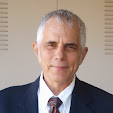
My very first blog post (http://bkoffman.blogspot.com/2008_04_01_archive.html), other than the portrait of me by my son, dates from April 29, 2008 and deals with another fateful decision, the one to have a transplant. Now with 1100 posts and 1.2 million views later, I am still telling my CLL story.
The Decision to Enter a Clinical Trial
In 2011, my CLL was not behaving. After my failed allogeneic hematopoietic stem cell (bone marrow) transplant, my nodes were growing again and became massive, over 11 cm long in the gut. My absolute lymphocyte count was also climbing, I had a mild anemia, but at least my platelets whose prior crashes from the auto-immune ITP (immune thrombocytopenia) had lead to five unpredictable and life-threatening hospital admissions were now holding steady on my immune suppressing cocktail of cyclosporine and rituximab.
I had added a small sub-clone of 17p deleted cells to my more dominant 11q deleted clone of bad actors. In fact I had developed several new mutations, more than enough to qualify as a complex karyotype. I had a very nasty flavor of CLL.
My CLL also had now clearly demonstrated genomic instability, the ability to continue to mutate and find ways around drugs meant to control it.
Chemo-immunotherapy (CIT) such as FCR (fludarabine, cyclophosphamide and rituximab) was off the table. It simply wouldn’t work due to my 17p deletion. My options were vanishingly few.
With a failed bone marrow transplant as part of my medical history, I was not only a high-risk patient, but also one excluded from most clinical trials. There is a lot of risk in clinical trials, and manufacturers want to eliminate as much as they can by excluding those who might disrupt the data such as post-transplant patients like me. This is still a common exclusion criterion.
Against this dark landscape, there was a tiny, but dazzlingly bright light. At the huge annual ASH (American Society of Hematology) meeting in San Diego December 10 – 13, 2011, there was a loud buzz about two new related therapies that were showing remarkable efficacy in very early and very small phase 1 trials in the worst of the worst CLL patients, such as yours truly.
And there was this remarkable moment of agreement between all the CLL experts, a moment never seen before or since, a consensus that we might be witnessing something special, that a new era might be dawning in CLL.
That feeling of a sea change coming turned out to be prescient.
Those two drugs were CAL 101 (now known as idelalisib or Zydelig) and PCI-32765 (now known as ibrutinib or Imbruvica).
Neither was available for me in California in a trial, but there was a trial opened in Columbus, Ohio at Ohio State University where I would likely qualify.
Clinical trial NCT01217749 (PCYC-1109-CA) would end up both changing and saving my life.
I had leveraged my position as a doctor and by this time, my modest fame as a CLL blogger, to wrangle an introduction to Dr. John Byrd in a noisy hall at the ASH conference. Within 10 minutes of talking, he had penciled me in for the clinical trial that he was running and so began our strong friendship.
I had to fight hard with my insurance company to get coverage for this out-of-state trial, but soon I had enrolled in the study and moved from sunny southern California to Columbus, Ohio for three wintery months.
I took my first three pills of PCI-32765 a little over five years ago.
In the next installment of this story, I will share more about the trial from the first days to the present, but for now I want to share a few “take- aways” from my adventure that I learned from this experience:
  • Don’t give up.
  • Think outside the box, or as Dr. Terry Hamblin would say: Think Laterally.
  • Leverage every advantage you have.
  • Be prepared to move, both physically and metaphorically, when you need to move.
  • Expect the unexpected- in this case, amazingly good results.
  • Remember to be grateful.
More to come…
Stay strong. Stay in touch.
We are all in this together.
Brian

Labels: , , , ,

Tuesday, February 9, 2016

Good news from OSU with lab results back to normal including all my liver tests for my CLL (chronic lymphocytic leukemia) Ibrutinib Trial

As some of my readers may know, my liver tests were slightly elevated and then climbed a little higher on a second blood test 3 weeks later for no good reason.

Spoiler alert: they are back to normal, and not barely normal but back into the low teens again.

I refuse to take any blame for why they rose (I don't drink, have no known toxic exposures, take no high risk drugs, have not been sick, and have a very low risk lifestyle for any type of hepatitis), but I will take all the credit (along with my wife) as to why my transaminases normalized.

Before I share what I did with my wife's help, please understand I am not recommended this for anyone else. Your mileage may vary. Please check with your doc before making any changes.

So what did I do?

First I stopped Co-Q10 that my dentist recommended- that didn't seem to help. They continued to climb.

Next I stopped verapamil for my blood pressure- it can significantly raise the blood levels of ibrutinib, but ibrutinib has a very wide therapeutic margin so I am not sure a high level is a bad thing. Anyway, it is not associated with liver inflammation as are other kinase inhibitors such as idelalisib.

My BP is fine off the drug as I suspected, so I am staying off.

Next I started adding fresh home ground and juiced organic turmeric and ginger and garlic to my usual daily green juices. And I noshed on some dark chocolate covered coffee beans (better than the Gershon method of liver detox by coffee enema). Word to the wise: some of these herbs can have a mild blood thinning effect.

My spicy concoction should cure what ails you, whatever ever it is.

And just to be sure, I added in some organic milk thistle tablets whose liver calming effects are celebrated in the alternative medicine world and doubted in allopathic circles. However, they all agree it is pretty safe. I think the data is convincing that it works for some liver issues.

Would my tests have fallen on their own? Probably, but I'll never know and it's empowering to do something as long as it's safe and approved by your treatment team.

My other lab results were good too.

My CBC remains healthy with no anemia, and no real abnormalities. My ALC (absolute lymphocyte count) was 2.1 which is high for me, but is in the bottom half of the normal range.

The rest of my chemistries were good except for a mild elevation of the LDH that is not worth worrying about. It is trending down and is just a touch high.

The fancy tests that may carry heavy prognostic import are pending and will be for weeks.

I am talking about my flow cytometry and the special testing for the mutations that might lead to ibrutinib resistance.

There will be more to share as more results come in, but I wanted to rush out my good news.


Labels: , , , , , ,

Saturday, November 28, 2015

Despite my CLL, I have almost Normal Lab as I head to ASH next week

I am back from a quick trip to Ohio State University, Columbus, Ohio to see Dr. Byrd for my ibrutinib trial with good news.

My clinical exam was normal - no enlarged nodes or liver (my spleen has been long gone, removed more that 8 years ago in an unsuccessful attempt to raise my low platelets). The rest of physical exam was normal.

But what about the lab you ask- many of us with CLL may look good, but it is often our labs that are wonky.

Not mine. No anemia and basically normal platelet and normal neutrophil counts. The total lymphocyte count that includes our cancerous B cells was even a bit lower than normal.

So if my total lymphs are low, then my cancerous CLL cells must also be low. And that is very good news.

I won't know the actual number of lymphocytes that are part of my bad monoclonal clone until the fancy flow cytometry come back in a few weeks. That test tells what percent of my lymphocytes are cancerous.

And then even later, I will learn the results of the important research test that looks deeply at my cells for the common mutations that could make my cells resistant to ibrutinib. A negative test (no significant mutations) bodes well for the ibrutinib to continue to work its magic, a positive finding  suggest a relapse may be in the offing.

This is important because in high risk patients such as yours truly with an unstable cell type (17p deletion and complex karyotype) there is a small but real annual rate of relapse on ibrutinib. This test looks into the future and projects who at risk.

That's why I am always pushing for a second step beyond monotherapy with a signal blocker (ibrutinib and idelalisib). We need a one-two knock out punch.

My blood chemistries are mostly good too, though one very old school, inexpensive marker is abnormal. My LDH (Lactic DeHydrogenase) or LD has been slowly climbing.

This is a very nonspecific test as LDH is a ubiquitous enzyme found in most cells (and in bacteria too) that can be a marker of all kinds of cell destruction (heart, blood, lung, liver and even brain are common sources) or certain serious infections or certain types of tumor proliferation or nothing.

My LDH was been slowly trending up for a year and is now slightly above normal. Dr. Byrd is not worried as the much more specific markers of disease are all reassuring.

When we have CLL, there is always some fly in the ointment, some minor distraction, some nagging uncertainty.

Life rolls on and life is good. With CLL, we are never dealt royal flush, never have a sure thing, but when we have a darn good hand we need to celebrate and enjoy.

So I am off to ASH 2015, the largest and most important hematology meeting of the year, next week in Orlando. I am fighting a cold and tenosynovitis of my right thumb (think pain with using your thumb), but I am not going to let such trivialities slow me down, though I am going to take a short nap as soon as this post is online. Sleep- sweet nature's balm.

ASH will be crazy for sure because as it will be nonstop interviews and meeting and abstracts and press conferences.

I go wearing at least 5 different hats:
  1. A patient who want to know the latest about CLL as I am not cured
  2. An advocate pushing to get better trial design and better access to the best possible therapies
  3. A reporter bringing the latest news from the 100s of abstracts and oral presentations, press conferences and interviews with the experts
  4. The medical director of a nonprofit corporation meeting with other nonprofits and industry to find ways to mutually support our efforts to get the word out and help patients
  5. A doctor who directly helps care for patients with CLL (with the heavy lifting being done by their hematologists)
Someday soon I also hope go as a researcher or as a speaker as I did at iwCLL where I spoke on how to improve access to expensive drugs in front of 500 plus doctors. That will take more work and effort, but I have plans.

I also am getting used to the tables being turned and having the microphone in my face as I am now the occasional interviewee and not the interviewer.

And I go as friend. After so many years and conferences, many of the top CLL researchers have become friends, members of our scientific advisory board and active in our nonprofit CLL Society.

There is not too big number of patients and advocates in attendance, but I will connect with some of them there and at a related meeting for nonprofits in the blood cancer world that we will attend.

Much to share. All good.

Sign up for the CLL Society alerts here. It is where I am doing most of my writing these days and the alerts are the best way to keep up to date. We have been putting up new posts almost twice a week, so   it is the place for the latest CLL news. And our next newsletter will be out before the year's end

Finally, if you live in the LA area, please join us at City of Hope on Dec. 15 for a patient education forum and the possible launch of a new support group. Details are here.

Stay strong.

We are all in this together.

Labels: , , , , , ,

Monday, May 25, 2015

Dr. Wiestner on Novel Therapies for CLL (chronic lymphocytic leukemia), Oral versus IV therapies, Idelalisib plus Chemo-immunotherapy Update and my Lingering Cold

Our very thin CLL Society team is busy preparing for the ASCO (American Society of Clinical Oncology) 2015 Annual meeting which starts at the end of this week in Chicago, but we still found time to bring three diverse and instructive new topics to our website http://cllsociety.org for this week.

Today, Monday, May 25, 2015, we posted Dr. Adrian Wiestner's thoughtful and well-considered interview from ASH (American Society of Hematology) 2014 on what is known and unknown about novel therapies. You can find that here.

Expect more video interviews and commentaries from ASH 2014 over the next several weeks.

On Wednesday, the camera is turned on yours truly for my personal take on CLL topics of interest. We include the short video and an updated transcript on this week's topic of oral versus IV medications. I think you might be surprised at some of the issues and non-issues in what would seem at first glance to be should be a simple choice. I have posted extensively about the tragedies that were associated with potent oral medications before we knew about the risk of tumor lysis with ABT-199 now known as venetoclax or in the case of lenalidomide (Revlimid), where there is also the risk of tumor flare. These risks have largely been mitigated now with new dosing protocols. Please see this prior blog post for part of the story.

 This new section on the CLL Society website using monologues and text will roll out here.

And this will be only the first in a long series of instructional postings on the various CLL therapies.

On Friday, we will post an up to the minute review of and link to an important ASCO 2105 abstract about the latest data on combining idelalisib with chemo-immunotherapy. You will find it here on Friday.

Please let us know what you think, especially about my reading and the transcripts of my monologues. You can contact the CLL Society here or email directly, but the 1st method is preferable.

We are constantly working to respond to the unmet needs of the CLL community, so we listen carefully to what you write us and try to respond as best we can.

We don't have a big production budget and team or large institutional backing, but we keep going to offer up the most robust and recent, yet still accessible information with no gloss and no agenda other than to inform our community.

Because we believe that SMART PATIENTS GET SMART CARE™

Switching to a personal update, my wife and I are stilling struggling with a lingering upper respiratory infection aka a cold that my beautiful granddaughter shared when visiting from Chicago. No fever or cough for me. With the frequent use of a Neti pot, normal saline and steroid nasal sprays and a single shot of a decongestant (and no antibiotics), I have managed to control the symptoms and survive the pressure changes in the first of several air flights.  Both of us remain “under the weather” after a full week of symptoms, but we are slowly improving.

For most of my immune-competent patients, I would never recommend an antibiotic in such circumstances, but I am not most patients and either are any of my fellow CLLers. We are all immune comprised. Our immune systems are as dysfunctional as hyperactive adolescents who are asked to focus on a single boring multi-step math problem while the rest of the vibrant world pours on around them. Like those teenagers, my immunity’s focus is weak and easily diverted to the wrong target, having lead in the past to my nasty autoimmune problem of ITP.

Tomorrow I am at Ohio State for my three-month follow up on my ibrutinib trial.

Expecting another good lab report. Usually my neutrophils jump up when I am sick at all, even with a viral illness.

I wonder if Dr. Byrd will add an antibiotic and chide me for treating myself, always an ill-advised choice.

Personal confession: I worry about my admittedly relatively mild added illness. Worrying is already too easy to do with CLL, and even more so when we are sick. URIs can lead to chest infections and pneumonia is still the leading cause of mortality in CLL.

I will be much happier when this infection is gone.

I will be home one day this week, long enough to get my every 6 week dose of IVIG.

Late in the week, I will be Orlando for less than 24 hours to lecture on anemia and gout to some 400 primary care providers. Then I fly onto Chicago for the very busy ASCO (American Society of Clinical Oncology) Annual meeting.

Rest is not in the picture. But it is a good busy and I will be with friends everywhere I travel.

I may even get to see the little girl who gave me the cold in Chicago. If we are both well.

Thanks

Stay strong

We are all in this together.

Brian Koffman

Volunteer Medical Director of the CLL Society

Labels: , , , , , , , , , ,

Thursday, May 7, 2015

Three Year Anniversary on Ibrutinib for my CLL (chronic lymphocytic leukemia)

A Man and his Pills

On May 7, 2012, I swallowed my first three battleship grey pills of PCI-32765, later to be known as ibrutinib and finally Imbruvica when approved by the FDA for relapsed/refractory CLL in February, 2014. For us early adapters, most of whom like me, are still doing well in the subsequent extension trial, it is still the same grey pill and it is still called PCI-32765.

Clinical Trial NCT01217749 or PCYC-1109-CA out of Ohio State University (OSU) was a phase 1b/2 trial mixing the then very new BTK inhibitor with the then newest antibody, ofatumumab. I was in the last of three cohort. My group received the monoclonal antibody first so I actually started the trial a few months before I got to the ibrutinib. Details are described here.

Turns out that my cohort did the poorest as a bunch. Better to use the oral signal blocker first or even simultaneously to empty most of the cancer cells out of the marrow and nodes where the antibody can pick them off with no interference from their microenvironment enablers. That's why we do trials: do figure this stuff out.

But statistics predict for groups and here I am three years later in a deep deep remission. My absolute lymph count is at the low end of normal at 1000 and only 0.8% of those cells are clonal. If we do the math with just a few calculations we figure out that I only have 8 cancer cells in each microliter of blood. That not bad for someone who has a complex karyotype, 17p and 11q deletions, ZAP 70+, unmutated, CD38+, and a failed transplant.

Excellent disease control and a very deep remission, but not MRD negative. And certainly not cured.

For that elusive cure, I and most CLL patients will need a cocktail, preferably of target therapies. Fortunately some researchers agree and such trials are opening up.

During these last three years my blog has morphed from talking about my ups and downs in managing my CLL into a more universal story about the changing research and treatment paradigms in our disease.

Our newly launched nonprofit's CLL Society website: http://cllsociety.org will increasingly be taking on that educational role and my blog will return to being more my personal journey and the place for me to vent and pontificate.

Just this week, our website has several new articles: an article on the WHO statement on clinical trials, the news about the breakthrough therapy designation for ABT-199 or venetoclax for my fellow 17p deleted patients, and two cool interviews with Professor Roberts from Melbourne, part of our conference coverage,  which were done at ASH 2014. Dr. Roberts talks about the mechanism of action of and the early result with venetoclax or ABT-199, a drug that he helped develop in Australia.

Every Monday, Wednesday, and Friday we will be adding new videos and articles, so check back frequently. Already on some days, the one month old http://cllsociety.org is helping more folks affected by CLL than this venerable blog.

I have been asked by pessimists and worriers: How long and deep will the CLL Society's efforts at education, support, news, and advocacy continue? 

The answer is: As long as there is the need and the support for what we are doing, we will keep going.

Realistically, we desperately need to staff up in order to keep going at this pace and to expand what we are already doing. We have big plans that demand more than any one or two people can do, but we are just starting up and I am confident we will soon have the resources we need.

Stay strong.

We are all in this together.

Brian

Labels: , , , , , , , , ,

Monday, December 1, 2014

Good News from OSU About my CLL ( Chronic Lymphocytic Leukemia)

It is no fun to travel on Thanksgiving weekend across the country to OSU, spending hours in busy airports full of long lines of irritable flyers, but I am know that I am one lucky patient and I am grateful for my good care and my good drugs, even if it means crossing 3 time zones and leaving sunny beachy California for cold and wet Columbus, Ohio.

When I started on my ibrutinib trial two and half years ago there was a definite buzz about this new oral med that might change everything.

Well the game has changed, or more accurately is changing, and it is only going to get better with new non-chemo combos and second and third generation kinase inhibitors and monoclonal antibodies  (mAbs) offering us more and more options.

We aren't there yet, but we are moving fast (but not fast enough for those of us who need answers now) in the direction of long term disease control. Cure is still elusive, but there is now an active area of research on curing CLL, sometime inconceivable a few years back.

I am an example of the early changes.

Before ibrutinib and idelalisib and ABT-199 and now the second generation kinase inhibitors and the new mAbs came along in trials, someone like me with a failed transplant and a clone of 17p deleted bad boys had fewer choices than a vegan at a Texas BBQ stand.

Now 30 months into my ibrutinib adventure, I have a boringly healthy blood chemistry, and a mundane CBC (complete blood count) with a normal numbers of my red blood cells, my neutrophils, my platelets, and an absolute lymphocyte count of only 1.04

If you dig deep enough with PCR or sensitive flow cytometry, I suspect my cancerous clone is still lurking in the less that one percent of my B cells that still carried the signs of being part of the nasty cancerous clone gang when checked three months ago at OSU.

But as I said much to happy about it. And many reasons to give thanks.

Now with my personal good results locked in for another three months until I return for my next OSU clinic visit, I am off to ASH 2014 to bring the broader good news and to push the CLL researchers and pharmaceutical industry no to take their foot off the gas until we have a cure for us all.

Let me know if you have any burning questions for the researchers at ASH.

Life is good.

Labels: , , , , , , , , ,

Monday, September 15, 2014

Personal Good News on the CLL (chronic lymphocytic leukemia) Front at OSU


Selfie with Roy Lichtenstein's wonderful sculpture at the Columbus Ohio Airport 

Perfect weather in Columbus, Ohio and a lovely walk in the woods with OSU friends the day before my OSU clinic morning with Dr. Byrd.

The Columbus airport is in the throes of construction so they have moved the marvelous structure by Ohio State University alumni, Roy Lichtenstein to a more accessible site where I could snuggle up to his flying brush strokes.

At the James Cancer Hospital, my vital signs were all good with my usual healthy low end of normal blood pressure, no fever, slow pulse, and stable weight.

Physical exam revealed no surprises (no enlarged nodes or  organs), and my lab was rock steady. Red blood cells were just the tiniest bit low, platelets were stable in the high 300's, neutrophils were good and my absolute lymphocyte count was 1.2.

My immunoglobulins are still very low except for "my" IGG level. The "my" is in quotations as the source of my normal IGG on the blood test is from many other generous souls whose blood donations were pooled to produce my every seven weeks infusion of IVIG that boost only that one antibody. As of today, there is no known way to raise my poor IGA and IGM levels.

Blood chemistries were all perfect with my happy healthy liver and renal function tests, electrolytes, and blood sugar. Clean living has its rewards. And ibrutinib is less likely to inflame the liver compared to many other cancer therapies.

Everything tested really hasn't changed much in over a year. Rock steady. I like it.

My only complaint is that appointment was at 9 AM and it's 12:30 now and I am still waiting for my magic grey pills (PCI-32765 AKA ibrutinib) to be dispensed so that I can skedaddle. I was hoping to catch a 12:30 flight out, but that is sure not going to happen. There's another flight in a 90 minutes, but it is fully booked. Miss that I will be sitting at the airport for several hours.

Tomorrow, due to a quirk of scheduling, I do it all over again in San Diego at UCSD with Dr. Kipps.

It's all OK, especially when the news is so good.

PS: I  did nab the very last space on an earlier flight (that left late of course) to Chicago from Columbus, then had to race from one side of the airport to the other at O'Hare to snag my standby seat to LAX just as they were announcing the flight was closed, waited forever for the shuttle to my offsite cheaper parking, discovered too late that the 405 freeway home was stopped dead due to a car fire, so I snuck off going around a barrier as I missed the last possible off ramp, and finally made it home  using surface streets for a great vegan dinner and a short refreshing swim. Now time to sleep. Traveling is not for wimps, but life is good.

Labels: , , , , , , , , , , , ,

Monday, April 14, 2014

Personal Update on my CLL (Chronic Lymphocytic Leukemia): The Good News

It's been a while since I posted on my personal medical news.

Today in Columbus, it was all good. CBC was happily and boringly normal. My Hgb still shows that I am no longer anemic. My ALC (lymphocytes) is 1.4 which is actually a bit high for me, but certainly a comforting level.

My ANC (neutrophils) was healthy. My platelets are a bit higher than normal again, but that is to be expected due my splenectomy. The spleen gleans the aging and decrepit platelets, so counts are higher when it's missing. I will take high platelets any day over the terrors of single digit counts when my ITP was raging. By the way, the accepted wisdom is that the high platelets associated with a splenectomy do not increase the risk of a blood clot, but ironically ITP which ravages the platelets does. You can both hemorrhage and thrombose with the same disease. Seems inflammation is the enemy. I refer you to the 19th century wisdom of Virchow's triad, a trusted nugget carried in the brain of all medical students. 

More on this particular topic soon with some personal revelations, but that is for another post.

My blood chemistries show my liver and kidneys are happy and healthy. The advantages of a vegan lifestyle.

Dr. Byrd would not agree to skipping my next CT scan in three months. The very few late relapses on ibrutinib that he has seen after 24 months (my two year anniversary of living with the TKI magic of ibrutinib aboard will be at 9:30 AM EST on May 7, 2014) are often subtle and begin in the nodes. With my pesky abdominal nodes, that does seem prudent despite my aversion to more diagnostic "radiation therapy". Getting the scan at the newer CT at OSU's Martha Morehouse may cut the rads by as much 60%.

Most relapses occur between 12 and 24 months, so my period of higher risk is thankfully coming to an end. 

Still my clonal instability and my small subclone of 17p deleted cells keeps me forever on alert.

What we really need is a trial for the many patients such as myself that are doing very well on ibrutinib, but are not in a complete remission (CR). How about adding in a PI3K inhibitor such as idelalisib or one of the newer ones following in its footsteps. Hit the cancer clone on two pathways at once. A pincer move. A classic chemotherapy technique, but instead on chemo, we box off the cancer with focused therapies. Next add a potent third generation monoclonal antibody (mAb) such as obinutuzumab once the rascally clonal B cells have been released from the nodes and marrow out into the open spaces of the blood stream where they are easy picking for the antibody. Finally, we add something to mess with Bcl-2, say ABT-199. All this done in a carefully orchestrated and timed dance to maximize efficacy and dodge tumor lysis (TLS) by adding the ABT-199 as the final coup de grâce to make sure the beast will never rise again, but also when the tumor load is low so the risk of TLS is mitigated.

You can't get to cure without first passing by CR and MRD (minimal residual disease) negative.

For me, this is not a theoretical discussion. This is my blood and marrow and proliferative centers in my node that are at stake.

The same applies to many others that are in similar circumstances with ibrutinib and other TKIs.

It may even make long term financial sense in that it may also be a way to limit the duration of therapy with this initial treatment intensification, but with a predicted end of treatment baked into the plan.

I don't want to wait until it's too late so I am hoping such a trial may come to pass, speedily, in my time.  

These and similar concepts are beginning to percolate out there.

What do you think?

I am wondering about bouncing such a plan off the powers that could make it happen. Right now it is a small population that would qualify for such a trial, but our numbers are growing fast.

Please give me your feedback.

"You may say I'm a dreamer, but I am not the only one."

More news, personal and general soon.

I wish a meaningful Passover to all my Jewish friends. May we all leave our personal Pharaohs behind and cross dry shod into the promised land.

Labels: , , , , , , , , , , , , , , , , , ,

Wednesday, December 18, 2013

Paul Henderson Battles Back Against Cancer


Paul Henderson and me in Niagara Falls

Thank you, Toronto Sun for this good news story in your hockey section.

OK, I am still a Canadian.

OK, I am still a huge hockey fan.

OK, I still remember the goal he scored against the Soviets.

When we met in Niagara Falls in 2012 at CLLPAG conference, I suggested he look into the NIH trial for ibrutinib. At that time, I had not yet started ibrutinib, but was still in the ofatumumab stage of the clinical trial at OSU with Dr. John Byrd where I would eventually get ibrutinib and do so well.

I am glad to see he is having the extraordinary success that I and so many others are enjoying with ibrutinib and the other new medications for CLL.

I am moved but his spiritual response to his cancer challenge. Paul is a man of faith and this is the season of miracles.

I hope and pray that the cost of these medicines will not delay their access in Canada- in every province, for every patient that would benefit.

I salute Paul Henderson for getting on a plane and flying to Bethesda. Not everyone has the resources or the knowledge or guts to do that. Not everyone fits the admission criteria for a trial.

I want to build a CLL community where every patient across all borders has the opportunity for the best possible care.

I am traveling, having met with other blood cancer patient advocates in Greece, so I appreciate the Toronto Sun doing my work for me on this post. Little time to write here.

One comment:

The hockey great tells the truth when he says what we know is that ibrutinib will work for about two years, but that is only because that is the best data we have. Only a handful of patients have taken it for around 4 years now and nearly all of those are still cruising along with their disease controlled, but the truth is that most of the data is out about two years or less. The curves are very flat for the treatment naive (those whose first treatment is ibrutinib), meaning that nearly all do not develop resistance and are doing great. In the relapsed and refractory population, the great majority also continue to respond, but there is a slightly bigger drop off. There are clearly some late CLL relapses seen after a year or more on drug, mostly seen in those with genomic instability such as those of us with a deletion 17p. More on this with the exact statistics from the papers at ASH when I get back stateside.

When I get home, I promise that I will write more about the news about CLL from iwCLL and ASH.

But first this feel good article.

BY JOE WARMINGTON ,TORONTO SUN
FIRST POSTED: MONDAY, DECEMBER 16, 2013 09:50 PM EST | UPDATED: MONDAY, DECEMBER 16, 2013 10:48 PM EST

TORONTO - 

All Paul Henderson wanted for Christmas was a clean bill of health from his deadly cancer.
It was actually more his wife of 50 years, Eleanor, their three daughters — Heather, Jennifer and Jill — and seven grandkids who were doing the asking.

It was no secret it was wishing for a lot. A miracle may be more what they were praying for.


It was not looking promising.


Just a year ago, the thought that the legendary Canadian hockey hero, suffering from chronic lymphocytic leukemia, would even be around for another Christmas was a dream.

In a column on Henderson in 2012, he was open about his ongoing battle with a rare, often terminal, form of cancer.

“There are signs of it getting worse,” he told me. “I have to admit the tumours are not getting any smaller. The cancer is now in my stomach, chest and lymph nodes.”


He had dropped from 184 pounds to 160 pounds.


The man who scored the winning goal in the final three games of the 1972 Summit Series against the then mighty Soviet Union was running out of both time and options.


The only goal he was focused on was trying to stay alive.

But Henderson has been known to thrive in tough circumstances, including scoring the goal of the century with just 34 seconds remaining in the final game in Moscow.


More than 41-years removed, he has proved his flare of beating the odds once again.

“It’s either chemotherapy or a clinical trial,” he said in 2012.

He chose the clinical trial and with fingers crossed went down to Bethesda, Md.


“The tumour in my stomach was the size of a grapefruit,” said Henderson, who was at the Toronto Sun’s downtown offices for an appearance on Michael Coren’s Sun News Network show, The Arena. “My spleen was double the size and the tumours were all over my body including in my armpits and my lymph nodes were swollen.”


Enter an experimental drug, called Ibrutinib, which is now being referred to as “breakthrough” therapy. “I take two little pills in the morning.”


The tumours began to shrink and now while Henderson can’t say his cancer is in remission, it is as close to that as someone with his form of the disease can ever hope for. “In my bones, they said they were 87% affected and now it’s down to 5%,” he added. “And the tumour in my stomach that was the size of the grapefruit is all but gone.” He has put all his weight back on and is back to 184 pounds.


“I just feel great,” he said. “I feel terrific but I think it’s even better for my family.” Yes, Eleanor, the kids and grandkids’ prayers have been answered.

It’s a Christmas Miracle!


“The Lord be good,” was Don Cherry’s reaction.


Henderson said the good news is also that most of the people in his clinical trial have had similar results and that one day Canadians may be able to gain access to this yet-to-be approved treatment.


He is hopeful it could mean that chemotherapy could become a thing of the past.


“When people say it’s a miracle I just say I will wait until I get to heaven and ask,” teased a smiling and upbeat Henderson.


He feels fantastic and looks even better.


“My wife joked she wants to take some of those pills because they must have Botox in them,” he said.


The Hendersons are realistic that with cancer, every day is special.


“I am told that this drug will work, they think for two years, so we don’t know what is going to happen after that.”


But what he does know is Henderson is feeling positive about enjoying Christmas with his family and even his 71st birthday on Jan. 28.


“I feel blessed because my dad died at 49,” he said. “I have never been worried because when you have hope and peace, you can handle anything.”


Henderson said he wouldn’t change a thing.


“I think having the cancer allowed me to be able to freely talk about my faith,” he said.


And, this Christmas, he is also able to reflect on another remarkable do-or-die moment he pulled out from suspected defeat and turned into victory just in the nick of time. 

Labels: , , , , , , , , , , ,