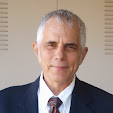
iwCLL 2013: Dr. Jeff Sharman Discusses the Practicalities of the New Prognostic Factors
In this short but rather technical discussion of the new diagnostic tests that is a follow-up to part one of my interview from iwCLL 2013 in Cologne, Germany, Dr. Sharman shares what he actually tests for in a patient who is considering therapy.
I started by challenging him that we have heard of these novel disease markers such as BIRC3, Notch 1 and SF3B1, but they are not discussed much outside of academic research, and even then, they are not tested for in most trials
Most of these new prognostic markers have just not yet made it from the research studies into the hematologist's office.
One important point that I want to linger on for a moment is the difference between a prognostic and a predictive marker.
Though the terms are often used rather loosely, and many markers are clearly both, there is a difference.
A predictive marker tells us patients how likely we are to respond to a particular therapy. A 17p or BIR3 or CYP2B6*6 warns us that our chance of a response to FC is markedly diminished.
Mutation status prognosticates how likely we are to need therapy and die too soon from our disease. Remember that all prognostic markers are prognostic for groups, not for individuals
While there is frequent overlap, it is a helpful distinction to keep in mind when considering our workup in advance of therapy. Obviously a marker that predicts that we won't do well with traditional chemo-immunotherapy carries with a bad prognosis if that is the only therapy our docs could offer.
But as you have heard over and over again, that dangerous bottleneck is rapidly expanding with the new treatments coming into use. Accordingly, the distinction becomes increasingly important and predictive tests may soon help guide choice of our therapy.
Here is Dr. Sharman:
One more sad note: I just found out that another CLL warrior lost the fight. George Martinez, whom I met and connected with in Columbus, Ohio, a fellow charter member of Team I (ibrutinib) who like me, flew to Ohio from his home in SoCal to join Byrdland, came to that drug after being badly beaten up by his CLL, its treatment, and multiple horrific infections.
I will miss his kind, funny, warm and generous ways.
We need to be looking at more than kicking the cancer down the road. We need to looking at reconstituting our immunity and preserving our marrow.
I hate this disease and want to see it vanquished!
Rest in peace, George.

I started by challenging him that we have heard of these novel disease markers such as BIRC3, Notch 1 and SF3B1, but they are not discussed much outside of academic research, and even then, they are not tested for in most trials
Most of these new prognostic markers have just not yet made it from the research studies into the hematologist's office.
One important point that I want to linger on for a moment is the difference between a prognostic and a predictive marker.
Though the terms are often used rather loosely, and many markers are clearly both, there is a difference.
A predictive marker tells us patients how likely we are to respond to a particular therapy. A 17p or BIR3 or CYP2B6*6 warns us that our chance of a response to FC is markedly diminished.
Mutation status prognosticates how likely we are to need therapy and die too soon from our disease. Remember that all prognostic markers are prognostic for groups, not for individuals
While there is frequent overlap, it is a helpful distinction to keep in mind when considering our workup in advance of therapy. Obviously a marker that predicts that we won't do well with traditional chemo-immunotherapy carries with a bad prognosis if that is the only therapy our docs could offer.
But as you have heard over and over again, that dangerous bottleneck is rapidly expanding with the new treatments coming into use. Accordingly, the distinction becomes increasingly important and predictive tests may soon help guide choice of our therapy.
Here is Dr. Sharman:
One more sad note: I just found out that another CLL warrior lost the fight. George Martinez, whom I met and connected with in Columbus, Ohio, a fellow charter member of Team I (ibrutinib) who like me, flew to Ohio from his home in SoCal to join Byrdland, came to that drug after being badly beaten up by his CLL, its treatment, and multiple horrific infections.
I will miss his kind, funny, warm and generous ways.
We need to be looking at more than kicking the cancer down the road. We need to looking at reconstituting our immunity and preserving our marrow.
I hate this disease and want to see it vanquished!
Rest in peace, George.

Labels: Chronic lymphocytic leukemia, CLL, Death, Dr. Sharman, George Martinez, interviews, iwCLL 2013, Notch1, predictive markers, Prognostic Markers, Video
posted by Brian Koffman at
12:12 AM
4 Comments