Sunday, January 19, 2014

iwCLL 2013: Dr. Byrd Discusses If and When to Stop and the Long Term Use of Ibrutinib

In this last part of my interview with Dr. Byrd from iwCLL 2013 in Koln, Germany, he speculates on the issues of long term risks of using ibrutinib, and the complex concerns about stopping the medication.

This segment's posting was delayed due to some technical issues, so please look back to the prior part one and part two to get oriented.

The updated news from ASH 2013 about the long term safety concerning ibrutinib continues to be encouraging. Most problems, including serious infections, occur most often in the first six months. The longer we take the pill, the fewer the problems.

The data on late relapses is still very thin because they are so few and far between, but it is clear that they do occur, mostly in the usual suspects, those of us who have been heavily treated or have high risk and unstable genomics such as deletion 17p or 11q.

Sadly, the Kaplan Meier curves are not longer straight lines going out towards eternal life, but they are still pretty great. Below are the ones from about six months ago from NEJM. The latest data is little changed.


KAPLAN MEIER CURVES FROM DR. BYRD'S ARTICLE IN NEJM 7/4/2013

Will they continue there downward droop? Will it accelerate? We don't know the answers yet.

Because every step down is a lost life, we are not being greedy when we want the great results to be even greater.

Dr. Byrd does make an interesting and important point about going off meds. Most relapses occurred in those who had only been medication for a short time, and without the selection pressure of ibrutinib blocking the BTK pathway, there is no survival advantage to mutating past it and therefore little likelihood that we will see that resistance develop off med. That's good news and if confirmed in clinical trials and hopefully soon, in real life experiences, could have major implications on how we dose the medication and control the cost.

Here is the video:


Since that meeting, we do have some answers to a few of the questions that were unanswered in Germany.

We know what the pills cost. About $91 each retail. About what was expected.

We are seeing some new interesting late side effects. In contrast to the minor annoyance of brittle nails, some of us are enjoying thicker, curlier and darker hair.

Maybe there is a whole new marketing opportunity for Pharmacylics and Janssen. Insurance may be hesitant to pay that kind of cost for control of cancer, but the price of vanity has no limits.

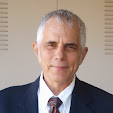
I will let you be the judge on the effects on yours truly.


Selfie from my Balcony 1/19/14

Labels: , , , , , , ,

Thursday, January 9, 2014

iwCLL 2013: Prof Hallek Discusses a Focused Role of Chemo-Immunotherapy

In this brief second part of a three part interview from iwCLL 2013, Professor Hallek precisely defines the populations that do well with chemo-immunotherapy.

It is important to keep in mind that it was only with the addition of rituximab, an anti- CD20 monoclonal antibody,  to a chemo backbone of FC, comprising together the "gold standard" therapy of FRC, that a survival advantage was first shown. Prior to the German study presented at ASH only a few years ago that proved FCR prolonged lives, no therapy had been shown to help us live a day longer.

At iwCLL 2013, we learn some very important new wrinkles on exactly who it is that benefits from FRC.

There should be no debate that the role of CIT (chemo-immonotherapy such as FCR or Bendamustine -Rituximab or BR) is shrinking. Who benefits is a shrinking pool of CLL patients with very specific demographics and FISH findings and the good news that they are mutated. This argues strongly that we should never consider FCR without first knowing our mutation status and our FISH results.

The debate is whether there is any role at all for CIT even in that select population.

The question how intense the CIT protocol should be or what is best approach may soon be moot with all the new kinase inhibitors changing everything, but at ASH 2013 a few months later we did learn that FCR has deeper longer remissions than BR but at the price of more toxicities, so the answer is as always in CLL: It depends on the patient. More on this ASH abstract later

Listen to Professor Hallek discuss who should consider CIT and who should not.

Labels: , , , , , , , , , ,

Thursday, January 2, 2014

iwCLL 2013: Dr. Michael Hallek Discusses Clinical Trials in Germany versus the USA and BR versus FCR

Happy New Year.

I am in Alameda, enjoying babysitting my 7 month old and 2 1/2 year old granddaughters. Needless to say, finding a second to get any work done is tough, but the joy of being with them makes my inefficiency a small price to pay.

Today, I am returning to share additional relevant interviews from iwCLL a few months ago.

In the first part of my interview on September 11, the last day of iwCLL 2013, Professor Hallek first discusses some of the differences in clinical trials on either side of the pond.

One subject Prof. Hallek does not mention is the greater willingness of European patients to be randomized in a trial. Canadians and Americans prefer more control in deciding their therapy, and that helps explain the generally lower accrual in North American studies that have two or more randomized arms. I admit that one reason I was drawn to my trial, the official title being,  An Open-label, Phase 1b/2, Safety and Efficacy Study of the Bruton's Tyrosine Kinase (Btk) Inhibitor, PCI-32765, and Ofatumumab in Subjects With Relapsed/Refractory Chronic Lymphocytic Leukemia/Small Lymphocytic Lymphoma and Prolymphocytic Leukemiawas that I was assured that I would be getting PCI-32765, AKA, ibrutinib, AKA, Imbruvica. Phase 3 trials rarely offer that certainty, unless there is a cross-over and that is a big ongoing issue.

Keep in mind that the  calculus of accrual is entirely different when we are looking at the new non-chemo agents, where trials offering some of the exciting new drugs have filled at record rates.

Also don't miss the professor's definition of young.

I like it.

Next, Prof. Hallek, presages with great accuracy what was going to be announced a few months later  in at an abstract presented in New Orleans at ASH 2013, namely that BR is gentler on the marrow, but less effective than FCR. His take on what to do with that data is the real gem in our conversation. Listen to how he describes tailoring of the therapy to the individual patient.

Dr. Jeff Sharman whose interviews have and will continue to pop up here, has a nice review of the ASH data on his excellent blog.

Here is Professor Hallek, who was very busy chairing iwCLL, so I very much appreciate his time.  Sadly when my flight to New Orleans was canceled, I had to also cancel my follow-up interview at ASH, but we get the full story here and from the abstract.

Many, myself included, wonder if the whole question of BR versus FCR is moot as the era of chemo-immunotherapy may be ending in CLL. We have spent many blog posts discussing this issue, and we aren't finished yet.

Here is Professor Hallek:


More soon.

Labels: , , , , , , , , , , , , , ,

Thursday, December 12, 2013

iwCLL 2013: Dr. Tom Kipps Discusses the Changing Role of Chemo-immunotherapy in CLL and the New Role of BCL-2 Blockers

Dr. Tom Kipps is my personal CLL physician and was announced the winner of the prestigious Binet-Rai award for his contribution to CLL research at the iwCLL 2013 meeting.

This interview from a few months ago provides important background to help understand and get perspective on the great news from ASH 2013 on ABT-199 that I will be reporting and analyzing here soon with the help of the many of the doctors who actually lead the research.

In the first part of this interview with Dr. Kipps in Cologne, Germany, he first lays out some of the groundwork of when not to use chemotherapy.

Next, he gives us some of the history of how BCL-2 blockers work. I love his cathedral and buttress analogy especially after walking through the beautiful and delicate cathedral in Cologne. It seems like only yesterday that I was there working at the iwCLL meeting and visiting the sights when I got a break.


Cologne Cathedral

Next he explains the risks of tumor lysis syndrome. Two deaths about a year ago that halted the trial for months. But it has restarted on was reported on at ASH.

And he touches us on the tricky area of how and when can we stop these meds.


Due to a technical glitch, the final part of Dr. Byrd's interview will have to wait.

I will be mixing videos and analysis from iwCLL and ASH over the next several weeks. So much to share.

Labels: , , , , , , , , ,

Saturday, December 7, 2013

iwCLL 2013: Dr. Byrd Discusses 17 p deletion with Ibutinib

I need to keep this brief. I am exhausted.

As my flight was canceled, I ended up on a red eye to Baton Rouge, then took a shuttle to NOLA.

Didn't even get to sleep much on the plane. There was a medical emergency in the row next to us so I offered my help. That kept me up.

All turned out well.

Back to iwCLL

In the second part of the interview with Dr. Byrd from Cologne, Germany for iwCLL  2013, we learn his ideas of how to approach patients with 17p deletion.

I am seeing a consensus growing that for the more high risk patients, monotherapy is probably not the way to go.

That said it is important to remember that all 17p were not created equally, and some, especially in mutated patients or those wit ha low percent of cells with the 17p deletion can follow a fairly benign course.

More on that later, but let's hear what Dr. Byrd has to say on the topic.


Though it was less than three months ago, it seems like so much has happened since.

ASH today was amazing. So much to share, with important papers and informative interviews. I want to dissect out a new treatment paradigm that Prof,. Hallek is promoting.

But first I will post most of the iwCLL stuff. It is too good not to share.

Still sick and bit hoarse from all the interviews, but I will survive.


Labels: , , , , , , ,

Thursday, December 5, 2013

iwCLL 2013: Dr. John Byrd Discusses the Role of Novel Therapies versus Standard Chemo-Immunotherapy

In the first part of my interview from iwCLL 2013 in Cologne, Germany, my doctor for my ibrutinib trial out of Ohio State (OSU) gives us his take on two of the pressing questions facing us patients.

First, what is the going forward role of chemo-immunotherapy?

Remember that FRC offers those with specific favorable markers a 60% chance of a greater than a nine years MRD negative survival. That is beginning to smell like a cure, but at what price?

Based on his experience with over 400 ibruitinb patients, listen to Dr. Byrd's take. He calls upon the experience with imatinib (Gleevec) in CML to illustrate his point. Not every agrees with Dr. Byrd, but I do.

Next I ask about the vexing issue of residual disease with these new agents. Dr. Byrd is not worried. Hear his reasoning.


On a personal note, I am off to a very frantic ASH meeting tomorrow. Expect on the fly updates.

Still sick and miserable, but I am not I will recover.  Coughing less with a normal chest and sinus x-rays More of a head cold now. I also have been hampered by a cracked computer screen and broken eyeglasses, but the show must go on.

Labels: , , , , , , , ,

Monday, December 2, 2013

iwCLL 2013: Dr. Jeff Sharman Discusses Richter's Transformation in CLL

In the final segment of my interview with Dr. Jeff Sharman discusses the dreaded complication of Richter's Transformation.

First he explains exactly what we are talking about and the importance of understanding the difference flavors of this sinister secondary blood cancer.

Why are we seeing more Richter's?

What is the future for those of with CLL?

Dr. Sharman was very generous with his time exploring these tough questions.

And I plan to prevail upon him again to update us from ASH next week.

But first I willing be posting many more interviews from iwCLL. So much news to share.

Here is Dr. Sharman. I so appreciate his making himself so available to the CLL community.


Personally, I saw my PCP today and he said my chest was clear. Great news. Still have a persistent cough, now dry and painful, but I am getting better. Voice is raspy, but I can talk, between coughs that is.

I am winning this battle will my allies of levaquin, cough meds, and pot after pot of a  hot tea made from mullein leaves, marshmallow roots, and slippery elm to sooth my weary throat.

Labels: , , , , , ,

Sunday, December 1, 2013

iwCLL 2013: Dr. Jeff Sharman Discusses Two Issues: 17p deletion and Residual Disease in CLL

In Part 6 of my iwCLL 2013 interview with Dr. Sharman who has a lot of experience with several of the promising new CLL agents, we look at some more unknowns.

He reminds us about how thin and immature the data is when looking at 17p deleted patients treated with either idelalisib or ibrutinib, but, and it is a big but, how encouraging it is compare to the historical data. In other word, how much much better it is than standard therapy such as FCR.

Another take away message is when we are comparing studies, make certain we are comparing apples to apples. Results with treatment naive patients will be much better than that with a group of patients who had been a round the block a few times.

And sometimes the enemy of good is better. His advice is sound and I echo it. Most of these new drugs are a great leap forward in CLL therapy. At least for now when not one of the new oral meds is yet approved for CLL, don't be too picky about which one you can get. Do your homework, follow the literature (or my blog and other reliable online sources), check clinicaltrials.gov, and make the jump if appropriate.

Dr. Sharman also raises the question implicit in the observation that those treated earlier, before we are badly beaten up by chemo-immunotherapy or by the disease itself, do much better. Should we treat with these new agents earlier?  Only more trials will tell.

And he has an interesting historical take on the issue of the residual disease.

Here I might respectfully differ with the doctor. These drugs work so differently than traditional chemo or even monoclonal antibodies, that we may need to radically rethink our assumptions about what residual disease means in terms of prognosis.

I personally hope so. My next CT will be 21 months after I first swallowed a bruton tyrosine kinase inhibitor named at that time PCI-32765, soon better known as ibrutinib or now as ImbruvicaMy nodes have changed little in the last few CT scans with gut nodes hanging around 4 centimeters, so the risks associated with residual disease are not a theoretical problem for yours truly. I may have reached my "maximum response", but maybe that is not such a bad thing. Again, only long term follow up with inform us.

Here is Dr. Sharman. Please see his other videos if you haven't already. Lots of good stuff in this segment.


Part 7 soon, and more interviews to come.

On a personal note, thank you all for your kind thoughts and prayers as I battle this nasty respiratory infection.

I think I have hit bottom, and am clearly getting better, albeit slowly with levaquin 500, a broad spectrum antibiotic, aboard. I am hardly well, but I am no longer getting worse. My fear of pneumonia is fading.

Labels: , , , , , , , , , , , ,

Saturday, November 30, 2013

iwCLL 2013: Dr. Jeff Sharman Outlines Options if You Need Treatment NOW

In Part 5 of my interview from iwCLL 2013, Dr. Jeff Sharman outlines what factors go into deciding  how to manage our disease NOW with these new drugs coming, but not here yet.

He lists many of the available trials for both treatment naive and relapsed refractory patients, focusing mostly on the two leading oral CLL drugs, idelalisib and ibrutinib.

As always your best source of finding out about the latest on the status of any clinical trials is visiting clinical trials.gov and don't be afraid to email the trial co-ordinator if you have questions. They want to hear from us. That's how they fill their trials. It is a very user friendly web site and should be part of your life.

There are some great options out there, and we need to know more. Our work is not done. We are not cured with any of these therapies. There are relapses late and early.

We need more clinical research to tell us what works best and most safely, but without us patients enrolling, all research halts.  No doubt the lightning fast FDA approval of ibrutinib, going from test tube to prescription pad in under 8 years, was facilitated by the dazzling rapidity of accrual in many of the important trials.

Please carefully consider investigating some of the promising trials of combination therapies with the better known novel agents or one of the newer less studied but very promising novel agents such as ABT-199 and IPI-145 or ONO-4059 and others.

Here is Dr. Sharman. If you haven't seen Parts 1-4 please scroll down or search under Dr. Sharman on my blog.


Part 6 and 7 are on their way.

And so are my interviews with Drs. Kay, Byrd, Kipps, Pagel and Hallek.

On a personal note, I am a touch sick again or still: a deep chesty cough and fatigue. We will see what the morning brings. If I am not better, time to break out for my "just in case" antibiotic.

Labels: , , , , , , , , , , , , ,

Wednesday, November 27, 2013

iwCLL 2013: Dr. Jeff Sharman Discusses Why We Feels so Lousy with Cancer

In Part 4 of my conversation with Dr. Sharman at iwCLL 2013, we start by discussing the lousy tired feeling that sadly so many of us are all too familiar with. And even more sadly, that too many community oncologists seem not to be familiar with or in total denial about our truth that CLL could be the primary source of our achy tired feelings.

When we understand about the cytokines released by our rogue cancer cells, we begin to understand why decreasing our tumor burden with standard therapy such as FCR, or better yet, blocking those cytokines with idelasilib or ibrutinib and others, can give us back out lives.

Many questions. No cookie cutter answers.

Do the new therapies change the threshold to treat?

Dr. Sharman touches on the dilemna of mono therapy with rituximab?

If you have not seen Parts 1-3, take the few minutes to acquaint yourself with the first segments of this wide ranging interview.

Start here with Part 1 where we discuss among other things, the emerging importance of pharmacogenetics in medicine in general and cancer in particular.

In Part 2, we move on to prognostic and predictive factors and the difference

Part 3, Dr. Sharman managing high risk disease.

And a heads up, Parts 5- 7 are very quickly on their way.

And more from Drs. Byrd and Kipps and Kay and Pagel.

And then on to ASH.

Dr. Sharman was incredibly generous with his time in Germany. I am very grateful and lucky that I get to do this work.

Enjoy listening to a thoughtful expert. I did.

.

Blessings to all my American friends for Thanksgiving. There really is much to be thankful for in the CLL community this year, but until we all have a seat at the table of deep and durable remissions, we have much hard work ahead of us.

And to all my friends from the Regina and surrounds, how bout them Saskatchewan Roughriders winning the 101st Grey Cup in North America's oldest professional sports league.

Labels: , , , , , , , , , , ,

Wednesday, November 20, 2013

iwCLL 2013: Dr. Jeff Sharman Gets Down to Discussing How He Treats Patients with High Risk Disease

In Part 3 of our conversation from iwCLL 2013, Dr. Jeff Sharman talks about how he approaches a patient with 17 p deletion.

This touches on the thorny issue of clonal evolution and the concern that treatment might lead to a Darwinian selection of the fittest, in this case the most resistant and probably the nastiest sub-clone of the CLL bunch.

Still, Dr. Sharman points out how the new biological treatments may force us to reexamine (and I do mean examine in a formal one) our long held beliefs about the inadvisability of early treatment.

Some of the new kinase inhibitors such as ibrutinib and idelalisib seem to have less of this risk, as they seem nearly as active on the high risk clones as in the more wimpy cancer cousins.

But there remains too many gaps in our knowledge to know what is the right thing to do, but we are moving forward at a rapid clip. And what may seem the best choice today, will certainly be different tomorrow.

Here's Dr. Sharman in part 3 from Cologne, Germany. If you haven't seen part 1 and 2 of the interview, please scroll down to the two prior posts.


More to come soon.

PS: I love the comment that my tie looks like gene sequencing. That made my day.

Labels: , , , , , , , , ,

Tuesday, November 19, 2013

iwCLL 2013: Dr. Jeff Sharman Discusses the Practicalities of the New Prognostic Factors

In this short but rather technical discussion of the new diagnostic tests that is a follow-up to part one of my interview from iwCLL 2013 in Cologne, Germany, Dr. Sharman shares what he actually tests for in a patient who is considering therapy.

I started by challenging him that we have heard of these novel disease markers such as BIRC3, Notch 1 and SF3B1, but they are not discussed much outside of academic research, and even then, they are not tested for in most trials

Most of these new prognostic markers have just not yet made it from the research studies into the hematologist's office.

One important point that I want to linger on for a moment is the difference between a prognostic and a predictive marker.

Though the terms are often used rather loosely, and many markers are clearly both, there is a difference.

A predictive marker tells us patients how likely we are to respond to a particular therapy. A 17p or BIR3 or CYP2B6*6 warns us that our chance of a response to FC is markedly diminished.

Mutation status prognosticates how likely we are to need therapy and die too soon from our disease. Remember that all prognostic markers are prognostic for groups, not for individuals

While there is frequent overlap, it is a helpful distinction to keep in mind when considering our  workup in advance of therapy. Obviously a marker that predicts that we won't do well with traditional chemo-immunotherapy carries with a bad prognosis if that is the only therapy our docs could offer.

But as you have heard over and over again, that dangerous bottleneck is rapidly expanding with the new treatments coming into use. Accordingly, the distinction becomes increasingly important and predictive tests may soon help guide choice of our therapy.

Here is Dr. Sharman:


One more sad note: I just found out that another CLL warrior lost the fight. George Martinez, whom I met and connected with in Columbus, Ohio, a fellow charter member of Team I (ibrutinib) who like me, flew to Ohio from his home in SoCal to join Byrdland, came to that drug after being badly beaten up by his CLL, its treatment, and multiple horrific infections.

I will miss his kind, funny, warm and generous ways.

We need to be looking at more than kicking the cancer down the road. We need to looking at reconstituting our immunity and preserving our marrow.

I hate this disease and want to see it vanquished!

Rest in peace, George.


Labels: , , , , , , , , , ,

Saturday, November 16, 2013

iwCLL 2013: Pharmacogenetics and Dr. Jeff Sharman Discusses New Prognostic Factors

In this interview from iwCLL 2013 with Dr. Jeff Sharman, a very clear teacher and community based cancer researcher, we learn about what I call the coming third generation of prognostic testing.

The first generation was staging, Rai in the USA, Binet in Europe, plus describing how the bone marrow looked liked under a microscope (degree and pattern of CLL infiltration), and some simple blood tests such as monitoring the rate of the rise in the lymphocyte count (doubling time), and B2M, a marker of disease burden.

Then we got more sophisticated (and expensive) with FISH testing, ZAP 70, CD38, and mutation status.

Dr. Sharman tells us what is coming next. An abstract of the Blood article that reviews some of this topic can be found here.

And the progress is not stopping.

Here's a new word we should all learn: pharmacogenetics or our unique genetic nature or phenotype that is concerned with how we metabolize medications. As we might easily infer, our individual pharmacogenetics has significant consequences on how well we respond to some therapies.

An article published last month in Blood, describes for the first time how this aspect of our genetic make up, specifically the subtype or allele of CYP2B6 that we carry, determines how well we convert a certain chemotherapeutic agent, in this case cyclophosphamide into its active form which in turn influences our response to that chemo. Not unexpectedly, those who have a low conversion rate not only do more poorly, but also have less adverse toxic events.

This  whole new area of medicine, pharmacogenomics is already important in cardiac disease where we can measure markers that tells us how and when we doctors should, but sadly too often are not, properly using certain blood thinners based on the patient's measurable genetic make-up.

UPDATE: More on the  gathering importance of pharmacogenetics from today's (11/19/13) New England Journal of Medicine (NEJM) here and here and here with an editorial here.

When the conservative and prestigious NEJM devotes most of an entire issue to a topic, we know that is an emerging hot topic. I am certain that this ill become an increasingly important arena in research in oncology precisely because so many drugs have such a narrow range of safety, and how we metabolize them might just determine the difference between toxicity or efficacy or no activity.

Let us return to listen to Dr. Sharman clearly explain some of these new prognostic tests that are emerging. I am particularly interested in his discussion of directly measuring the functionality of p53, rather than just look for a deletion. What matters to us patients is not the presence or absence of part of a single chromosome , but whether the anti--cancer gene is working or not.

Here's Dr. Sharman:


Part 2 soon.

ASH is coming so I want to be get most of the iwCLL posted here before.

Labels: , , , , , , , , ,

Sunday, November 10, 2013

iwCLL 2013: Part 2: Dr. George Calin Explains more about the Critical Role of micro-RNA in CLL

Besides addressing our critical importance of needing to understand the biology of our cancer in order to stop it, in Part Two of my interview from iwCLL 2013, Dr. George Calin of MDACC gives us a brief history lesson on micro-RNA and its relevance for us in unlocking the mysteries of CLL.

He also reinforces and enhances our modern understanding that CLL is not just about our stupid clone or clones, but it is all about how that stupid clone or clones prospers and evolves with the support of many helper or nurse cells that have been tricked into coming to the cancer's aid. Micro-RNA is one way all these cells communicate.

Anti-micro-RNA therapies are already being explored in other cancers. See my immediate prior post.

More than that, he touches on one of my favorite themes: the need to have better predictive tests so that we can individualize therapies. He visualizes a time when, by measuring these tiny "non-coding" pieces of genetic material in the blood, we will be able to better predict what therapies will work for which patients, saving much unnecessary treatments with all the attendant risk of collateral damage.

In the second and final part of the interview, Dr.  Calin expands on the research that he is doing to help all of with CLL.


The abstracts from ASH have just been released and I am going to be very busy reviewing and digesting and commenting on some of the major ones here, but first, in lead up to ASH in December, I have several more very relevant video interviews including hearing from Dr. Kipps, Byrd, Pagel, Kay, and Sharman from the iwCLL meeting in Cologne to post here over the next few weeks.

This is the last  iwCLL interview that is mostly basic science.  The rest are more "clinical" and more immediately relevant.

I will be attending ASH again, and welcome your suggestions for questions and concerns for when I meet with the leading researchers. Drop me an email or comment and I'll try to help. After all, we are all in this together.

Labels: , , , , , , ,

Wednesday, November 6, 2013

iwCLL 2013: Dr. George Calin on Micro-RNA

Dr. George Calin trained in Romania as a gastroenterologist, did ground breaking genetic research in CLL in the lab of the brilliant Italian born geneticist, Professor Carlo Croce, at Ohio State (where as you know I am  doing great in my clinical trial), and is continuing to unearth more secrets about our cancer at his lab at MD Anderson by studying what not so long ago was thought to be "too small to be important" tiny chunks of RNA, but that we know realize play a critical role in gene regulation.

In this first part of my two part interview from Cologne, Germany, I will let the "doctor turned scientist" tell his amazing story and begin to explain more of the basic science that will hopefully soon gives us more tools to outsmart our cancer.

We are so lucky to see this type of international and interdisciplinary collaboration. We patients all benefit and must do what we can to encourage more.

Medicinal specialties spend too much time in their own silos, and Dr, Calin's important work reminds us of what can be achieved when we work beyond our national and professional boundaries.

Enjoy and learn as I did.

Part two soon.

Labels: , , , , , ,

Thursday, October 24, 2013

iwCLL 2013: My Advice to Patients about their Therapy and How to Talk with Your Doctors: Shared Decision Making

It was a delight for me to be asked by Andrew Schorr on behalf of Patient Power to be interviewed in order to share the patient's perspective on how to use all the news from iwCLL 2013 in Cologne, Germany.

I particularly like the way he took the trouble to highlight some of my points with the superimposed text.

Over the next weeks, I will have many more informative interviews to post with Drs. Kipps, Kay, Furman, Hallek and others, but I thought I would first let you hear my counsel on how to best deal with your doctor appointments.

In the meantime, please let me know what you think of my suggestions and please add your own tips and advice to the communal discussion.

This is a tricky time. So many new CLL therapies on the way, but none of them are here today, except of course in clinical trials. The right approach will be different for each and every one of us. I hope this video gives some ideas on how to have the conversations that best inform our decisions.

My recommendations touch on "share decision making" or SDM, a critical and growing part of every patients' and doctors' future. It is even incentivized in the Affordable Care Act. Here one link that has a nice general discussion and video.


iwCLL 2013 Cologne, Germany

Labels: , , , , , , , , , ,

Saturday, October 12, 2013

iwCLL 2013: Dr. Jan Burger Discusses More Details on How the New Targets Therapies (TKIs) work in CLL

In the second of my three part interview with Dr. Burger out of MDACC, we get into some of the gritty details about how the new novel agents such as ibrutinib or idelalisib work in the nodes, blood and marrow.

This video interview assumes you know some of the basic of how these kinase inhibitors block homing, anchoring, and communication of our malignant B cells. For a refresher, see my earlier post from iwCLL with Dr. Burger

Here in part two of that same interview, he tackles the thornier issue of the effects of the novel small molecules in terms of clearing the marrow and also discusses what we know and don't know about their ability to directly killing the cancer cells.

We are still in the very early stages of this research, and the old cliches ring true about the more we learn, the more we realize we don't know.

Some may argue that we know that they work great and that's good enough, but until we get a better handle on how they work, what are their weaknesses and strengths, we run the risk that we may not be using them in the optimal way in terms of the combinations, sequencing and duration of therapy.

This is critical stuff, and we need to fill in the details to improve long term outcomes.

We know they are very active (that is medical talk for the fact that they work) and very well tolerated.

We know that they are kinder to the marrow.

What we don't know is how and when to best use them.

We are lucky to have so many fine doctor/scientists such as Dr. Burger interested in CLL research who can translate what they are learning in their labs to help the patients in their clinics.


More soon.

Labels: , , , , , , , , ,

Monday, October 7, 2013

iwCLL 2013: Dr. Jan Burger Discusses the Role of the Micro-environment in CLL: Part 1

On the first day of iwCLL 2013 in Koln, Germany, Dr. Jan Burger presented important basic science lab based research on how our CLL cells survive and grow in their protected niches and why it is so difficult to rid us of all the cancer calls, especially those hiding deep in our marrow and nodes.

His strong research along with the pioneering work of Dr. Tom Kipps and others helps us better understand the power of the new small molecules such as ibrutinib and idelalisib, and why we sometimes see the wild rise and slow fall of the absolute lymphocyte counts with treatment, particular with mono-therapy.

Without understanding the factors that influence the vulnerabilities and strengths of the evil clones that we are battling, we would never be enjoying the promise of the emerging targeted therapies. Instead. like the chatter for so many years at past ASH and iwCLL meetings, we would still be studying the best mix of chemo cocktails, admittedly often extremely effective, but coming packaged with all their collateral damage and long and short term risks.

We owe a great debt to all the bench scientist who are finding biological answers with potentially revolutionary clinical implications.

Here is the first of my three part interview with Dr. Burger from MD Anderson, Houston, Texas.


On a person note, today I saw Dr. Steve Forman, my transplant doctor from City of Hope for my twice a year follow-up. He agrees with the plan to taper the IVIG to every eight weeks and we have a plan to reduce my cyclosporin. More on all this later, after I get Dr. Byrd's sign off next week when I am back in Columbus.

Labels: , , , , , , , , , , , ,

Friday, October 4, 2013

iwCLL 2013: The Patient's Perspective

My friend and fellow CLLer, Andrew Schorr, asked to interview me to give  patient's perspective for his helpful website, Patient Power when we were both at the iwCLL meeting in Koln, Germany. I was happy to help.

When I attend these meetings I attend first and foremost as a patient, trying to learn what's new for myself and others with CLL, perhaps most importantly as an advocate, pushing patients' needs and priorities to anyone who will listen and who may have the influence to make a difference, as a doctor, gathering information to help my personal patients and to better understand the CLL disease state and its therapy as it relates to other similar medical conditions, as a reporter and blogger, bringing the latest news and interviews, and finally as an "on air" talking head in the video interviews.

No wonder I get tired.

Here's my interview with Andrew on my take from iwCLL. Enjoy.


Labels: , ,

Tuesday, September 17, 2013

CLL: Eight years and counting


"The whole world is a very narrow bridge. The important thing is not be afraid."
Rabbi Nachman of Breslov


Walking 30 feet up on a telephone pole at the Cancer Advocate Leadership Conference at Miraval
Thank you Escape and Bag It

It was eight years ago on September 7th, 2005 that I received the lab results that changed my life forever and was handed the diagnosis of the incurable (and soon after the added adjectives of aggressive and complex) chronic lymphocytic leukemia.

I have riffed on these anniversaries before, but this one almost passed me by un-noted.

Why? Because recently my focus has shifted from my personal struggles to my efforts to increase awareness of how CLL therapy is changing.

Yes, my personal future is still unclear. Yes, my CLL is still hanging out in my mesenteric nodes and a small percentage of my marrow. Yes, it has evolved into a nastier dance partner over the eight years of this waltz. No, I am not cured, just very well controlled.

Though I would obviously prefer to get off the dance floor once and for all, or at least have a more benign partner who is not always trying to trip me up, I am just fine with living with a well mannered cancer. Fine enough to spend more of my energies in shining a light that might guide others to similar happy outcomes. Fine enough to teach and advocate and support.

I am in the process of putting together my non-profit and working with other not for profits to move forward on the mission of smarter care for all those with CLL and related B cell cancers.

Of course, when I was at XViwCLL 2013 in Cologne last week, I paid close attention to the news and research that might impact my health personally. But the bulk of my efforts in Germany were outward. Please understand that that is not an entirely selfless or strictly altruistic act, but as many have argued before me, a recognition of how much healthier it makes me to share and spread my good fortune. It is so much better for me personally to look to the needs of the whole CLL community as well as my own.

So I almost missed my "anniversary" because my focus was on the future, not the past.

Stay strong.

We are all in this together.

I am moving later  this week, so my posts may be a bit more sporadic over the next weeks or so.

Labels: , , , , , , , ,