Sunday, March 9, 2014

The Sad and Untimely Death of my dear Friend Dragana: "Dying for Your Principles" or "Herbs versus Cancer is a Fixed Fight"

2011 in Wales
Dragana is wearing the red skirt

If tragedy is suffering without meaning, then I am trying to give meaning to the untimely death of this  beautiful woman on March 6, 2014. Please follow with me as I share the story of how our intertwined paths unfold. There is even a poignant cameo appearance by the late Dr. Hamblin.

I first met Dragana on her 40th birthday in the magical kingdom of Bhutan in 1997, and I last saw her over two years ago though we Skyped often until a few weeks ago.

Let me linger on our first encounter seventeen years ago to place out connection in the exotic, mystical, and Eastern space where it flourished for so long.

Went we met in the land of the the peaceful dragon half way around the world, my best friend, Todd and I were traveling to celebrate his 50th birthday to escape all the "Depends and Geritol" jokes and instead spend his half century mark visiting as an exotic place as possible.

Those days, the Buddhist kingdom of Bhutan was not receiving too many tourists (still isn't), especially in the monsoon season when we slipped and slid around in the thin air on the narrow and muddy Himalyan roads, but what it lacked in creature comforts it made up for in the beauty of the people and their country.

Then there was no TV and no lawyers, the national sport was archery, polygamy was common, and everyone wore the traditional clothing of a "go" and argyle socks and spoke the queen's English. As a potency talisman, there were pictures and sculptures of erect ejaculating penises everywhere hanging from rafters in people's homes, inside Buddhist temples and on the walls of government buildings. We drank yak milk and ate red rice. We never encounter a Yeti, but he and she can be found commemorated on the country's stamps. Wedged in the Himalayan mountains and valleys between India and China, Nepal and Bangladesh, the citizens proudly say it would be the largest country in the world if you could iron it out. 

The modern basketball loving king famously wants his government to increase the country's gross national happiness. Check out his website for the details.

It is also known since ancient times as the land of medical herbs. 

That is where Dragana fits in.

Dragana was part of a small ex-pat community working in the capital, Thimphu, as a third generation herbalist for the government helping to modernize traditional Buddhist herbal medicine.

She was standardizing and identifying active agents, checking for bacterial and fungal contamination, and cataloging ancient therapies.

She proudly told me that she brought the first elevator to the country, actually a dumb waiter to deliver the bulk herbs to the traditional hospital.

She was melding modern technology and science with ancient wisdom, something she was expert at.

Her knowledge of botanical and traditional Chinese medicine, her amazing talent as artist painting the plants that she so loved, her creative approach to raw organic vegan food, her dizzying personal energy, her ruthless ability to see though my sometimes facile notions, and her complete commitment to her herbal way of life has been a beacon in my life. 

We stayed in touch, at first by handwritten letters, then email, then phone and finally Skype. Though she was born in Croatia, she called England home and worked as an herbalist for Neil's Yard, a respected maker of various botanical products. My son Will once helped her pick wild lavender for one of her concoctions.

We met again in Spain when I was traveling with my same friend and my oldest daughter. I visited her twice in England, once with my two boys and yes the same friend (Todd and I have traveled a lot together), and the last time with my wife.

I remember us standing together in remote Druid stone circles in the rain at midnight or exploring the English country side for wild herbs and flowers or lounging in the sum In Parc Guell in Barcelona.

She visited the US with her friend Daphne (pictured above on the left) to attend my daughter's wedding and three of my four children visited her and stayed at her home in England. Just a few months ago, Dragana arranged for my oldest son to visit at last June's summer solstice celebration with the Druids at Stonehenge.

When she came here eight years ago for my daughter's wedding, she was one of the very few that I told of my cancer diagnosis one month earlier. She and Daphne immediately deconstructed my diet and my life, helped me shop for a juicer and order all the accruements of my new raw vegan lifestyle.

She had little faith in Western medicine, but I am proud that she would occasionally and reluctantly consult me on allopathic matters when her herbs were not strong enough.

When I visited her last, she had been diagnosed with cancer. I scheduled a trip to England to beg her to consider a likely life saving and curative surgery but she would have none of it. She came into the world with all her parts and she was leaving it the same way. We even all visited the wonderful CLL champion Dr. Terry Hamblin not long before he passed on from his colon cancer. (Dragana was in his living room with us in the picture from my memorial post). I had not prepped him in anyway, but somehow he came to tell us the story of how early in his career as as an oncologist he had had a patient that refused curative therapy for her cancer because she wanted to treat it naturally. She went on to die a needlessly horribly painful death from metastatic disease. I was moved by the story, but Dragana was not. She heard none of this. In fact, she felt sad for Dr. Hamblin and his sterile English diet and his trust in Western medicine.

She also heard none of my pleas to be open to all possible options to cure her cancer. She was clear and strong on this.

Instead, my wife and I traveled with her though southern England and Wales and had a marvelous time. 

Near the end, the terrible pain of metastatic disease caused her to relent. Palliative radiation bought her respite to revisit her home in Croatia. Hospice care with pain meds made sure she was comfortable in her last few months. Even then, when she was so weak that she could barely speak, she still refused most therapies and used her herbs to ameliorate many of her symptoms.

She lived and died in a consistent and valiant way, congruent with her whole life's work and philosophy.


Now she's gone and I will miss her powerful and haunting spirit. She opened my eyes to a bigger world and changed my whole approach to food and herbs and really healing. She also became a dear friend and mentor to my whole family.

I am so sad that she's passed and I so wish that I could have changed her mind so that I could plan another visit to her home in the beautiful English countryside to learn from her and to eat one more of her amazing meals. I want to chat on SKYPE with her tomorrow and get her counsel on diet and herbs while she scolds me on my out of balance life choices.

There is a huge part of me that is in shock that I have outlived her. My cancer is still for the most part incurable. Her's was not.

Even if I wish it wasn't so, I respect and admire her decision.

My backbone is less strong. Though I hate chemo, if there was a chemotherapy available tomorrow that would for sure cure my CLL, I'd be first in line. Heck if it was proven homeopathy, which in the face of it seems completely nonsensical, could get me a lasting remission, I would give it a try, even if meant standing my whole allopathic understanding of medicine on its head.

I believe we need to use what is proven to work, and when that is unknown, which is too often the case, we should use what makes the most sense to our hearts and our brains.

But I also believe we need to be open to change, especially radical change, as Dr. Hamblin would say, "think laterally".

The Talmud teaches we are to live by the commandments, not die by them. I generalize that principle to be pragmatic core of my flexible approach to healing. I am results oriented. Dragana was process oriented, committed to a balanced and "eastern" way of seeing the world. If and when our we ever meet again, I am sure we would lovingly disagree on who chose the better path.

In the meantime, I cherish the nearly seventeen years that she was my dear dear friend.

Every time, and this would be many times every day, that I eat a sprouted grain or drink a raw vegetable juice or thumb my nose at a GMO highly processed food, I will think of her.

Rest in peace, Dragana. You are a very special person.

Labels: , , , , , , , , , ,

Saturday, November 30, 2013

iwCLL 2013: Dr. Jeff Sharman Outlines Options if You Need Treatment NOW

In Part 5 of my interview from iwCLL 2013, Dr. Jeff Sharman outlines what factors go into deciding  how to manage our disease NOW with these new drugs coming, but not here yet.

He lists many of the available trials for both treatment naive and relapsed refractory patients, focusing mostly on the two leading oral CLL drugs, idelalisib and ibrutinib.

As always your best source of finding out about the latest on the status of any clinical trials is visiting clinical trials.gov and don't be afraid to email the trial co-ordinator if you have questions. They want to hear from us. That's how they fill their trials. It is a very user friendly web site and should be part of your life.

There are some great options out there, and we need to know more. Our work is not done. We are not cured with any of these therapies. There are relapses late and early.

We need more clinical research to tell us what works best and most safely, but without us patients enrolling, all research halts.  No doubt the lightning fast FDA approval of ibrutinib, going from test tube to prescription pad in under 8 years, was facilitated by the dazzling rapidity of accrual in many of the important trials.

Please carefully consider investigating some of the promising trials of combination therapies with the better known novel agents or one of the newer less studied but very promising novel agents such as ABT-199 and IPI-145 or ONO-4059 and others.

Here is Dr. Sharman. If you haven't seen Parts 1-4 please scroll down or search under Dr. Sharman on my blog.


Part 6 and 7 are on their way.

And so are my interviews with Drs. Kay, Byrd, Kipps, Pagel and Hallek.

On a personal note, I am a touch sick again or still: a deep chesty cough and fatigue. We will see what the morning brings. If I am not better, time to break out for my "just in case" antibiotic.

Labels: , , , , , , , , , , , , ,

Thursday, October 24, 2013

iwCLL 2013: My Advice to Patients about their Therapy and How to Talk with Your Doctors: Shared Decision Making

It was a delight for me to be asked by Andrew Schorr on behalf of Patient Power to be interviewed in order to share the patient's perspective on how to use all the news from iwCLL 2013 in Cologne, Germany.

I particularly like the way he took the trouble to highlight some of my points with the superimposed text.

Over the next weeks, I will have many more informative interviews to post with Drs. Kipps, Kay, Furman, Hallek and others, but I thought I would first let you hear my counsel on how to best deal with your doctor appointments.

In the meantime, please let me know what you think of my suggestions and please add your own tips and advice to the communal discussion.

This is a tricky time. So many new CLL therapies on the way, but none of them are here today, except of course in clinical trials. The right approach will be different for each and every one of us. I hope this video gives some ideas on how to have the conversations that best inform our decisions.

My recommendations touch on "share decision making" or SDM, a critical and growing part of every patients' and doctors' future. It is even incentivized in the Affordable Care Act. Here one link that has a nice general discussion and video.


iwCLL 2013 Cologne, Germany

Labels: , , , , , , , , , ,

Friday, August 16, 2013

CLL: Report From The Infusion Center


It has been six weeks since my previous infusion of IVIG for my now well-behaved ITP and my platelets remain near 400,000, a very healthy level. Post splenectomy counts tend to run a touch higher than normal limits but it certainly seems with these results, I can safely stretch out visits to the cancer center to every seven and then eight weeks.

Dr. Byrd is behind this as long as my trough IGG (immune globulin G) level stays > 600. That level is a bit below normal, but safe.

More good news.

My absolute lymphocyte count remains nice and low. Neutrophils remain rock steady. Monos remain a touch high. All good.

The only slight annoyance to an otherwise joyous lab report was the slight drop of my hemoglobin to 13.1, back into the mildly anemic range. Last time it was 14.4. The time six weeks before that was 14.6.

Those last two blood counts represented the first time since my hematopoietic stem cell transplant more than five years ago that I have had two CBCs in a row that showed no anemia.

However, if I look back to April 2013 my Hgb. was 13.2. 

I was hoping it would be staying in the > 14 gram range and maybe even start to climb to where it was pre-CLL in the high 15s, but it continues to bounce around in a narrow range of low normal to normal. I refuse to be concerned unless I see a downhill trend. What I see instead is this pattern of the same minor ups and downs over the last three years of blood counts.

I teach others that in most circumstances, one blood count in CLL means little. It is the trends that matter.

I will listen to my own counsel.

So no worries. At least until my next infusion seven weeks from now in October! My veins are so happy.

Talking about IVs, while here with a needle in in my right arm, I spoke with a young CLL friend doing well after HDMP+R (high dose methylprednisolone and rituximab) at UCSD with Dr. Castro who now is considering a Campath mop-up.  With his blood clean and no abnormal nodes, he has only < 1% CLL left in his marrow. He is less inclined, and I agree, to follow such a course with all the new meds in the pipeline. The calculation of the risk benefit ratio of prolonging the remission versus the real danger of serous infection from the knocking out of the B and T cell population with Campath may be shifting.

And I Skyped with a friend in Ireland whose wife with CLL has a growing solitary cervical node and a upper respiratory infection on the same side. We discussed the differential diagnosis with a reactive benign node (the typical nodes that swell in response to an infection) being number one, relapse number two, and Richter’s the least likely in the absence of a rising LDH and more malaise.  Also she was only received rituximab therapy in the past, has no high-risk deletions, and is mutated, making the last diagnosis even less likely.

I point these two cases out to remind us all that there is no one size fits all in CLL, and along the way, we are faced with a myriad of big and little decisions and worries.

Labels: , , , , , , ,

Tuesday, June 18, 2013

The Biggest Mistake Patients Make

The Biggest Mistake Patients Make

This is a link to an interesting post.

Even doctors are not immune to thinking anecdotally. Our personal mistakes and successes inform our future decisions and the advice we offer more than we might admit. It can be easier to remember a particular patient than a bunch of statistics.

One caveat: statistics are always blended data. Rare indeed is the CLL study on 57 year old females with exactly two prior chemo-immunotherpies who now needs treatment for enlarged nodes, but whose counts are good.

More likely we will see a study that takes all comers whatever the age or gender or indication for therapy. Maybe the trial only accepted those who have relapsed or who are under 65, but whether is a statistic or an individual, we need to assess carefully how similar their situation is to ours, and then discount or value the information accordingly.

We are always making decisions with imperfect knowledge. Knowing how to weight the value of what we do and don't know can help.

Labels: , , ,

Monday, October 8, 2012

Worrying

I am revisiting an old theme on worry and decision making. Maybe it is the recent death of my dear dear friend that evokes my need to again look inward. Old themes for me, but I needed a refresher course in mindfulness.

When we have cancer in general and CLL in particular, it is easy to imagine that any minor issue represents the tip of an iceberg that is going to sink our ship.

At least it is easy for me.

I can worry that my clogged ear could be due to a salivary or lymphoid tumor compressing my right auditory canal. Odds are way against it, I am not  really too concerned, but still my ENT wants me to have a MRI and it is scheduled tomorrow.

Could my pain in my calf on the elliptical trainer be from a sore muscle or is the first warning of a blood clot? Worrying minds want to know.

Is my occasional cough a well recognized side effect of my blood pressure medication, or is it telling me to get a chest x-ray to rule out something more sinister?

Is my rash dry skin or an early infection? What does this or that pain mean?

I suspect that I am not alone in these mind games. Don't we all let our fears gallop ahead of us?

It is so easy to catastrophize when we have cancer.

Mark Twain is quoted as saying:

"I have suffered a great many catastrophes in my life, most of which never happened."

Still we are admonished to stay vigilant, so cultivating the place of awareness without the worry is the goal.

Aware and calm. That is the sweet spot.

Some tricks to getting there include recognizing that most bad things progress, so anything with ups and downs is likely not the grim reaper sending ahead a search party.

With the critical exception of infections in those of us who are immune compromised, most bad things are bad from the get go and waiting a bit of time does not often change the final outcome. A delayed diagnosis is almost never fatal mistake.

So I do my best to acknowledge and then gently dismiss most of my worries and only check things out when they hang on and on or they get really annoying. And I remained detached. As best I can.

Another place that we must cut ourselves some slack and show ourselves some compassion is the worrying we do about our choices. In CLL, we are blessed to have some time to ponder and consider our decisions. But that extra time can give us a chance to over analyze and agonize.

This doctor or that cancer center?

This supplement or that diet?

CT scan or no CT scan?

FISH or cut bate?

Watch and wait or treat early?

FCR or BR or a clinical trial?

Transplant or CAR-T?

Is it safe to travel to Kenya or China or next door, eat sushi or drink grapefruit juice, visit the sniffly grandkids or a friend in hospital?

These questions big and small never stop, but the second guessing should.

None of us nail it every time. CLL is a slippery disease and it is constantly morphing. Even the big name gurus famously can't agree on much.

So let us forgive ourselves when we make what might seem at least in the short term to be a wrong move, and simply learn from it and move forward.

Congratulate ourselves on the good choices. We are still here, aren't we? We still have choices, don't we. The real trouble begins when we run out of options.

So the uncertainty is a good thing. The only things that are completely ordered are dead or divine, and although I believe we all carry a spark of the holy inside us, we are all fallible and faulty. Heck, we have cancer, the poster boy for chaotic dysfunction at the cellular level.

Still we are bumbling our way forward, groping for answers. The path ahead actually looks wider and brighter with more options coming online at an increasing pace. New therapies such as ibrutinib (PCI-32765) or GS1101(CAL 101) or CAR-T or new MABS open more possibilities and even more decisions.  This is all good,

We need to share our experiences, good and bad with each other because we can't do it alone.

After all, we are all in this together.

Labels: , , ,

Thursday, February 23, 2012

Lost Again

I am a bit lost these days.

I am in the trial, this trial that I pushed so hard to nab a precious slot and cajoled the insurance to cover an expensive out of state option.

Done deal.

Over the last few years when sadly it became all so clear that my transplant was not going to be my way out of the cancer dance, we have been waiting for just such a third chance, waiting for just such a trial. We have been saving up and preparing as best we could to manage all the out of pocket expenses and emotional stresses of flying back and forth and staying warm and dry in a city with a hard winter and sticking with my raw vegan organic diet outside the comfortable crunchiness of California.

I have read and scanned thousands of CLL articles and spoken with hundreds of fellow patients and scores of clinicians and researchers waiting for a new pathway out. In this case it is a pathway that is at once novel however you deconstruct it, be it molecular or therapeutic or modal.

Molecular: It is small molecule, small enough to get through the gut and into the cell unscathed, so you can take it in pill form. No infusions. It's not really even chemo. It doesn't kill, but blocks proliferation. Birth control for cancer.

Therapeutic: It's therapeutic response rate is near an amazing 90% in difficult to treat relapsed populations. And the longer you stay on it, the better the respond rate. Toxicities are low too.

Modal: It doesn't wipe out the cancer or even knock it back to undetectable levels, at least not at first. It may not even get you into remission. It just slows it down, it reaches a compromise with the nasty clone, so we all get along and live in harmony hopefully for a long long time

Is this a sea change in the molecular, therapeutic and modal approach to CLL? I am one of the "subjects" that should help answer those questions. I am betting yes and putting my body and my money where my mouth and pen is.

I got what I wanted. More than I could have dreamed of less than year ago when Dr. Furman when presented the preliminary data from his first in human trial of this new medicine, PCI-32765.

So why am I so lost?

Lack of clear purpose? A schedule full of so many permutations and combinations that my math and logic skills fail me? A domino effect that this decision effects that decision that effects the next and so and so on? Decision fatigue with so many mundane and critical choices shuffling around in my tired head for attention?

Maybe it is because my flight and lodging plans are less clear now than a week ago, but that's because of exciting new possible options?

Maybe it's the realization that I have lived with the fantasy for so long and now I am opening my body and soul to the reality that I am going forward? I am really doing this. The surrender of all that is possible in every moment to hard fact of the done decision.

I am not wavering. I am not panicked or depressed or even anxious.

I am just a little lost.

I will simply live here with this disorientation because I know it will be just fine. It is not that I am expecting some divine intervention or even an inspired secular EUREKA moment. Unlike one of my hero's Dr. Terry Hamblin, I am not one to "trust in G-d and think laterally". At least not the trust G-d part

Rather I know it will be fine because this "lostness" is ephemeral. It's real but of no consequence and is made of nothing. It is only a learning opportunity, not a place to hang out. I need to examine it and then it evaporates on its own.

It will definitely be gone by the time I touch down in Columbus in my winter coat with my wife by my side and my green tea and juicer in my baggage.

It will probably be gone much sooner.

This writing speeds the process. I am feeling less lost already.

No worries. Struggles, yes, worries, no.

Labels: , , , ,

Friday, February 17, 2012

Spiritual Discrimination

Spiritual Discrimination « Daat Elyon

http://daatelyon.org/2012/02/spiritual-discrimination/
Februray 17, 2012

Every morning, we begin our day with the following prayer:

“Blessed are You, O Lord our God, Who gives the rooster understanding to distinguish between day and night.”

The attribute of discrimination is a great blessing. Discrimination is a power of the mind. It is the capacity to look at any situation and analyze its component parts – to distinguish between day and night, right and wrong, good and bad, true and false.

The ability to discriminate is one of the distinctive characteristics of a human being. It is the key to our growth and evolution. It is only by discriminating that we can learn to make conscious choices in our life. As the Dhammapada states:

“A wise man calmly considers what is right and what is wrong, and faces different opinions with truth, non-violence, and peace.” [1]

Discrimination is essential in our relationship with others. We live in a world of appearances where the outer façade often belies the person underneath. Sometimes a person with a beautiful exterior is ugly inside, while an individual who outwardly looks ragged and unappealing is inwardly shining with light. It is important for the spiritual aspirant to learn to discriminate between a saintly appearance and true holiness.

Discrimination also plays a role in determining the activities in which we invest our energies and the surroundings in which we spend our time. Not all situations that are pleasant are spiritually beneficial. Some situations that appear congenial on the surface may have a negative spiritual influence. Some of the groups which call themselves spiritual actually have nothing to do with the life of the Spirit.

Our inner growth lies in learning to differentiate between platitudes and real spiritual truths, between sentimentality and true compassion; between the attitude that says “everything is the same” and an inclusive consciousness that embraces all of humankind.

People often become confused when trying to reconcile the spiritual truth that “all is one” with the harsh reality of our physical world. When asked about this conflict, Annamalai Swami, a disciple of Sri Ramana Maharshi, gave his students the following analogy:

“I once went for a walk near the housing board buildings. There was a sewage trench on one side of the building. I could smell the stench of the sewage even though I was a long way away. I stayed away from it because I didn’t want to be nauseated by the bad smell.

“In circumstances such as these you don’t say, ‘All is one. Everything is the Self,’ and paddle through the sewage. The knowledge ‘everything is the Self’ may be there, but that doesn’t mean that you have to put yourself in dangerous or health-threatening places.

“When you have become one with the Self, a great power takes you over and runs your life for you…If you are not in this state, then use your discrimination wisely. You can choose to sit in a flower garden and enjoy the scent of the blooms, or you can go down to that trench I told you about and make yourself sick by inhaling the fumes there.” [2]

A developed sense of discrimination is an essential part of the equipment of any serious spiritual seeker, without it all of our efforts may be in vain. Positive intentions and a desire to be good are not enough; we must also be able to see ourselves, and the world around us, with clarity. Otherwise, God will not take the chance of putting His powerful energies into our hands.

There is yet another level to the process of discrimination. In the spiritual life we seek to know not only what is good and bad, but also what is real and unreal; what is the Self and the “not self”. Here, discrimination is more than a capacity of the mind; it is a property of the soul.

Through the intuition, we learn to discriminate when the higher or true Self is at work and when the lower or “not self” is pushing itself forward; to differentiate between our own desires and God’s Will. People often believe that they are serving the Will of God when really they are only fulfilling their own wishes. It is a natural tendency to assume that what we want is what God wants as well. It is rarely the case that this is so. God’s plans for us often demand that we undertake actions that we do not wish to pursue. It is a real test of our humility when we need to put aside our own desires and accept what God wills instead.

In this case, discrimination means an honest appraisal of our abilities combined with a rock bottom assessment of where we are in our spiritual journey. It means differentiating between dreams and reality. It demands a willingness to sacrifice our illusions in return for a real job for God.

The attribute of discrimination has a great transforming power. Rebbe Ephraim of Sadilkov, the grandson of the Baal Shem, teaches that a person who has discrimination is able to completely change his nature:

“For the form must be like the one who made it: Just like the Maker of All created the natural world through wisdom, as it is written, ‘you made them all with wisdom’ [Psalm 104:24]… so a man of discrimination and true wisdom can create for himself a whole new nature…

“For example, if he was born with an angry and lustful nature, if he is a man of discrimination, he can change his nature and conquer his anger… as is written in Proverbs: ‘The discrimination of a man makes him slow to anger.’” (19:11) [3]

Rebbe Ephraim believed that the transforming power of the attribute of discrimination reaches beyond our own individual selves. He teaches that a tzaddik (enlightened soul) who has bound his mind to God can “change all natures – both physically and spiritually – for the good and for a blessing.”

The discrimination of a tzaddik has the power to influence others and help them to break free from their attachment to wishful thinking and illusion. By shining the light of commonsense into a situation, he shatters superstitious practices, ideas and beliefs. When his clear radiance is cast on that which is evil, it exposes the ugliness and lifelessness that lies at its core. And when it shines on that which is good, it reveals the vitality and inner beauty for all to see.

A holy person is the very embodiment of truth. Contact with a holy person purifies and uplifts the sight of those around him or her. Their minds become loosened from material confusion. They see the world with a new clarity. They begin to understand the true purpose of their existence, to intuit what is real and what is not.

Sri Ramakrishna used to tell his householder devotees:

Haven’t you seen the trees on the footpath along a street? They are fenced around as long as they are very young, otherwise cattle destroy them. But there is no longer any need of fences when their trunks grow thick and strong. Then they won’t break even if an elephant is tied to them. Just so, there will be no need for you to worry and fear if you make your mind strong as a thick tree-trunk. First of all try to acquire discrimination. Break the jackfruit open only after you have rubbed your hands with oil, then its sticky milk won’t smear them.” [4]

The faculty of discrimination is an essential element of our spiritual equipment. It instills within us the higher awareness that we need in order to live upon this material plane. It enables us to pursue the lofty life of the Spirit, while immersed in the tumultuous existence of this physical world.

Copyright © 2011, by Yoel Glick


Important discriminating essay. But I want more.

You say: "Through the intuition, we learn to discriminate when the higher or true Self is at work and when the lower or “not self” is pushing itself forward; to differentiate between our own desires and God’s Will. People often believe that they are serving the Will of God when really they are only fulfilling their own wishes."

That is the rub. How can you tell? From the mundane (Is the urge to skip exercise today my body saying you need to rest or is just being lazy?) to the profound (Will giving more charity to help those in need help them get going again or will it foster dependence?) What urges are divine and merciful and just are well disguised self serving drives?

How do you tell?

How we decide anything spiritual or material is where I am hanging out these days.

How do we sort it all out?

Labels: ,

Saturday, January 28, 2012

Novel Therapies and Their Integration into Allogeneic Stem Cell Transplant for Chronic Lymphocytic Leukemia Biol Blood Marrow Transplant 18:S132-S13

Dr. John Byrd is the lead investigator on the clinical trial NCT01217749 that is the reason I am flying to Columbus hoping to enroll to procure this exciting new therapy.

Anticipating the future, Dr. Byrd co-authored an important article (Novel Therapies and Their Integration into Allogeneic Stem Cell Transplant for Chronic Lymphocytic Leukemia Biol Blood Marrow Transplant 18:S132-S13) that articulate how the trial drug- PCI-32765 and other promising novel therapies may effect the time and place of transplants in CLL. It is a clear, thoughtful and accessible discussion that I strongly recommend.

On the eve of my departure for Ohio, I sent Dr. Byrd an email expressing how the uncertainty about the durability of the response to these new promising agents might be a good thing

Please tell me what you think.

Dear John,

Thank you for your thoughtful review of this important topic.

Implicit in your review of the evolving therapeutic paradigm for novel therapies and RIC HSCT in CLL is a shift in the calculation that each doctor and each patient must make when dealing with aggressive CLL .

Before the bloom of these new treatment options, an informed patient or hematologist could make a good faith calculation on what gives the better chance of PFS in five or ten years. Although it is always dangerous to compare data from one trial to that in another, and even more so to assume that statistics that are applied to a group can predict what happens to an individual, one could still study the Kaplan-Meier curves for a HSCT and any particular therapy and make at least a partially informed choice.

Now with the promise of the new treatments, the decision to consider a transplant has become more tricky for some. The K-M curves are known on the transplant side of the equation, but what the novel therapies will yield is based on extrapolation of very thin data. We are comparing a known to an unknown. Ironically, with the survival rates so poor for F refractory or 17p del disease, this "unknownness" is a source of hope for some patients and another reason for others with the aggressive or refractory CLL to consider a clinical trial over a more conventional route starting with chemotherapy and moving to transplant.

Thanks again.

Brian

What is implicit but not explicit in my letter to Dr. Byrd is how I myself employed precisely this hopeful calculus in my decision of the known versus the unknown.

As I leave tomorrow, I will keep you informed every step on the way.

Wish me luck.

It calls for snow in Columbus tomorrow.

Labels: , , , ,

Tuesday, January 3, 2012

There are lives in the balance

A painful truism in the practice of medicine is that nothing is ever casual.

No off the cuff remarks or comments are allowed. Non-medical people don't always get it. When a doctor says something, whether it is the clinic or the hospital or on the phone or in an email or during a meal or a hockey game, it has the potential to alter lives and can lead to actions that simply can't be undone. There are lives in the balance.

This is not the familiar G-d delusion that afflicts too many in my chosen field. It is the recognition of the awesome responsibility that comes with a little knowledge.

I don't for a minute believe what I say alone determines what others do, but I would be naive and self deceiving if I said I don't think I influence choices.

Today I was touched to the wick of my soul by a post from my friend Wanda on her Caring Bridge site by her thanks for nudging her towards her courageous choice of an "experimental" transplant protocol at Stanford.

I am simultaneously blessed and challenged by this burden with its mix of joys and sorrows.

This is not a burden that I can or would want to put down. A doctor is always taking a risk with someone else's health when he or she is less than thoughtful with a medical comment.

So my dear friends, please understand how hard I have worked to lighten up, to be comic force in the dark world of leukemia and all the existential decisions that diagnosis engenders. It doesn't come naturally. I am just fighting to balance both my innate and professional tendency to lead with all that possibly can go wrong.

I love what I can do and the world that my leukemia has opened to me.

I just get tired at times.

Heck, I am no G-d.

I am not even a specialist.

Labels: , ,

Monday, January 2, 2012

Answer from Dr.Steven Weinreb on why the quick transplant

Dr.Weinreb was kind enough to save me the phone calls and letters and post his response to my question as a comment. I have pasted his words here as I know some of you don't read every comment on my site.

Chaya Venkat and others have written about opportunity costs. Timing is so critical. Windows for many treatment options open and close quickly and with no warning. I always say you should get a transplant about a month before you need it, because when you need it, it may be too late.

Dr.Weinreb
clearly outlines his reasoning for his decisive and sensible and courageous move.

I like to think I would have done the same.

Thanks, Steve for your post. Best wishes in the new year. Stay in touch.

Dear Brian

Thanks for the kind words! I really had no choice. I relapsed 6 moths after Rituxan/ Fludarabine. I have an agressive disease, one that appears to be unresponsive to traditional therapy. We quickly found a molecular unrelated match, and i had no time to wait. The new therapies are promising, but the timing wasn't right for me. I am at day (+) 100, feeling well, no sign of GVHD. Good luck!
Steven

Labels: , ,

Wednesday, November 16, 2011

Fighting the hidden enemy- My big mesenteric CLL nodes force my hand

The disconnect between how well I might look and feel and the growing burden of cancer in my gut challenges my intuitions of how the world and leukemia works. Fighting the hidden enemies is my new imperative, one I can not ignore or wish away.

My doctors Forman and Kipps disagree on most everything, EXCEPT that I need therapy. Soon.

I will be spending the next 2 to 3 months deciding what to do next.

Doing nothing is not an option. Or at least not a very wise option, though it is certainly the most appealing in the short term.

I will not let this decision consume me, but will try as best I can to detach myself from the process and argue as I would for a friend or patient.

I will try to be calm in the face of imperfect choices and incomplete data.

I will try to look beyond the immediate horizons to the best possible future.

I will decide and move on.

I will, in the words of Jon Kabat-Zinn: Meditate, Act and Be Aware

Labels: , , ,

Saturday, November 12, 2011

Live from Dearborn: Travelog and a Gentle or Heavy Approach. Very Slight Revision

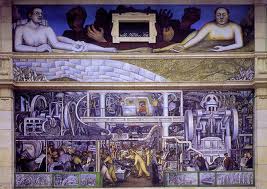
Rivera Court in the Detroit Institute of Arts

Karl asked I post a slightly more polished version with his signature.

It's worth reading twice.

I am in Dearborn, having just finished two days of lectures and little thought about CLL- Ask me about sleep apnea or migraine or circadian problems and I am all over it, but CLL has been happily off my radar screen for a day or two.

I am loving Hockeytown. There is a big hockey tournament in town so kids as young as 6 are found all through the hotel carrying their gear with help from lots of proud moms and dads.

There is also a Star Trek convention here.

Is this great or what?

Saw the powerful Diego Rivera Courtyard at the Detroit Institute of Arts and went to a wonderful activist Sabbath service in an old downtown synagogue, then enjoyed a decent raw organic vegan meal. I was the only one there over 30, and the patrons were diverse to say the least. Next store, crowds in T-shirts and shorts or clown outfits were braving the bitter cold for what seemed to be a rave- I asked one of the freezing guys waiting in the que to get in: DJs, circus, lots of dancing and laughs. Sounds like a rave to me.

Tonight it's Arab food. Dearborn has the largest Lebanese community on the USA.

And I leave for the airport at 4:30 AM. Almost not worth going to bed.

Here is Karl's revision:

Re: "If treatment for cure is necessary; is it possible? If possible, is it
necessary?"

~ Dr Willet Whitmore (on prostate cancer)

... Which seems to apply pretty well to the indolent lymphomas and CLL.
However, for most types of indolent lymphomas treatment is eventually, but
not always, needed. So there are two basic approaches to clinical care and
research.

One being to manage it with treatments that have lower toxicity - and only
as needed.

- With this objective it can be argued that one should treat earlier (when
the need to treat is not evident but expected soon) in order to have a
better chance for the less aggressive therapies to be effective - but also
because milder therapies generally are not as fast-acting and advanced
lymphoma can sometimes require a timely response.

The second goal is to treat the indolent lymphoma with intent to induce a
durable remission (and dare we say it, with a potential for cure) with more
aggressive combination therapy.

- Here treatment is generally deferred to when the need for treatment is
clearly indicated. However, waiting until the condition becomes too advanced
(bulky, causing symptoms) can sometimes limit therapeutic options and lower
the odds of achieving the best results.

Which approach is best? It's sometimes argued that it's better to conserve
one's "bullets" to preserve future options. However, it is also noted that
having a long remission increases your options - allows you to use even the
same therapy again when therapy is needed, and that this might better
preserve therapeutic options and lead to less treatment resistance compared
to using milder therapies more often.

So this is a big reason why --- for the indolent lymphomas --- there is NO
standard of care - no easy, one-size-fits-all formulas for how and when to
treat.

So informed choice is a process, which requires an objective understanding
of our clinical context:

1) The natural history - or anticipated clinical course for your type of
lymphoma,

2) The potential benefits and risks of the current standards of care,

3) An appreciation of the unique and sometimes changing individual risk
factors - such as one's age and performance, the changing behavior of the
lymphoma, or responsiveness to prior therapies.

The clinical context can influence how much risk is appropriate to take when
treating the lymphoma and also how appropriate it might be to ask about and
consider clinical trials.

Karl Schwartz
President, Patients Against Lymphoma
www.lymphomation.org

Labels: , ,

Wednesday, November 9, 2011

Gentle or Heavy Approach to CLL

Karl is an excellent researcher and a very clear thinker.

Take a look at what he has to say about the choices in an indolent cancer.
What would you choose?

This is the generic question I face.

Do I hit the CLL hard and then dash to a transplant, and be cured or die trying or perhaps worse get a new difficult and sometimes incurable disease, graft versus host?

OR

Do I gently rap the cancer's knuckles with a slightly bigger stick than the rituximab which is no longer doing the job, but hold off on the big clubs to avoid peripheral damage to my already compromised marrow and immunity? Probably that means a clinical trial.

Here is how Karl lays out the options. I will write soon on the specific details of what I need to deal with, what I can't ignore.

"If treatment for cure is necessary; is it possible? If possible, is it necessary?"~ Dr Willet Whitmore (on prostate cancer).

Which seems to apply pretty well to the indolent lymphomas and CLL.However, for most types treatment is eventually, but not always, needed.So there are two basic approaches to clinical care research for the indolent
lymphomas.

One being to manage it with treatments that have lower toxicity - and only
as needed.

- With this objective it can be argued that one should treat
earlier (when the need to treat is not evident but expected soon) in order
to have a better chance for the less aggressive therapies to be effective -
but also because milder therapies generally are not as fast-acting and
advanced lymphoma can sometimes require a timely response.

The second goal is to treat the indolent lymphoma with intent to induce a
durable remission (and dare we say it, with a potential for cure) with more
aggressive combination therapy.

- Here treatment is generally deferred to when the need for
treatment is clearly indicated - however, waiting until the condition
becomes too advanced (bulky, causing symptoms) can sometimes limit
therapeutic options and lower the odds of achieving the best results.

Which approach is best? It's sometimes argued that it's better to conserve
one's "bullets" to preserve future options. However, it is also noted that
having a long remission increases your options - enable you to use even the
same therapy again when therapy is needed, and that this might preserve
options and lead to less treatment resistance compared to using milder
therapies more often.

So this is a big reason why --- for the indolent lymphomas --- there is NO
standard of care - no easy, one-size-fits-all formulas for how and when to
treat.

So informed choice is a process, which requires an objective understanding
of our clinical context:

1) the natural history - or anticipated clinical course for your type of
lymphoma,

2) the potential benefits and risks of the current standards of care,

3) an appreciation of the unique and sometimes changing individual risk
factors - such as one's age and performance, the changing behavior of the
lymphoma, or responsiveness to prior therapies.

The clinical context can influence how much risk is appropriate to take when
treating the lymphoma and also how appropriate it might be to ask about and
consider clinical trials.

All the best,

~ Karl

Labels: , , ,

Tuesday, November 8, 2011

Big nodes

My MR showed that my gut nodes that have grown too big, and need attention. Counts are good except for a mild persistent anemia.

Kipps says I shouldn't ignore them or the ones he can palpate, but there is no urgency.

The next step is a bone marrow biopsy and then probably a clinical trial at UCSD. All in the next 60 -90 days or so.

Actually the next step is a nap. I always think clearer after a nap.

And I write better too.

It would be so great to get a long respite from decision overload. My longest rest from having to do something about my CLL was about first 12 months after I was diagnosed, and that hardly counts as I was running around getting contradictory opinions on what to do and not to do.

I could use a break from this chess game.

But that's not to be, and so I will nap and research and meditate and move on.

It is a much better time to be pushed to treatment than say 4 years ago when I went for my transplant. Many more effective low toxicity choices now.

But first, my nap. I love to nap, don't you?

ZZZZZZZ

Labels: , , , ,