Wednesday, May 27, 2015

Living With CLL (Chronic Lymphocytic Leukemia): My Personal Clinical Trial News and Travails from the James and My Take on IV versus Oral Therapies.
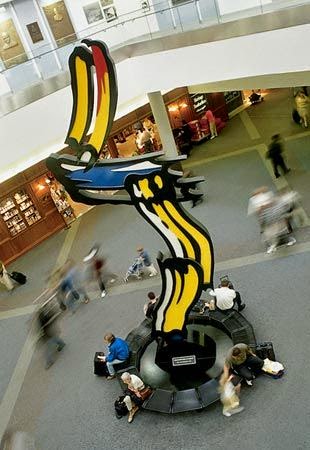

"Brushstrokes in Flight" by Roy Lichtenstein at CMH airport

If you want to skim through my long miserable travel story, and just get to the lab results and my reflections on all these goings-on, my feelings won’t be hurt.

Monday, May 25, 2015, I got out of bed around 5 AM after only 4 hours sleep in order to catch my early flight to Columbus via Dallas (DFW), so that I might arrive in Ohio (CMH) in time to spend some hours with a good friend over dinner.

All went well at the airport (breezed through security in 5 minutes) and with my first flight.

Little did I know that I would be spending time with news friends, my fellow travelers sitting on the tarmac for 3 hours the first time, and more than two hours the second time.

And I must have looked mighty strange during much of that hurrying up and waiting. Having somehow lost my N95 mask after the first flight, I wore the cloth eye mask that I had in my bag over my nose instead of using it for its true purpose of blocking out the light to allow sleep.

Torture by a million blows: 

First, after boarding the plane and a minute away from take off, comes the first 15 minute delay at the gate due to the rain that’s coming but not there yet, then another 30 minutes delay, and then more and more, then finally we are pushed out the gate as the ground crew are back in action now that the rain threat has passed, but when we get to our runway there are no longer any flight corridors to the north, so we wait and wait and wait again, then make the decision to make the long taxi to the other side of the airport for a take off on the still open longer southern route to our destination (FACT: DFW is bigger than the entire state of Rhode Island), only to wait again…. until we become too low on fuel to make it to Ohio, so back to the gate, where just before  things are looking as if we finally might get airborne, we next learn that our flight crew has just passed the “legal limit” of how long they can be at the controls, so we need a new pilot and first officer. More delays at deceptively optimistic 15-minute increments, until the final cancellation is not really announced, more just realized and we all march off the plane.

I am one of the lucky ones who left the long, long line at the unlucky gate and walked to the next open gate (a flight to NYC as I recall) where the helpful agent helped me grab one of the few remaining seats on the next flight out, originally scheduled for a departure about three and half hours after the first one.

I was OK with all this until the almost identical story started repeating itself on my second flight, right down to losing our crew as we were within minutes of departure.

Now I was starting to get panicky.

I was stuck at DFW. It was after 10PM and we had no crew. As a result of having no one in the cockpit, we, of course, had no air conditioning. No one could turn it on.

There weren’t even any flights available the next day that would get me to the clinic in time for an afternoon appointment. And I have my important IVIG infusion scheduled back in sunny California the day after. And the day after that, I’ll be off to Orlando, and the day after that, Chicago for ASCO. My dominoes were tightly lined up.

No clinical trial appointment at OSU would mean no more magic pills.

I was completely out of my ibrutinib, having stretched this clinic appointment to the maximum at 13 weeks. AND I had just read the ASCO abstract about increased relapses when we miss more than a week of pills. More on this critical subject later.

It got me thinking.

This cancer-controlled life is such a fragile construct and there are so many ways it can blow up. Let’s face it: Those of us with CLL that need treatment, especially in a clinical trial, especially in a clinical trial across the country, are high-maintenance and high-risk for something messing up.

Of course my dinner was canceled. And any food plans. No 7/24 vegan catering in Columbus.

But amazingly American Airlines did find a fresh first officer and about 45 minutes later, a new captain for my second flight.

That plane ride to Columbus ultimately left a little more than 8 hours later than planned and instead of arriving at 6:45 PM, I got in well after 2 AM. All the car rental stalls were closed. Got into bed at my friends’ house (without waking anyone up) around 3:15 AM and was up again at 6:45 AM for an 8 AM clinical appointment.

All of this with a lingering cold! And with less total sleep times in two days than total time on the tarmac.

But it all worked out.

And there were some unexpected surprises:

In Dallas, I was introduced to a wonderful 91-year-old women aviator, flight instructor and former WASP. At the request of her friends who discovered that we were on the same flight, I helped shepherd her through the same confusing mess that so many of were enduring. She was charming and full of great stories and she walked faster than I did.

When we arrived at CMH, she asked if I might help drive her home as we discovered she lived close to my friends’ home north of Columbus, so after some fumbling with the GPS in her new KIA parked in an offsite lot, I drove to my destination and she continued the less than 2 miles to her home.
At the clinic early the next morning, Dr. Byrd checked out my head cold and declared it was a head cold. No chest rattles or swollen nodes. No treatment.

My blood count was basically normal- borderline anemia, but all else was good including normal platelets. Blood chemistry was normal too, except for the usual low protein. That’s what happens when we don’t make immunoglobulins, so no surprise there

But I always seem to manage to find some cause for worry. My ALC (absolute lymphocyte count) was a very normal 2.48 but that is double what it has been over the last few years. It usually lingers around 1 or less. 

Why the jump up?

Could it be from my cold? You bet, but I still will be happier when I see that it is not the start of a trend.

(HAPPY UPDATE: ALC was 1.2 the next day back at my local infusion center at St. Jude Medical Center in Fullerton)

My small number of myelocytes probably also signifies nothing. You are not supposed to see any myelocytes in the peripheral blood

My LDH was just a tiny high too. 207 and normal tops out at 190. There are a million causes for that blip. Most are innocuous, but it can herald cancer resurgence when it climbs and climbs and climbs. Again it makes me more vigilant, but I know and I counsel others that the trend is your friend and will tell the tale, not one isolated and trivially elevated level.

Putting it all together (and more critical lab is pending) it probably doesn’t amount to a hill of beans, but I have been spoiled by a few years of mostly boring results.

One last sweet encounter to share:

As most of you know (probably to the point of annoyance at this point), I am vegan and eating on the road is always my personal challenge. Despite the heartening finds of lentil and kale/quinoa salads at DFW on Monday, unless I took some bold action, it looked like my food fare on the way home from breakfast until 10 PM when back in my own kitchen would be only the raw organic nuts, green teas, and the vegan cookies that usually accompany me in my carry-on bag for such contingencies.

CMH might have a fabulous Lichtenstein sculpture, but it is lacking in vegan cuisine. My connection in Phoenix is too tight to grab a snack even if there was an option.

So I sleepily waited at the James Cancer clinic after my appointment was done until the lovely Portia’s Café opened its doors at 11 AM, and then treated myself to a cab drive to to this Clintonville haven of delicious organic vegan and raw food. After a naturally sweet vegetal loose green tea, the tasty fortifying raw broccoli soup, a deeply satisfying gluten free raw hummus and sprout wrap and a to-die-for vegan chocolate “cheesecake”, my batteries were recharged. I wasn’t hungry any more.

The same cabby picked me.

Here’s the cool part of day two:

Magid, the cab driver, was born and grew up in Fez, Morocco and is a geography student. We talked and talked (some in English, some in French, none in Arabic) about his wonderful unique corner of the world that I have been lucky enough to visit twice. His wife has just joined him from Maroc.

He insisted on cooking me a vegetable tagine next time I am in town and I think I will take him up on the offer.

So despite all the delays and near panic and my dangerous lack of sleep (I wrote this on the first leg of my plane trip home), my travel adventure was full of some magical encounters, an on-time clinic visit and good news from Dr. Byrd.

I am flying home with 13 weeks of ibrutinib, and for my wife (SSSHHH!), two pounds of Tim Horton’s whole bean coffee and one squished apple fritter, treats for her that are woefully unavailable in southern California.

On a different note, please check out the CLL Society website today for the first of my monologues on therapy, this time on oral versus IV drugs. It’s a more nuanced decision than I thought when I first started researching the material for the post. The direct link is here and I would appreciate your feedback on this new format and content.

I think this is all working out.

My blog is reverting back to my personal story and where I postulate and pontificate however I want, sharing the good and bad.

The CLL Society website is evolving to be more about the facts and research news, their unpacking and contextualization in our effort to make them useful and accessible.

It is more effort to keep both going, but I believe they are both important in their own way.

What do think? Please let me know.


PS. We were sideswiped on our way out of the airport. Thankfully no one was hurt, but the rear and both door panels on the passenger side are going to need work. OY!

Labels: , , , , , , , , ,

Friday, December 6, 2013

ASH 2013: The Joys of Travel

What else could go wrong? Horrible respiratory infection (getting better), cracked computer screen (replaced), broken eyeglasses with a missing lens (found and repaired with one of those cheap kits you buy at check-out), and now our flight is canceled to NOLA for ASH 2013. Painful to have to cancel all the interviews that I had worked so hard to arrange, especially the very much in demand Professor Hallek. The best I could do after hours on hold has us arriving tomorrow morning on a pricy flight from LAX to Baton Rouge on a different airline. Then a long and expensive shuttle ride.

But I am busy texting and emailing and trying to reschedule what I can. And hopefully I can sleep a bit on the plane and shuttle.

Thankfully, most of the interviews don't start until tomorrow afternoon, but the rearranging means I may need to miss some of the lectures that I wanted to catch.

I can't do everything. Can't be everywhere at once.

I still expect ASH 2013 to be a stellar meeting for those of us with blood cancers, and I expect to be back in my stride by tomorrow.

This is all fixable stuff. No big deal. Minor annoyances. As those of us with cancer know too well, that is not something that we can always say.

Expect a brief update tomorrow, late.

Labels: , ,

Thursday, August 2, 2012

It's Always Something: Secondary Cancer Risk with CLL and CT scans

CLL is bad enough, but about half of us will get a secondary cancer and when we get them our overall survival is inferior. Skin cancers occur to more than one in three and a whopping 16.5% of us must deal with a melanoma.

Here is the gut of an abstract from ASCO this year:

546 CLL patients were included in the study. Median age was 62.5 years. 84 (43%) were Stage 0 and 62 (32%) were Stage 1 RAI at diagnosis indicating earlier disease. 266 (49%) patients had a second or secondary malignancy. A total of 304 cancers were identified. 14% of patients had more than one malignancy. Melanoma was identified in 44 (16.5%) patients and non-melanoma skin cancer was identified in 54 (20%). Lung cancer was identified as the most frequent solid tumor malignancy with 36 (13.5%) cases, followed by prostate (35), breast (21), colorectal (15), and bladder (14). 10 patients had a Richter’s transformation of their CLL. 26 patients developed either myelodysplastic syndrome or acute myelogenous leukemia. Conclusions: Second malignancies are frequent in CLL patients. Immunosupression, increased UV light exposure, longer life expectancy in low risk CLL, and tertiary cancer center referral bias are likely reasons for these increased rates.


And here's the conclusion of the one on how aggressive those secondary cancers can be:

Conclusions: Several common cancers, including breast, colon, and lung, have inferior overall and cancer-specific survival when there is coexistent CLL. 


And our risk is high even when compared to other B-cell cancers such as follicular lymphoma (FL)


Here's part of a Canadian abstract:


CLL patients had a 1.8-fold higher relative risk of a 2nd cancer (95% CI 1.29-2.41) compared to FL patients. SIR (Standardized Incidence Ratiowas 1.9 when non-melanoma skin cancers were excluded. Patients with FL had a similar incidence of second malignancies, as did patients with other invasive cancers. The most common second cancer among CLL patients was non-melanoma skin cancer, followed by cancers of the digestive organs, prostate, breast and lung. Malignancy was the leading cause of death in CLL patients. In patients with a 2nd cancer, cancers of the digestive organs, lung and brain were the most common causes of death. However, in patients without a 2nd cancer, CLL was the primary cause of death. After cancer, cardiovascular complications and infections were the most common causes of death in CLL patients.

And:

We demonstrated that CLL patients have a significantly increased risk of developing a 2nd cancer compared to FL patients, and this increase was similar in both genders and in all age groups. Thus, the poor relative survival of older men with CLL cannot be explained by an increased incidence of 2nd cancersThe increased incidence of malignancy in CLL may be related to the immune suppression in this disease or to an inherited predisposition to cancer.  


Five dear friends have had their CLL complicated by a secondary cancer is the last few months, two lung cancers, one breast, one prostrate, and one possibly renal.  Two are in ibrutinib trials and one is post transplant. Andrew Schorr, a well respected CLL patient and reporter has shared that he has developed MDS. I lost a friend a few years back to AML. And there are so many more.


Secondary cancers usually quickly vault into being the primary concern often demanding urgent therapy as the Canadian article notes. They are, after all, the leading cause of death in CLL.

I don't share this to depress you. I tell you because we are immune suppressed, many of us are on treatments that further compromise the ability of our immune systems to search and destroy potential and early cancers. A few of us must get EPO and other "growth" factors that might accelerate cancer growth. There is one possible positive. We often get more testing (see below re CT scans) that may facilitate finding new cancers sooner and more often.


And remember: we got CLL in the first place, which suggests at least a predisposition to one cancer. Maybe more?


So get your check-ups. See the dermatologist at least annually. Get our annoying choice of gender and age specific cancer screening tests: PAPs, mammos, PSAs, colonoscopies. We are not at normal risk. We are not the people at whom the recent relaxed recommendations for PSA screening were directed. We need to be more vigilant.


Next lab draw I get a PSA and I have a derm appointment scheduled. Colon is fine, thank you. It better be with all the fibrous veggies that I eat.


My news today from my ibrutinib/ofatumumab trial at OSU?  


Palpable nodes are slowly but surely getting smaller. Blood chemistries are completely normal including liver and kidney function and uric acid and LDH. ALC (absolute lymphocyte count) is down to a very normal 2.3, eosinophils are back to normal, platelets are just fine for someone with a history of ITP and single digit counts in the past at  a lofty 348,000, Hgb is almost normal at 13.0, reversing its prior slow downward drift. All good, very good.


So after four plus hours of my ofatumumab infusion, I will be leaving with my three bottles of ibrutinib. YEAH!


The trial protocol may be changing. Nothing is certain until there are written changes to the protocol approved by the independent IRB (Institutional Review Board) that is set up to safe guard us "subjects" from unethical or dangerous therapies.  


First the good news: After next month's and my last ofatumumab infusion, I probably only need to be here every 60 days. That makes perfect sense. 


Now the bad news which unfortunately is pertinent to today's topic of new cancers. I may no longer be able to opt out of the excessive CTs scan, every 60 - 90 days. Why do we need such frequent exposure to a proven cancer promoting procedure that is of questionable value in patients with CLL, already at higher risk for secondary malignancies? 


From the New England Journal of Medicine:


These considerations suggest that the estimated risks associated with CT are not hypothetical — that is, they are not based on models or major extrapolations in dose. Rather, they are based directly on measured excess radiation-related cancer rates among adults and children who in the past were exposed to the same range of organ doses as those delivered during CT studies. 


It is not that bad. The same journal does point out that the risk, while not insignificant, does dramatically decrease with age. Another advantage of being older; I am not likely to live the many decades it takes to get the secondary cancer. Dr. Rick Furman points out the data from that same article that states: One article published (NEJM 2007;357:2277-2284) suggested that the increase risk for developing a cancer during their lifetime for a 40 year old was 0.02% from a single CT scan. Thus, it would take 50 scans to increase one's risk by 1% if they were 40 years old."


I don't want to overreact, but there is no safe minimum amount of radiation.  The radiation exposure from each set of three CT scans ordered here are roughly equivalent to 12 years of background radiation. Do I really need four or six a year? And it is reasonable to assume that the negative synergy of having CLL and a lot of ionizing radiation might make the risks higher for us.


As for the role and value in CLL, from an article that Dr. Bryd co-authored in JCO:
VOLUME 25 􏰆 NUMBER 35 􏰆 DECEMBER 10 2007.


"Current NCI-WG CLL response criteria are a significant predictor of PFS in previously treated CLL patients, with no additional benefit from the inclusion of CT scans."


But there are other ways to look at the issue.


Also from JCO earlier in 2007:
VOLUME 25 􏰆 NUMBER 12 􏰆 APRIL 20 2007


"In this series, an abnormal abdominal CT was a strong predictor of progression in patients with early-stage CLL. The inclusion of CT scans in the initial work-up of patients with early clinical stage on clinical grounds can, therefore, provide relevant clinical information. "

But those of us in this trial are much more similar to the previously treated patients in the first of those two study from JCO.

Finally, again from Dr. Byrd referring to the demands to include CTs in clinical trials in an ASH publication in March 2011:

"The current requirement for CT scans remains problematic to interpreting new study results, as essentially all prior CLL clinical trials did not include CT scans. More importantly, these imaging tests add significant cost and potential morbidity to the very special patients who volunteer to be part of clinical trials exploring new treatment approaches. Reconsideration of the CT requirement in the setting of implementing detailed lymph node and spleen physical exams might offer an opportunity to match our new clinical trial approaches to methods best supported by evidence-based tumor assessment."


I know I am in a trial. It is to get important potentially life saving information, but as Dr. Byrd says so eloquently, trials are for patients, not the other way around.


If push comes to shove, and the imaging is a must to do to in order to receive my meds, then the choice is simple: it is a small risk for a big gain.


Moreover, if it helps get the drug approved sooner, so all those waiting for these game changing meds can benefit, then it is a small theoretical risk for a huge payoff.


Finally, small molecules such as ibrutinib and GS-1101, because they unanchor the B-cells from the safe home in the nodes and send them out in droves onto the less protected environment of the blood stream,  the ALC can shoot up.  That is normally a sign of disease progression with old school therapies, but is not usually the case with these new new drugs. Hence, the need to document shrinking nodes to prove that the therapy is working is even more critical with these treatments.


Still, isn't twice a year enough?


I even opt out of the total body scanners at the airports where the risks are at best minor and more honestly, unknown at this time, so I hope I can continue to opt out of my CTs here. TSA staff can get by with just patting me down at the airport to check for contraband. Why is essentially the same procedure for palpable nodes done by team of medical professionals not sufficient?  


A while back, I suggested to Dr. Byrd that he do a trial that once and for all compares the response to therapy of palpable nodes to that of the nodes seen on CT to see if we can eliminate need for all the scans. Seems even more urgent now.


Finished the airport at Phoenix waiting for my delayed flight home.

Labels: , , , , , , ,

Tuesday, January 24, 2012

Delayed in Dallas: Lesson for travel and CLL

Sometimes it seems being smart and having connections allows you to see the train wreck coming, but may not let you get off the train.

Still in Dallas trying to fly home from Orlando.

I was notified as we landed of the delay due to change of planes. That pushed back our departure just long enough to catch the start of the weather delay. Now we have been delayed three more times for mechanical issues. 10 or 15 minutes each time. I get test messages every 10 to 15 minutes with the latest update from American Airlines. But we all know that nothing on a plane takes 10 or 15 minutes, but they soften the blow with these mini delays until sometimes it's too late to do anything, to find another way home to the west coast.

I thought about taking a later flight out when I first heard of the trouble, but this flight was scheduled to leave two hours earlier so I gambled it was the better choice.

The joys of flying. I guessed wrong.

Sometimes CLL is like that. You might know that your FISH report is bad news, that the best option for a remission will whack your marrow, that infections are a significant risk, but what can you do?

You do your best is what you do.

Make a wise choice and hope for the good response without too much damage and keep moving forward. Sometimes you realize that maybe you didn't make the best choices, but you must forgive yourself and move on. How could you know, and even if you did know, it might not have made any difference.

The one advice I have for flying or tackling CLL is to keep your options open. Try to avoid the last plane home that night. Look at the departure schedule. Know your Plan B. Have your airline phone number on speed dial. And bring a few extra days of your meds just in case.

What about CLL?

Try not to close doors for future cancer treatments and try to walk through doors that open that might lead to a chance for a long healthy spell between decisions and delays. They may not stay open for long, so the timing of when to start therapy is always tricky. As I have said before, the best time to start therapy is a few weeks before you need to.

I will eventually get home. The mechanic is aboard. Maybe we can leave real soon? We were just ask to fasten seat belts so that's a very good sign.

I am off to Ohio State next week for my clinical trial assessment. No direct flights I am afraid between anywhere in southern California and Columbus. I chose to fly through Phoenix to avoid weather. I am optimistic that route was a wise choice.

But my real optimism is reserved for my banging the door open to Dr. Byrd's trial with PCI-32765 and ofatumumab, That I am betting will turn out to be a sea change of a wise choice.

I am finishing this post 30,000 feet up in the air nearing home, so all is well.

Labels: , ,