Sunday, February 28, 2016

Traveling Blues related to CLL (chronic lymphocytic leukemia)

Stairs to the beach at Torrey Pines State Nature Reserve

February may be an extra day longer this year, but that still doesn't justify my travel schedule.

I was in Charlotte, Tampa, and Atlanta this month to speak to patients and caregivers about the importance of a CLL support group. The meetings were successful beyond our highest expectations, and if the cards and the support line up, and I expect they will, we soon will be starting CLL specific support and education groups on the east coast with strong  local enthusiasm and support.

When I am on the plane, I wear my N95 mask and using prodigious amounts of hand sanitizer to preserve my health.

I was in cold and snowy Columbus at Ohio State for my CLL clinical trial (more on that in a later post). It is not easy to leave warm and sunny Socal for the snow.

I was in Dallas for just a few hours at the airport to meet others to discuss the changing nature of medical education for family doctors.

And I drove to San Diego twice. The first time was for a wonderful meeting with a fellow CLL patient who is doing important and worthy work to educate and counsel those fighting a major illness or dealign with a serious life event (much more on that later too).

The second trip (that gave us time to hike at the beautiful Torrey Pines State Nature Reserve on the way down) was to attend the two day international CLL Research Consortium (CRC) meeting with folks such as Drs. Kanti Rai and Bill Wierda and Neil Kay and Tom Kipps and John Gribben and Matt Davids and Mike Choi and Cathy Wu and Jeff Jones and Januario Castro and Jennifer Brown and Carlo Croce and Nick Chiorazzi and Philip Thompson and Jackie Barrientos and many many others. What a privilege to be there and to hear their ideas on new research directions and to be able to insert a patient's perspective.

Many of the trips saw me flying across the country for only a few hours before scurrying home.

All this time in planes and cars is crazy and unhealthy and expensive and inconvenient, and very very tiring, but I do it because when there are these opportunities to make an impact or learn something or forge a new alliance, if I can go, I will try to be there.

March sees me in Denver and Dallas, back to San Diego again to see Dr. Kipps, and a quick trip to the beach.

I will be speaking at the LLS Blood Cancer Conference in Anaheim on March 19. This is a great conference for patients and caregivers. Tanya Siddiqi from the City of Hope will be talking about CLL. Those who heard her at our City of Hope CLL Patient Forum in December know what a great  speaker she is and how deeply she understands CLL. Try to attend if you are in the area.

The CLL Society will again have a table there so please say hello. Last year's LLS Blood Cancer meeting was our "coming out party", and this year we get to brag about all that we have accomplished in our first year and our plans for 2106 as a non-profit.

Yes, it has been and will continue to be crazy with seven trips out of town in the month (and one I didn't include on January 27), but today, I have nothing except for some phone calls that I must do on my schedule.

I plan to enjoy my down time listening to the Beatles and some be-bop and then going for a long walk.
Sunset at Torrey Pines on our way to San Diego

Labels: , , , , , ,

Thursday, October 17, 2013

Ups and Downs: Time to Under React Again


My blood count has gone from anemic to normal to anemic and back to normal all in about two weeks.

My platelets remain nice and high near 400,000, my ALC (absolute lymphocyte count) remains nice and low at about 1.0 Even at that low count, the sensitive flow cytometry done six months still showed the cancerous clone at very low levels. My T cells and the CD4/CD8 ratios are all healthy. My neutrophils are normal and my monos are as always a bit high, a potential marker of a recovering from a damaged bone marrow. But more on that story later.

My blood chemistries were all within normal limits. To all but the most astute observer of my labs, there is no hint of leukemia.

My wife says it’s the high iron in the blackstrap molasses that she uses to bake Cajun gingerbread that has cured my anemia.

I say it was lab error that caused it. Or a lab variation. Four different doctors and three different labs in two different states. I am not expecting agreement, even on the basic numbers.

After years of these ups and downs, I am finally practicing what I preach and underreacting to these blips.

My hemoglobin today at 14.2 grams is within one gram of where it has been for the last few years – somewhere in the range of 13 or 14 grams. Long gone are the days of blood counts near the top end of male normal 15-17 grams. I have to go back to August 2009, about one year post-transplant days when I topped out at 16.4.

In 2010 through 2011, while my CLL and ITP were advancing and I was clearly a sicker patient than I am now, my Hgb jumped around 12.7 and 15, but for with a few exceptions, since Dec 2010, it has been mostly hanging in the 13-14 range.

My bone marrow obviously took a hit with the chemo-immunotherapy (FCR) for the conditioning for my transplant in July 2008, but it was only one week and you’d think it would have fully recovered by now.  The lowest it ever got post transplant was an amazing resilient 10.2, to me a sign at the time that I had not been hit hard enough with chemo and ATG (see my prior posts on this topic from the weeks following transplant) to clear out my marrow of my own stem cells to make room for the donor cells to engraft. Sadly my worries turned out to be dead on and I rejected the graft and got none of the benefits or risks of the potent and potentially curative graft versus leukemia, but on the good side, I never had any graft versus host disease, and I have been never transfused. My hemoglobin had started to climb and stay above 12 grams just 60 days post transplant.

Water under the bridge. Eight years with an aggressive CLL and only one week of chemo in that time.

I think of myself as pretty lucky.

Ready to learn a little basic nonmalignant hematology? Don’t fret. It’s easy, logical, and will help you understand your own blood counts.

For a long time I was slightly macrocytic (macro or bigger than normal red blood cells or in medical talk, a greater than normal mean cell volume or MCV for short). They are many causes for that finding including low levels of vitamin B12 and folate, but the one that gets my attention is a damaged marrow that can lead to a too common complication of CLL and its old school chemo treatment, a nasty cancer deceptively named myelodysplastic syndrome or MDS. CLL itself probably increases our risk of this secondary cancer. So does FCR. The macrocytosis has been less of an issue recently, but the reason may be my lowish iron (veggies have lots of iron, but it is not easily absorbed as is the iron in a juicy steak). Anemia from low iron tends to be microcytic (that’s right, micro or small red cells- you see that hematology terminology is not that difficult). So when the red cells go through the automated “Coulter” counter, some are too big and some too small, so the average is normal. Hematologists have a few ways to look for that possibility and one is even automated. They review the RDW, or the red blood cell distribution width, a freebie and part of most CBCs (complete blood counts). When all the RBCs (red blood cells) are the same size the RDW is usually in the normal range. In an anemia of mixed causes, the RDW can be high. Mine is high.

But I am not anemic, so it’s all moot. Just something to keep an eye on. Abnormal RDW and MCV are not often significant and don’t usually deserve a work-up in the absence of anemia.

I walked you through this to help you understand how a doctor thinks about these things, even when there are not “action items”. Just sniffing the air, looking for trends that might portend future dangers.

In the meantime, I under react. Know our options, keep exploring, and have a plan. Don't give up.

On an entirely different scale, for the second week in a row, I have been rerouted on American Airlines coming home. Twice, first time in Atlanta, next in Columbus, I have breezed through the TSA pre-screen security, twice I was upgraded to first class, twice I has thinking this flying ain’t so bad and twice my bubble was burst because twice, my flight was so delayed by mechanical issues that I needed an entirely different route home. Today, due to changing delays and missed connections, I was booked on a total of four different air route to various nearby airports in California as I was informed that there were absolutely no seats left on any flights to Orange County. I didn’t have a ticket home until I left the secure gate and the overworked gate agents who by their own admission were in over their head, walked out past the TSA security zone and went to the American Airline ticket counter where a smart agent nabbed me a seat home though Chicago instead of Dallas. Not first class anymore, but who cares, I get home the same day.

Had I arrived at LAX as I was at one time rescheduled at 5:10 PM on a workday, it would have added at least two hours and $40 for a “stop everywhere on the way home” shuttle, so I am very grateful to the helpful staff at the ticket counter in Columbus. 

Under react. Know our options, keep exploring, and have a plan. Don't give up.

Labels: , , , , , , , , ,

Monday, May 20, 2013

Personal Travels


With ASCO (AmericanSociety of Clinical Oncology) and EHA (European Hematology Association) upcoming, a significant backlog of abstracts to review, promised synopsis of critical issues, important editorials, and still some videos from ASH, I am going to grab this moment at the airport in Orlando to update my crazy spring.

First the biggest most important news:

My oldest daughter gave birth this weekend to our second beautiful granddaughter. Mother and baby are doing great (if you don't consider the sleep deprivation), and I am flying to Alameda to meet the newest member of our happy growing family. I can’t wait to hold her and smell her and kiss her.

Sydney Lilah

It is being alive for moments such as this that remind me why I fought so hard to travel across the country a year ago leaving the California sunshine for an Ohio winter, uprooting my wife and myself for months, and risking a new unproven therapy to knock back my CLL and ITP. But my calculated gamble has been an unmitigated success, offering me chances to see so much more than I could have dreamed possible. And no sight will be sweeter than my new grandchild.

Now that baby has safely arrived after a very quick and natural labor and delivery, my schedule is a little more solid.

This frantic spurt of travel started at the end of April with my trip to Columbus, Ohio for my treatment. I stayed a few extra days due to scheduled CT scans, an opportunity to tour of the new hospital and Dr. Byrd’s wonderful lab (the highlight was meeting the bright and enthusiastic PHDs, MDs, and other lab staff), meals with Dr. Byrd and other friends, new and old, and an amazing Mark Rothko exhibit at the Columbus art museum.

Rothko

When back home, I had time to catch a hockey game (Go Kings Go) where the Kings beat St Louis in the Stanley Cup playoffs, before driving up to the Bay area to help my then expectant daughter and son-in-law with the toddler. That didn’t stop me from flying to Vancouver, Canada for a few wonderful days of a west coast all boys high school reunion (UTS or University of Toronto Schools) that included kayaking in Deep Cove, a gondola ride to the snow and the grizzly bears at the top of Grouse Mountain, and poignant memories.

Deep Cove, British Columbia

Now I am writing this post from a plane leaving Orlando where I attended a two day primary care medical conference.

Once back in the bay area, I will be driving back to Orange County for a day or two, then onto San Diego for one day for more learning.

Before the next week is over, and after spending time at the office, getting trained on a new EHR (electronic health record) module, and visiting the infusion lab for my life saving IVIG and a routine check-up with my local CLL doc, Dr. Sharma, I will be leaving for five nights in Chicago to cover ASCO with Andrew Schorr and Patient Power. So far Drs. Byrd and Wierda are aboard for interviews and several other familiar faces are very likely. I will also be interviewing experts on other hematological malignancies and on some solid tumors for Patient Power.

Only two days after ASCO, things get real crazy. I will be driving up to Santa Clara to lecture with Dr. Steven Coutre out of Stanford on anemia and MDS (myelodysplastic syndrome), a too common complication of CLL and its treatment. From there, just hours after I finish, I drive to SFO to fly to Stockholm for only three days to share my experience with ibrutinib from a patient’s perspective just before the EHA meeting (European Hematology Association), then rush back to the bay area the day before I leave for Chicago to see my younger daughter, just back from her delayed honeymoon in Spain and Morocco.

After another brief visit with my daughter, son-in-law and the grandkids in Alameda, the drive to SoCal gets me home in time for more doctors’ visits, clinic hours, a local CLL support group, seeing my son Ben off to Stonehenge for the summer solstice with the Druids, all followed by a two days car trip to La Jolla for more medical education conference, this time on heart failure organized by UCSD.

A week earlier, my son, Will is flying to Israel for 10 days, and I hope to arrange a meeting up with my bone marrow donor.

The next weekend I am in Baltimore for more med. ed., and the extra bonus of catching the Max Weber exhibit at the Baltimore Museum of Art.

This is the last year of my CME cycles in Canada and the USA, and I must squeeze in a lot of hours to meet my requirements. Now I have to overload my credits to catch up before the end of June. Poor planning and other priorities lead to this crisscrossing of the country.

July 3, I have been ask to lead a CLL support group for UCSD on their campus in San Diego.

In between, I have scheduling and planning teleconferences and the Stanley Cup Playoffs.

No more travel is scheduled for July until I need to be back in Columbus, Ohio again in the third week, and I am so looking forward to not leaving home for a few weeks.

This frenetic pace is not sustainable or healthy. I nap often at the hotels and on the planes. I wear an N95 mask and gobs of hand sanitizer. I treat myself to the best vegan meals I can find on the road ( which is not saying much) and I always try to see more of the town that I am visiting than the hotel lobby. In Orlando, I hiked though a lush swamp with catfish and egrets and Spanish moss that was just minutes from the silly shopping malls and alligator miniature golf courses near my hotel. No amusement parks for this traveler.

Shingle Trail, Orlando

Then I took a long nap.

I bring my comfort foods (organic raw nuts and fine Japanese green tea), meet old friends, do work that I love, and have a rare opportunity to make a small but meaningful difference in the world.

This schedule was an extraordinary confluence of opportunities and my inability to say no to spread the word about how cancer treatment is changing. I admit there is desperation to all this journeying, but I know my time is limited and I want every moment to matter.

If I was more at peace, perhaps I could sense the gravity and power found in standing still, like a mountain, like a master, but I am still a breezy soul.

Labels: , , , , , ,

Friday, February 1, 2013

ASH 2012: Dr Jeff Sharman interviewed about the new treatments in CLL


My friend and fellow CLLer, Andrew Schorr did a very nice and interesting interview of Dr. Jeff Sharman at ASH 2012.

Dr. Sharman brings up some new and provocative insights on how the researchers misstepped when searching for a specific genetic target in CLL similar to the famously fused Philadelphia chromosome of CML that Gleevec blocked and in doing so, produced low toxicity, durable remission. This breakthrough drug, this targeted oral therapy, revolutionized not just the management of CML, but the whole approach on how we treat or too often, wish we could treat cancer.

As you have heard many times, in CLL, it is more complicated. In CLL, it all about “turned on” pathways than need a brake applied rather than a specific genetic defect. However, as our knowledge of the activated cellular pathways of the cancerous B cell clone improves, so does our ability to intervene. That brings us to the new generation of small molecules including ibrutinib (PCI-32765), idelalisib (CAL-101 or GS-1101), AVL 292, ABT-199 and others in the pipeline.

He shares his experience of one of of his highly refractory patient finally responding to one of the new trial medications and another where idelalisib worked when ibrutinib failed.

He cautions us that it is way too soon to pick winners among the new molecules.

Some of Dr. Sharma’s tropes you have encountered before from the doctors I spoke with at ASH. It is good to witness the building consensus.

Some of you may know Dr. Sharman from his well-written, informative blog on blood cancers and lymphoma. Check it out if you haven't already. You should also know that he has been a pioneer in small molecule research and an energetic force in developing resources to get clinical trials done.  He talks about their paramount importance right now. He forecasts the end of the world of FCR as we know it. He reflects on how well these drugs work for even those with the worst prognostic markers.

Dr. Sharman asked me if I wanted to share the video. I am, of course, happy to get the word out however I can.

So enjoy and take heart.


Soon I will be posting my ASH interviews with Drs. Furman, Kipps, Wierda, and Wiestner.

On a personal note, I am home from a medical conference in San Francisco, but just for a few hours before I take off again to lecture in San Diego.

My health insurance has me in a ridiculous Catch 22. I can not get pre-authorized for my roll-over clinical trial at OSU that continues my lifeline of ibrutinib until I sign the informed consent, but I can't sign the consent until I am ready to roll-over into the new trial. All but two insurance companies that cover the myriad of patients from far away places that come to OSU for trials understand the fallacy of such a policy and do not insist on the signed consent, but mine is one of the two that makes it difficult.

That said, I am sure it will all work out (retroactively) with the help of some real kind, persistent, and hard working people at both OSU and Blue Shield. Just one more thing to worry about in the meantime.

On Monday I leave for cold Columbus to finish one trial and begin the new continuation trial. While there, I will be busy with a bone marrow biopsy, another photo shoot and interview. Guess which one I am not anticipating with joy. Hint: there there will be no camera or recorder involved, but there will be needles.

Labels: , , , , , , ,

Wednesday, October 31, 2012

So much to share: All of it good.


Fall colors in Columbus, Ohio

Let me explain some of the reasons there are long gaps in my writing.

I am off to Detroit on my own tomorrow to lecture on myelodysplastic syndrome. It will be the 8th different city I have visited in 6 weeks, not including stops at airports and a second trip to Columbus. My agenda still has trips to Columbus x 2, Oakland, Sunnyvale, Chicago, and Atlanta.  Most will be taken as a lone road warrior, all before the end of the year. There is even a small chance of another trip for CME, maybe to NYC in December. Thank goodness that the last lecture on CLL to primary care that I am giving this year is in Anaheim, just a short drive away. January and February look almost as crazy. Medical education work in San Francisco, La Jolla, Springfield, MO, and Washington, DC, and pleasure trips to Ireland and Costa Rica. I am glad to be well enough to do all this traveling.

When I am in town, I am busy seeing patients and doctors and family.

I am left doing much of my reading and writing on planes and in airport these days. Thank goodness for my MACBOOK AIR, though the solid state hard drive is getting pretty full.

Let me bring you up to date by starting with my trip almost two weeks ago to OSU for my ibrutinib trial Clinical Trial NCT01217749.

I could not get out of the CT scans without risking losing my spot in the trial. That made the decision easy.

I refuse the dental x-rays, the body scanners at the airport, and whatever I can, but in one day I have essential five sets of CT scans. It is a small price for access to ibrutinib.

If my biggest complaint is the excessive CT scans and travel needed for the trial, I must be doing rather well.

My news from Ohio and the ibrutinib trial was super.

On the too many CT scans Oct 19,  they found no enlarged cervical nodes. Nothing at all. Nada. Rien du tout.  This is a huge change for the better.

The largest axillary node had shrunk just a little to 2.1 x 1.3 cm and was the only node >1.3 to be found.

The chest remained free of adenopathy as is the usual case in CLL in general and me in particular.

The gut and pelvis is where I had had massive nodes before. The largest node, portal caval, (near the large vein draining the liver, a common site for cancer laden nodes), is still entirely too big at 4.4 x 0.9 cm but it had shrunk from 5.5 x 1.5 cm since June. That is about a 50% drop in area in 90 days. Still a ways to go, but that bad boy had started at 7.3 x 3.3 cm in March. It is less than 20% of the size it was when I started on the trial. One particularly nasty mesenteric node that was over 10 cms six months ago is now only 0.9 x 2.4. No wonder my tummy feels lighter.

And thankful, no surprises. No secondary cancers lurking in the kidneys or liver or lungs. Friends have not been so lucky as I have shared on prior posts with unwelcome findings on the scans.

Well, there is was actually one small surprise, not completely unexpected. My spleen is growing back. This is not of any clinical significant, as my ITP remains well controlled with cyclosporin and IVIG, but will need to be watched. More on that subject later.

Physical exam and blood pressure are all what you want them to be: boring.

Labs are normal except for a mild anemia.

I am hardly cured or even in a complete remission, but every single node has shrunk each time it has been imaged, and by any definition, I am in a deep partial remission.

Ibrutinib seems to be continuing to perform as it best publicity suggests it should for the majority of those in trials. It decreases the tumor burden at a slow and steady by shrinking the nodes where the cancer is most active and productive, and certainly in my case, most prominent. I never had very high lymphocyte counts, but had massive painful nodes. There is every reason to believe, based on those ahead of me in the study, that this painless cancer shrinkage and control should simply continue for who knows how long.

In three short months, my visit to OSU will include more CT scans and a bone marrow biopsy, then the OK to roll over into the continuation trial.

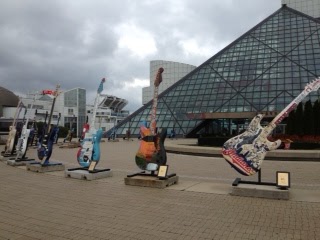
So to celebrate I stopped at the Rock and Roll Hall of Fame on my way home via Cleveland, and spent half my too short visit at the Beatles display. A splendid time was had by all. I highly recommend it.


Rock and Roll Hall of Fame, Cleveland. Ohio

More soon with the truly wonderful news and pictures from my daughter's, Heather, wedding last week in Chicago.

Life is good.

A great middle eastern meal with an important and kindly MDS expert and the amazing Diego Rivera mural and more at the Detroit Institute of Art await this weekend.

But honestly, I would rather be at home reading and writing and walking on the beach and eating organic raw food.

Labels: , , , , ,

Thursday, August 2, 2012

It's Always Something: Secondary Cancer Risk with CLL and CT scans

CLL is bad enough, but about half of us will get a secondary cancer and when we get them our overall survival is inferior. Skin cancers occur to more than one in three and a whopping 16.5% of us must deal with a melanoma.

Here is the gut of an abstract from ASCO this year:

546 CLL patients were included in the study. Median age was 62.5 years. 84 (43%) were Stage 0 and 62 (32%) were Stage 1 RAI at diagnosis indicating earlier disease. 266 (49%) patients had a second or secondary malignancy. A total of 304 cancers were identified. 14% of patients had more than one malignancy. Melanoma was identified in 44 (16.5%) patients and non-melanoma skin cancer was identified in 54 (20%). Lung cancer was identified as the most frequent solid tumor malignancy with 36 (13.5%) cases, followed by prostate (35), breast (21), colorectal (15), and bladder (14). 10 patients had a Richter’s transformation of their CLL. 26 patients developed either myelodysplastic syndrome or acute myelogenous leukemia. Conclusions: Second malignancies are frequent in CLL patients. Immunosupression, increased UV light exposure, longer life expectancy in low risk CLL, and tertiary cancer center referral bias are likely reasons for these increased rates.


And here's the conclusion of the one on how aggressive those secondary cancers can be:

Conclusions: Several common cancers, including breast, colon, and lung, have inferior overall and cancer-specific survival when there is coexistent CLL. 


And our risk is high even when compared to other B-cell cancers such as follicular lymphoma (FL)


Here's part of a Canadian abstract:


CLL patients had a 1.8-fold higher relative risk of a 2nd cancer (95% CI 1.29-2.41) compared to FL patients. SIR (Standardized Incidence Ratiowas 1.9 when non-melanoma skin cancers were excluded. Patients with FL had a similar incidence of second malignancies, as did patients with other invasive cancers. The most common second cancer among CLL patients was non-melanoma skin cancer, followed by cancers of the digestive organs, prostate, breast and lung. Malignancy was the leading cause of death in CLL patients. In patients with a 2nd cancer, cancers of the digestive organs, lung and brain were the most common causes of death. However, in patients without a 2nd cancer, CLL was the primary cause of death. After cancer, cardiovascular complications and infections were the most common causes of death in CLL patients.

And:

We demonstrated that CLL patients have a significantly increased risk of developing a 2nd cancer compared to FL patients, and this increase was similar in both genders and in all age groups. Thus, the poor relative survival of older men with CLL cannot be explained by an increased incidence of 2nd cancersThe increased incidence of malignancy in CLL may be related to the immune suppression in this disease or to an inherited predisposition to cancer.  


Five dear friends have had their CLL complicated by a secondary cancer is the last few months, two lung cancers, one breast, one prostrate, and one possibly renal.  Two are in ibrutinib trials and one is post transplant. Andrew Schorr, a well respected CLL patient and reporter has shared that he has developed MDS. I lost a friend a few years back to AML. And there are so many more.


Secondary cancers usually quickly vault into being the primary concern often demanding urgent therapy as the Canadian article notes. They are, after all, the leading cause of death in CLL.

I don't share this to depress you. I tell you because we are immune suppressed, many of us are on treatments that further compromise the ability of our immune systems to search and destroy potential and early cancers. A few of us must get EPO and other "growth" factors that might accelerate cancer growth. There is one possible positive. We often get more testing (see below re CT scans) that may facilitate finding new cancers sooner and more often.


And remember: we got CLL in the first place, which suggests at least a predisposition to one cancer. Maybe more?


So get your check-ups. See the dermatologist at least annually. Get our annoying choice of gender and age specific cancer screening tests: PAPs, mammos, PSAs, colonoscopies. We are not at normal risk. We are not the people at whom the recent relaxed recommendations for PSA screening were directed. We need to be more vigilant.


Next lab draw I get a PSA and I have a derm appointment scheduled. Colon is fine, thank you. It better be with all the fibrous veggies that I eat.


My news today from my ibrutinib/ofatumumab trial at OSU?  


Palpable nodes are slowly but surely getting smaller. Blood chemistries are completely normal including liver and kidney function and uric acid and LDH. ALC (absolute lymphocyte count) is down to a very normal 2.3, eosinophils are back to normal, platelets are just fine for someone with a history of ITP and single digit counts in the past at  a lofty 348,000, Hgb is almost normal at 13.0, reversing its prior slow downward drift. All good, very good.


So after four plus hours of my ofatumumab infusion, I will be leaving with my three bottles of ibrutinib. YEAH!


The trial protocol may be changing. Nothing is certain until there are written changes to the protocol approved by the independent IRB (Institutional Review Board) that is set up to safe guard us "subjects" from unethical or dangerous therapies.  


First the good news: After next month's and my last ofatumumab infusion, I probably only need to be here every 60 days. That makes perfect sense. 


Now the bad news which unfortunately is pertinent to today's topic of new cancers. I may no longer be able to opt out of the excessive CTs scan, every 60 - 90 days. Why do we need such frequent exposure to a proven cancer promoting procedure that is of questionable value in patients with CLL, already at higher risk for secondary malignancies? 


From the New England Journal of Medicine:


These considerations suggest that the estimated risks associated with CT are not hypothetical — that is, they are not based on models or major extrapolations in dose. Rather, they are based directly on measured excess radiation-related cancer rates among adults and children who in the past were exposed to the same range of organ doses as those delivered during CT studies. 


It is not that bad. The same journal does point out that the risk, while not insignificant, does dramatically decrease with age. Another advantage of being older; I am not likely to live the many decades it takes to get the secondary cancer. Dr. Rick Furman points out the data from that same article that states: One article published (NEJM 2007;357:2277-2284) suggested that the increase risk for developing a cancer during their lifetime for a 40 year old was 0.02% from a single CT scan. Thus, it would take 50 scans to increase one's risk by 1% if they were 40 years old."


I don't want to overreact, but there is no safe minimum amount of radiation.  The radiation exposure from each set of three CT scans ordered here are roughly equivalent to 12 years of background radiation. Do I really need four or six a year? And it is reasonable to assume that the negative synergy of having CLL and a lot of ionizing radiation might make the risks higher for us.


As for the role and value in CLL, from an article that Dr. Bryd co-authored in JCO:
VOLUME 25 􏰆 NUMBER 35 􏰆 DECEMBER 10 2007.


"Current NCI-WG CLL response criteria are a significant predictor of PFS in previously treated CLL patients, with no additional benefit from the inclusion of CT scans."


But there are other ways to look at the issue.


Also from JCO earlier in 2007:
VOLUME 25 􏰆 NUMBER 12 􏰆 APRIL 20 2007


"In this series, an abnormal abdominal CT was a strong predictor of progression in patients with early-stage CLL. The inclusion of CT scans in the initial work-up of patients with early clinical stage on clinical grounds can, therefore, provide relevant clinical information. "

But those of us in this trial are much more similar to the previously treated patients in the first of those two study from JCO.

Finally, again from Dr. Byrd referring to the demands to include CTs in clinical trials in an ASH publication in March 2011:

"The current requirement for CT scans remains problematic to interpreting new study results, as essentially all prior CLL clinical trials did not include CT scans. More importantly, these imaging tests add significant cost and potential morbidity to the very special patients who volunteer to be part of clinical trials exploring new treatment approaches. Reconsideration of the CT requirement in the setting of implementing detailed lymph node and spleen physical exams might offer an opportunity to match our new clinical trial approaches to methods best supported by evidence-based tumor assessment."


I know I am in a trial. It is to get important potentially life saving information, but as Dr. Byrd says so eloquently, trials are for patients, not the other way around.


If push comes to shove, and the imaging is a must to do to in order to receive my meds, then the choice is simple: it is a small risk for a big gain.


Moreover, if it helps get the drug approved sooner, so all those waiting for these game changing meds can benefit, then it is a small theoretical risk for a huge payoff.


Finally, small molecules such as ibrutinib and GS-1101, because they unanchor the B-cells from the safe home in the nodes and send them out in droves onto the less protected environment of the blood stream,  the ALC can shoot up.  That is normally a sign of disease progression with old school therapies, but is not usually the case with these new new drugs. Hence, the need to document shrinking nodes to prove that the therapy is working is even more critical with these treatments.


Still, isn't twice a year enough?


I even opt out of the total body scanners at the airports where the risks are at best minor and more honestly, unknown at this time, so I hope I can continue to opt out of my CTs here. TSA staff can get by with just patting me down at the airport to check for contraband. Why is essentially the same procedure for palpable nodes done by team of medical professionals not sufficient?  


A while back, I suggested to Dr. Byrd that he do a trial that once and for all compares the response to therapy of palpable nodes to that of the nodes seen on CT to see if we can eliminate need for all the scans. Seems even more urgent now.


Finished the airport at Phoenix waiting for my delayed flight home.

Labels: , , , , , , ,