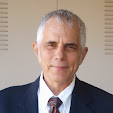
An expanded version of some reflections on my experience as a doctor and as a patient in Canada and the USA was published in today's
3/17/10 10:53 PM
Washington Times - KOFFMAN: A prescription for life or death?
Page 1 of 3
http://www.washingtontimes.com/news/2010/mar/17/a-prescription-for-life-or-death//print/
Dr. Brian Koffman
The ongoing health care debate is of more than academic interest to me. It is not an exaggeration to say that if I still lived where I was born, in Ontario, I could be dead.
As a board-certified family-medicine doctor, educator, dual citizen of Canada and the United States, and a patient with a dangerous blood cancer, I have seen medical care from both sides of the examining table and both sides of the border.
I am fiercely proud of Canada, the country of my birth. I am forever grateful and in debt for my world-class education as a medical doctor at McGill University in Montreal, Quebec.
But I cannot return to Ontario, where I started my medical career, until I am convincingly cured of my own medical problem, an aggressive form of chronic lymphocytic leukemia (CLL). I must happily stay in California, my adopted and beloved home for the past 30 years.
I just can't take the chance with my health.
The drug that saved my life, rituximab, is very expensive (thousands of dollars per cycle on either side of the border, but admittedly more in the United States) and is not covered by the provincial health insurance plans in much of Canada, despite large, well-designed studies that have proved clearly that it is the critical piece of the only treatment known to extend life with my type of leukemia. In my case, I developed a bleeding complication and without rituximab as part of my therapy regime, my status was, as we doctors are wont to say, "guarded."
Because rituximab is paid for in only some Canadian provinces, it has created what Bill Hryniuk, past chairman of the Cancer Advocacy Coalition of Canada, has called a "postal-code lottery for cancer drugs." Live in a province that covers the medication, and you get state-of-the-art treatment.
Live elsewhere, and your care is clearly inferior. That is just the truth.
I would love to see universal heath care coverage. It is the compassionate and moral thing, but it is only fair to point out the negative effects of the economic realities that universal care would impose.
It comes down to whom you cover versus what you cover.
You must make those hard decisions in a world of limited resources. To think otherwise is naive.
Universal coverage courageously extends its umbrella to all the population, but shouldn't it also cover all proven therapies? Canada's situation proves you can't do both, and lives are lost as a result. Give us universal care, and we will all be covered, but all that coverage had better be cost-effective. What care is good enough, and what is too expensive? What is your life worth? Don't delude yourself. Someone will be deciding, for you, sooner or later.
Cutting expensive care seems very sensible until you or a loved one is the one in need.
Those who speak of savings from preventive care have not studied the history of the roll-out of universal care around the world. It doesn't happen. Very soon, rationing care will be part the equation, with decisions made by distant committees that examine not the patient, but the bottom line. I left my practice in Canada because there was always a powerful, if unseen, third person in the consultation room, the government, telling me what I could and could not order.
True, insurance companies are already doing this, but they are regulated and must extend the best possible standard of care. To whom will you appeal when the government health care bureaucracy says no? I like the present checks and balances that insurance competition and government oversight offer.
There are two other concerns that are close to the heart of anyone like me with an "incurable" disorder looking for a better future yet to be invented.
The United States spends an estimated 5.6 percent of its total health expenditures on biomedical research, more than any other country, and $2 out of every $3 is put up by industry. With the government running the show, this, too, surely would decrease as the profit incentive is curtailed.
As big pharmaceutical companies, admittedly not always the best citizens, become the scapegoats for high cost and increasingly are squeezed, who will make good on their contributions to research and development? Without more research and development, most people with my cancer and many with other diseases remain incurable.
Then there is the brain drain - what some have called the "Gretzky effect" - in which the best and brightest from Canada and elsewhere head to the United States.
"Of eight Canadian babies who were born around the same time I was and who went on to win Nobel Prizes, seven of them did their prize-winning work in the U.S." says Richard Taylor, an Alberta-born physicist and Nobel laureate at California's Stanford University. Would this continue when our research budgets are cut?
My main point remains that you don't get something for nothing. More coverage for some means less for others. Less profit means less research. That is an inalienable but often forgotten part of the health care debate that matters to me as a doctor and as a patient on a life-and-death basis.
As the United States moves toward the clear benefits of universal health care, I need to point out the enormous risks.
Dr. Brian Koffman is a family doctor with St. Jude Heritage Medical Group in Diamond Bar, Calif.
Ads by Google Better Health Care Health Care Plan HMO Health Care UK Health Insurance Washington Times