Tuesday, June 20, 2017

Monoclonal B-Cell Lymphocytosis: A precursor to CLL (chronic lymphocytic leukemia)

This week I'm posting  on the CLL Society website an interview that took place at ASH 2016 with Dr. Neil Kay from the Mayo Clinic in Rochester, MN where we discussed monoclonal B-cell lymphocytosis or MBL, which is felt to be a precursor to CLL. You can view my summary, and watch the interview here: http://cllsociety.org/2017/06/mbl-precursor-cll/

We have posted interviews and articles about research that is being conducted to study treatment options for patients with relapsed or refractory CLL. On occasion we will make our readers of a clinical trial that is starting that might be of interest. Today we have posted some information about a trial for patients with relapsed refractory CLL who have received 2 or more prior treatments, including treatment with a BTK inhibitor such as ibrutinib or acalabrutinib. You can read more about it here: http://cllsociety.org/2017/06/new-clinical-trial-rr-cll/

Our big quarterly newsletter is next week.

So much to share. So little time.

Labels: , , ,

Tuesday, July 14, 2015

TITLE: CRC 2015: Dr. Neil Kay on Prognostic Indicators and Standard Early Care for CLL

This week’s new post on the CLL Society’s website brings us practical advice from Dr. Neil Kay out of  Mayo clinic on  prognostic indicators and how to manage early stage CLL. He also  discusses MBL or monoclonal B cell lymphocytosis a precursor to CLL.

Dr. Kay’s lecture and my commentary from the robust but accessible CLL Research Consortium (CRC) Patient Empowerment and Education Conference in April 2015 in San Diego at UCSD can be found under conference coverage here.

If you haven’t already seen Dr. Kipps’ incredible overview of CLL and the work the CRC does, please catch it here.

Brian Koffman (flying home after two weeks in Poland)

Volunteer Medical Director CLL Society

Labels: , , , , ,

Saturday, May 3, 2014

ASH 2013: Dr. Neil Kay on Why We Need a CLL (chronic lymphocytic leukemic) Expert and on Clonal Evolution

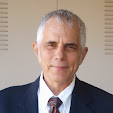
Dr. Neil Kay is Professor of Medicine at Mayo Clinic and also is fellow Canadian who had dedicated his career to helping those of us with CLL through research and direct patient care.

I interviewed him in New Orleans at ASH 2013.

His research has been wide and varied including the studies on EGCG (the active ingredient in green tea) that was sponsored by CLL Topics and Chaya Venkat that looked to see if there might be role for this specific extract from green tea as a gentler and more natural way to control our disease. Turns out it did have some significant efficacy, though its effect were not too powerful.

I miss what Chaya and what CLL Topics did for our community. Much of my work is an effort to pick up where she left off, but those are big shoes to fill.

In our interview form December 2013, Dr. Kay hits us with the cold facts that support my long time mantra of getting a CLL expert to head up your team. His published study has proven that we have better outcomes if we have a CLL expert on our team.

He and I discuss our shared vision of the perfect treatment team.

I can not overstate how important this is to our success in our long duet with our CLL, our nasty dancing bear of a partner. It can determine who will leads and who will follow, and how often we will get our toes stomped or worse, how often we will be forced to endure unwelcome advances by our disease.

The second topic we grappled with is more complex but worth the effort. It has to do with CLL clonal evolution.

Turns out p53 (often but not always related to a 17p deletion) is only half the story.

Turns out CLL is not a genetically stable disease. No surprise there. Especially true if you are unmutated or missing 17p.

Turns out the problem may be baked into the cancer from the start, to quote Dr. Kay it may be a "resident property of a patient who presents with CLL" and that treatment does not induce the new clones but allows what were once minor subclones to grow and become dominant. And that can spell problems for us as those clones are nearly always more aggressive and resistant to treatment.

The lessons from this research help inform us about the biology of how our cancer relapses and more importantly, about how it becomes refractory (resistant to therapy).

Dr. Kay admits that this research predates the new signal inhibitors such as ibrutinib and idelalisib and ABT-199 and more. How their use will impact the evolution of the CLL clones and subclones is a story that is not yet understood, but we can learn from this important research.

His explanation is crisp and clear. Understanding what his collaborative research has uncovered by looking at genetic evolution of CLL should help inform our decisions about when and how to treat our leukemia.

The second part of the interview will follow soon.

Labels: , , , , , , , , , ,